TL;DR

Get workout gear delivered free with Prime
- Fast, free delivery on millions of items
- Prime Video, Amazon Music and more included
- Member-only deals all year
Trainer and liftCLINIC CEO Amanda Lim shared a sample week combining strength work, cardio, walking, yoga and postpartum core rehabilitation. She advises people to track measures such as strength and muscle mass rather than treat scale weight as a measure of health; the report does not provide clinical evidence or outcome data for her approach.
Trainer and liftCLINIC CEO Amanda Lim has shared a sample of her weekly exercise routine and advised people not to use scale weight alone to judge their health. The Fit&Well report describes a schedule that combines strength training, cardio, walking, yoga and postpartum core rehabilitation, making the story a personal example rather than a clinical assessment of the routine’s effects.
Lim, who is 43, has worked as a trainer for more than 20 years and leads liftCLINIC, which the report describes as a metabolic health center focused on longevity. She is also a mother of three. Her youngest child is two and a half, and she says her exercise still includes pelvic-floor, deep-core and postpartum rehabilitation.
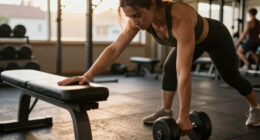
Her sample week starts with a leg-focused strength session on Monday morning and an upper-body-focused session on Tuesday. Wednesday is set aside for postpartum core rehabilitation, followed by walking for active recovery on Thursday. On Friday, she runs high-intensity intervals in the morning and does yoga in the evening; Saturday is a power-focused workout, and Sunday includes a zone two run. The report presents this as Lim’s own routine, not a prescription for every reader.
Lim describes her approach as a balance of functional strength training, zone two cardio and steps. Her five recommendations are to look beyond the scale when tracking progress, be open to the early gains of being a beginner, learn a new physical skill, start with walking and practise self-compassion. She says she monitors her own progress through the weights she lifts and her muscle mass. The article does not include independent measurements of those changes or evidence that her specific schedule produces particular health outcomes.
Tracking Health Beyond Scale Weight
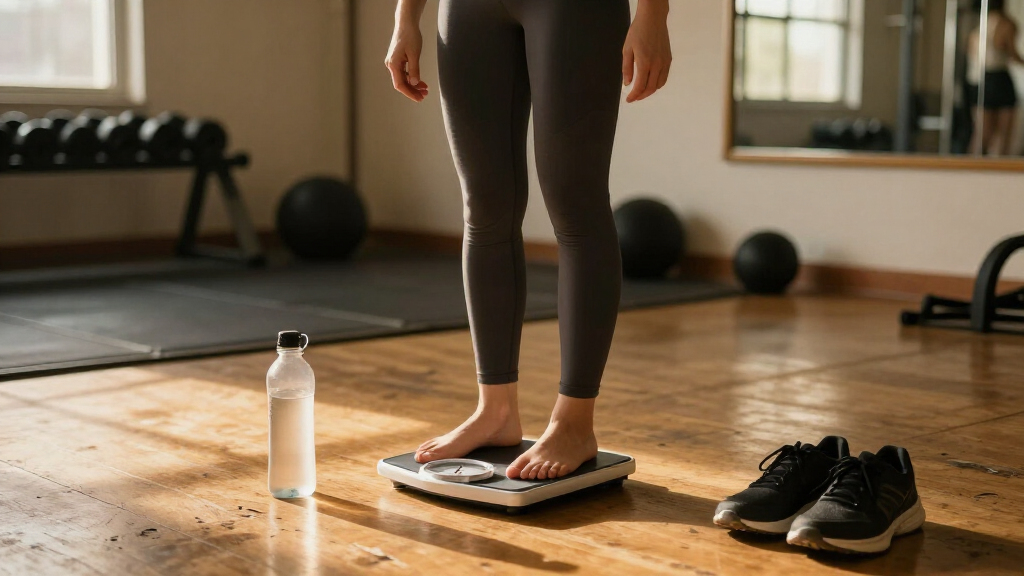
Lim’s central point is that body weight and health are not interchangeable measures. For readers setting exercise goals, that framing encourages attention to other indicators—such as lifting performance or muscle mass—rather than relying on a single number. Those measures can describe aspects of fitness, but the report does not suggest that they amount to a full medical assessment.
The routine also shows how one experienced trainer fits different kinds of movement into a week, including recovery and rehabilitation work. That may offer a practical example for people who want variety, while Lim’s advice to begin with a short walk presents a lower-barrier starting point. Her schedule is personal, however, and its volume or intensity may not suit someone else’s health, experience, or available time.
As an affiliate, we earn on qualifying purchases.
A Routine Built Around Different Movement
The source report frames Lim’s comments around long-term fitness and longevity, rather than weight loss. Her week includes resistance training, aerobic activity, skill and power work, walking, and yoga. The routine also places postpartum core rehabilitation alongside those other sessions, rather than treating it only as a brief period immediately after childbirth.
Lim says that some mothers may stop thinking about postpartum concerns as part of their longer-term fitness and that experiences from that period can reappear during perimenopause. These are her comments in the report; it provides no clinical detail on symptoms, prevalence, or treatment. Readers with pelvic-floor or other health concerns should seek advice from an appropriately qualified health professional rather than assume that Lim’s personal routine applies to them.
Lim also refers to six commonly cited lifestyle-medicine areas: nutrition, sleep, physical activity, stress management, social connection and reducing exposure to harmful substances. She proposes self-compassion as a seventh pillar, describing it as a way to keep going when someone falls short of personal goals. That is her characterization, not a formal change to an established medical framework in the material provided.
““We have to separate the number on the scale—the weight of our bodies—from the assessment of our health, because those two things don’t typically track beautifully together.””
— Amanda Lim, trainer and liftCLINIC CEO, as quoted by Fit&Well
postpartum core rehabilitation exercises
As an affiliate, we earn on qualifying purchases.
As an affiliate, we earn on qualifying purchases.
Limits of the Personal Example
The report describes Lim’s personal routine and opinions; it does not provide trial results, medical evaluation, or comparative evidence showing that her schedule improves longevity or health. It also does not specify the duration, distance, intensity targets or recovery needs for most sessions, so readers cannot infer a complete training plan from the weekly outline.
It is not clear what assessments or clinical guidance Lim’s clinic uses, or how it measures health beyond the individual indicators she mentions. The source also supplies no publication date, and it does not report follow-up outcomes from people who adopted her advice. Her comments about postpartum issues and perimenopause are not accompanied by detailed medical evidence in the article.
As an affiliate, we earn on qualifying purchases.
Adapting the Advice Safely
The source report does not announce a follow-up study, clinic program or next milestone. Its practical suggestions are to begin with manageable activity, build consistency and track progress using measures beyond body weight. Anyone considering a comparable mix of strength training, running and rehabilitation can adapt the workload to their ability and schedule.
People returning to exercise after childbirth, experiencing pelvic-floor concerns, or managing a health condition should seek individualized guidance from a qualified clinician or exercise professional. The report leaves open whether Lim will publish further details about her routine or how the clinic assesses clients’ progress.
As an affiliate, we earn on qualifying purchases.
Key Questions
Who is Amanda Lim?
Amanda Lim is a trainer with more than 20 years of experience and the CEO of liftCLINIC, described in the report as a metabolic health center focused on longevity. She is also a mother of three.
What does Lim’s weekly workout routine include?
Her sample week includes two strength-focused sessions, postpartum core rehabilitation, walking, high-intensity running intervals, yoga, power-focused training and a zone two run. She presents it as her own routine, not a universal program.
What does Lim recommend tracking instead of scale weight?
Lim says she tracks the weights she lifts and her muscle mass. The report does not claim those measures alone provide a complete assessment of health.
What does Lim suggest for people who are new to exercise?
She recommends starting with a five-minute walk and building from a manageable starting point. Readers with medical conditions or postpartum concerns should get advice suited to their circumstances.
Source: rss
Fall Picks
fall essentials
As an affiliate, we earn on qualifying purchases.