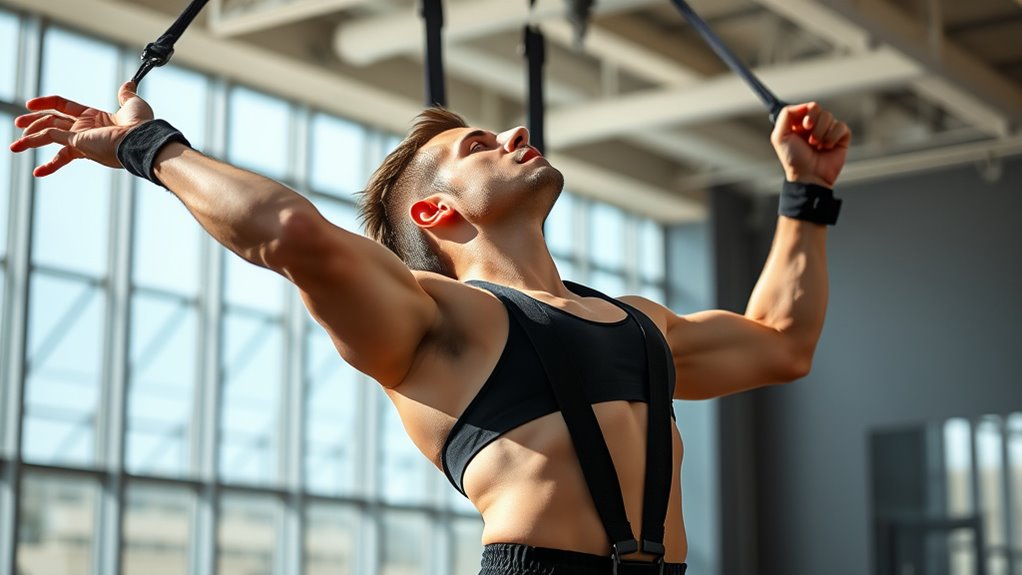

TRX suspension training provides a full-body workout by leveraging your body weight and strap resistance to build strength, stability, and flexibility simultaneously. It emphasizes core engagement, improves balance, and promotes functional movement patterns that mimic everyday tasks. The adjustable nature makes it suitable for all fitness levels and helps prevent injuries through proper form. With low-impact, joint-friendly exercises, you’ll challenge stabilizer muscles while boosting overall coordination. Keep exploring to discover how this versatile workout transforms your fitness routine.
Key Takeaways
- TRX suspension training engages your core and stabilizer muscles for a balanced, full-body workout.
- It offers adjustable intensity, allowing customization for all fitness levels and progressive challenge.
- Exercises mimic functional movements, enhancing daily activity performance and muscular balance.
- The low-impact design minimizes joint stress, making it suitable for injury recovery and joint issues.
- Focused, mindful training improves body awareness, strength, stability, and overall workout efficiency.

Are you looking for a versatile workout that challenges your entire body? TRX suspension training offers an effective way to build strength, improve stability, and boost flexibility—all using just straps anchored to a sturdy point. One of the key benefits of TRX is how it emphasizes core activation. As you perform each movement, you engage your core muscles to maintain balance and control, which not only enhances your workout but also helps develop a solid foundation for daily activities. This focus on core stability is vital because it translates into better posture, improved athletic performance, and a reduced risk of injury. When your core is activated properly during exercises, you’re less likely to overcompensate with other muscle groups, which can lead to strains or imbalances over time.
TRX exercises are highly adaptable, making them suitable for all fitness levels. Whether you’re a beginner or an experienced athlete, you can modify the intensity by adjusting your body angle or the strap length. This adaptability ensures you can progress steadily while maintaining proper form. Proper form is indispensable for injury prevention; it guarantees that you’re targeting the right muscles and minimizing unnecessary stress on joints and tendons. The suspension aspect of TRX challenges your stability, requiring you to constantly stabilize your body, which engages smaller, often overlooked muscles. This not only enhances muscle tone but also fortifies those stabilizers, reducing your risk of injury during other activities or sports. Additionally, UST projector rankings and ALR screen pairing guides can help you create an optimal environment for your home gym or workout space, ensuring you stay motivated and comfortable during your training sessions.
TRX’s adaptable design enhances stability and targets small muscles, reducing injury risk across all fitness levels.
Another advantage of TRX is that it promotes functional movement patterns. Instead of isolating muscles in a controlled environment, you perform multi-directional movements that mimic real-life actions. This functional training improves your overall coordination and strength, making everyday tasks easier and safer. Because TRX workouts involve your entire body, they encourage balanced muscle development, helping prevent muscular imbalances that could lead to injuries. Furthermore, the low-impact nature of suspension training means you can push yourself without excessive joint stress, which is especially beneficial if you’re recovering from an injury or prone to joint issues.
Incorporating TRX into your routine can also boost mental focus. Since maintaining proper form and stability requires concentration, you become more mindful of your movements. This mindfulness not only improves your workout efficiency but also helps you develop better body awareness—another key factor in injury prevention. Overall, TRX suspension training is a dynamic way to build strength, improve stability, and safeguard your body against injuries, all while challenging your muscles and mind. With consistent effort, you’ll notice improvements in your fitness, confidence, and daily function.
Frequently Asked Questions
Can TRX Training Replace Traditional Weightlifting?
TRX training can complement traditional weightlifting, but it may not fully replace it for muscle hypertrophy, especially if you’re aiming for maximum muscle growth. TRX is excellent for functional strength and aerobic conditioning, engaging stabilizer muscles and improving balance. While it offers a versatile workout, combining TRX with weights ensures you target all muscle groups effectively and achieve ideal hypertrophy and cardiovascular benefits.
How Often Should Beginners Use TRX Straps?
As a beginner, you should start using TRX straps 2-3 times a week. Focus on progression strategies like gradually increasing reps or adjusting your body angle to challenge yourself. Incorporate equipment variations, such as single-leg or suspension push-ups, to keep workouts engaging. Rest days are essential for recovery, so listen to your body and avoid overtraining. Consistency and proper technique will help you see steady progress.
Is TRX Suitable for Prenatal Workouts?
While TRX can be suitable for prenatal workouts, you must prioritize prenatal safety and consult your healthcare provider first. The straps allow for controlled movements, but exercise modifications are essential to avoid strain or injury. You’ll want to focus on gentle, low-impact exercises that support your changing body. Always listen to your body, and stop if you experience discomfort or pain during your workout.
What Are Common Mistakes to Avoid During TRX Exercises?
You should focus on maintaining proper form and alignment to avoid injuries during TRX exercises. Make sure your straps are adjusted correctly for your height and exercise type, preventing strain or instability. Avoid common mistakes like overextending your joints or rushing through movements. Keep control, engage your core, and listen to your body. Regularly check your strap length and alignment to guarantee you’re exercising safely and effectively.
Can TRX Training Help With Injury Rehabilitation?
Yes, TRX training can help with injury rehabilitation by providing low-impact, controlled movements ideal for rehab exercises. It helps improve strength, stability, and flexibility, which are essential for injury prevention. You can customize the resistance and focus on gentle progressions, making it safer and effective during recovery. Just guarantee you follow your healthcare provider’s guidance and avoid pushing into pain to maximize benefits and prevent setbacks.
Conclusion
With TRX suspension training, you hold the reins to your own strength, sculpting a resilient body one strap at a time. Imagine each pull and push as a brushstroke on your masterpiece of fitness, transforming sweat into your signature of perseverance. Embrace the challenge, and watch as your confidence soars like a bird breaking free from its cage. This isn’t just a workout; it’s your journey to becoming unstoppable, one powerful move at a time.