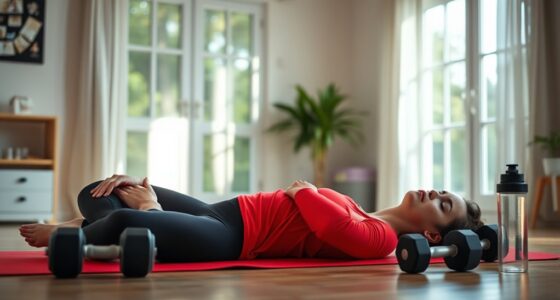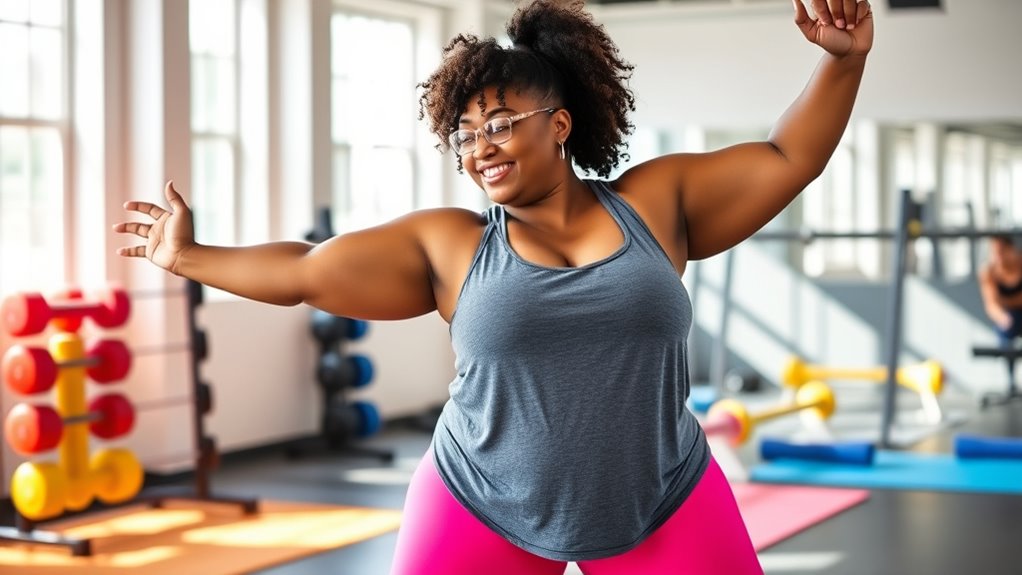

Starting your exercise journey at any size is about making gradual, sustainable changes that focus on your overall well-being. Begin with small steps, like walking more or choosing nourishing foods, and celebrate each win along the way. Using comfortable gear and staying hydrated can make workouts more enjoyable. Remember, progress isn’t always linear—patience and positivity are key. If you keep going, you’ll find helpful tips to support your unique wellness path.
Key Takeaways
- Focus on small, achievable goals that prioritize health and well-being over external standards.
- Celebrate every progress milestone, like increased stamina or healthier food choices, to stay motivated.
- Choose comfortable, supportive exercise gear to enhance enjoyment and reduce discomfort during workouts.
- Incorporate balanced, nourishing foods and monitor portions to support energy and overall health.
- Stay hydrated and make sustainable, mindful choices to build long-lasting, positive fitness habits.
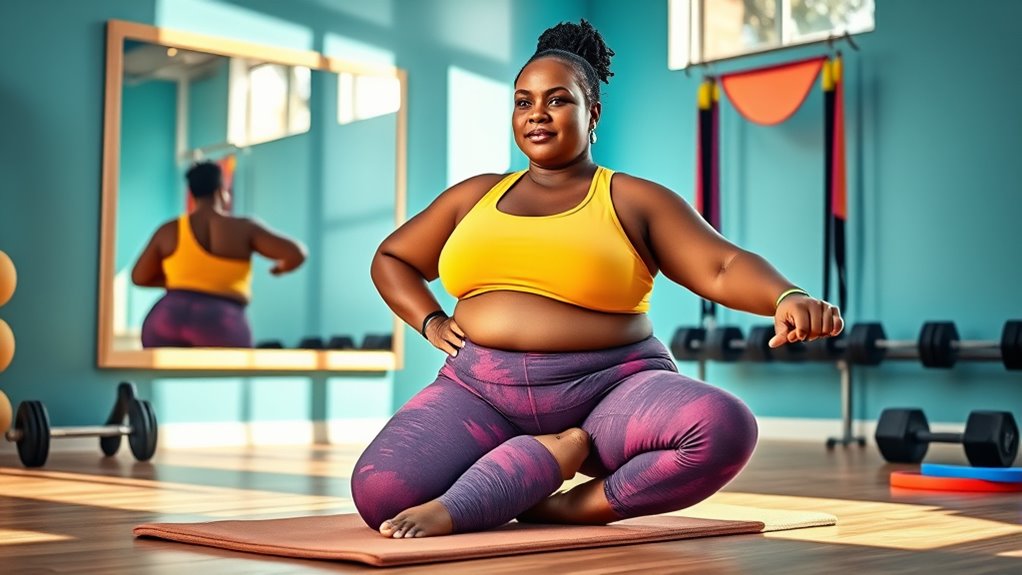
You don’t need to fit into a specific body size to prioritize your health and fitness. No matter where you start, taking small steps toward better habits can make a big difference. One of the most important things to remember is that your journey is unique, and it’s about improving your overall well-being, not meeting someone else’s standards. When you focus on your health, you’re investing in yourself, building confidence, and developing habits that last. It’s essential to approach this with a positive mindset, knowing that progress isn’t always linear. Celebrate each victory, whether it’s walking an extra minute or choosing a healthier snack. Over time, these small wins add up, helping you feel stronger and more capable. Incorporating proper equipment like supportive shoes or comfortable workout gear can make your exercise routine more enjoyable and sustainable. Nutrition tips play a crucial role when you’re starting out. Instead of obsessing over restrictive diets, aim to incorporate balanced, nourishing foods that support your activity level and energy needs. Focus on whole foods like fruits, vegetables, lean proteins, and whole grains. Keep an eye on portion sizes and avoid skipping meals, which can lead to overeating later. Hydration is also key—drinking enough water helps your body function optimally and can curb unnecessary cravings. Remember, it’s okay to indulge sometimes; the goal isn’t perfection but sustainability. Making mindful choices and gradually adjusting your eating habits creates a healthier relationship with food and reduces feelings of guilt or shame.
supportive walking shoes for overweight beginners
As an affiliate, we earn on qualifying purchases.
As an affiliate, we earn on qualifying purchases.
Frequently Asked Questions
How Can I Stay Motivated to Exercise Consistently?
To stay motivated, focus on building mental resilience and celebrating small victories. Set realistic goals, and remind yourself why you started. Surround yourself with social support—friends, family, or workout groups—to keep encouragement high. Keep a journal of progress, and don’t be too hard on yourself. Remember, consistency matters more than perfection. With resilience and support, you’ll find it easier to stick with your workout routine and achieve your goals.
What Types of Workouts Are Safest for Beginners?
For beginners, low impact exercises are safest and most effective. Try beginner-friendly routines like walking, swimming, or cycling to reduce joint strain while building strength. Focus on steady, manageable workouts that boost your confidence and prevent injury. As you progress, gradually increase intensity. Always listen to your body, stay hydrated, and consult a healthcare professional if you have concerns. Consistency and patience are key to long-term success.
How Do I Handle Body Shaming During Workouts?
Imagine you’re at the gym and someone makes a rude comment. You can respond with self-love and positive affirmation, reminding yourself of your worth. Focus on your progress and ignore negativity; it’s okay to set boundaries or walk away if needed. Remember, body shaming reflects others’ insecurities, not your value. Cultivating self-love helps you stay resilient, turning negative experiences into opportunities to strengthen your confidence and commitment to your journey.
Can I Lose Weight Without Dieting?
Yes, you can lose weight without dieting by focusing on consistent exercise benefits like improved mood, energy, and overall health. Avoid nutrition myths that suggest dieting is the only way; instead, prioritize balanced, enjoyable activity. Regular movement helps create a calorie deficit naturally. Remember, gradual progress is sustainable. By staying active, you support weight loss and boost your well-being without strict dieting.
How Do I Track Progress Without a Scale?
You can track progress without a scale by focusing on visual changes in your body and how your clothing fits. Take regular photos from different angles to spot subtle differences over time. Notice if your clothes feel looser or fit differently. Keep a journal of these observations and how you feel physically and mentally. This approach helps you stay motivated and see progress beyond just numbers on a scale.
comfortable workout gear for plus size
As an affiliate, we earn on qualifying purchases.
As an affiliate, we earn on qualifying purchases.
Conclusion
Remember, your fitness journey is like planting a resilient seed—nurture it with patience and care. Every step you take adds a splash of color to your vibrant canvas, turning obstacles into stepping stones. Embrace your unique rhythm and celebrate each small victory; they’re the gentle whispers of progress. No matter your size, you’re the artist of your story, painting a masterpiece of strength, resilience, and joy—because the journey is yours to create.
hydration bottles for exercise
As an affiliate, we earn on qualifying purchases.
As an affiliate, we earn on qualifying purchases.
beginner low impact exercise equipment
As an affiliate, we earn on qualifying purchases.
As an affiliate, we earn on qualifying purchases.