For muscle building, plant-based proteins like soy and pea are top choices. Soy provides all nine essential amino acids and is versatile in many dishes, while pea protein offers a highly digestible, complete protein option suitable for those with soy sensitivities. Combining both can boost your overall amino intake and support muscle repair effectively. Keep exploring to discover how incorporating these powerful plant proteins into your diet can maximize your muscle growth and recovery.
Key Takeaways
- Soy protein is a complete plant-based protein rich in all nine essential amino acids, supporting muscle growth similar to animal sources.
- Pea protein offers a high-quality, easily digestible, and environmentally friendly plant protein option ideal for muscle repair.
- Combining soy and pea proteins provides a broader amino acid profile and enhances overall nutrient intake for optimal muscle building.
- Incorporate plant proteins into meals and post-workout routines alongside whole grains, nuts, and vegetables for maximum muscle support.
- Versatile in recipes like smoothies, stir-fries, and baked goods, plant-based proteins can be easily integrated into a muscle-building diet.

Plant-based protein sources have gained popularity among those seeking nutritious and sustainable alternatives to animal products. If you’re looking to build muscle without relying on meat or dairy, it’s vital to choose the right sources that provide high-quality protein. Soy protein and pea protein are two of the most effective options, offering ample amino acids necessary for muscle repair and growth.
Soy protein stands out because it’s a complete protein, meaning it contains all nine essential amino acids your body needs. This makes it comparable to animal-based proteins in terms of muscle-building potential. When you incorporate soy protein into your diet, whether through tofu, tempeh, soy milk, or protein isolates, you get a substantial boost of protein that supports your workout recovery and muscle synthesis. Soy is also rich in other nutrients like iron and fiber, making it a well-rounded addition to your plant-based regimen. Its versatility allows you to add it to smoothies, stir-fries, or baked goods, guaranteeing you meet your daily protein goals without much hassle.
Pea protein has gained a reputation as a top-tier plant-based alternative, especially for those with allergies or sensitivities to soy. It’s made from yellow peas and is also a complete protein, which is somewhat rare among plant sources. Pea protein is highly digestible and provides a significant amount of leucine, an amino acid essential for muscle growth. Because of its neutral flavor and smooth texture, it mixes easily into shakes and recipes, making it an excellent choice post-workout. Pea protein is also environmentally friendly, as peas require less water and fertilizer compared to other crops, aligning well with sustainable eating practices.
Both soy and pea proteins are excellent choices for muscle building, but they complement each other well. Incorporating a mix of these proteins into your diet ensures you get a broader spectrum of amino acids and nutrients. For maximum results, pair your plant-based protein sources with other nutrient-dense foods like whole grains, nuts, and vegetables. Consuming enough total protein daily, especially around your training sessions, maximizes muscle repair and growth. Remember, consistency is key. By choosing soy protein and pea protein as your primary sources, you can effectively support your muscle-building goals while staying true to a plant-based lifestyle.
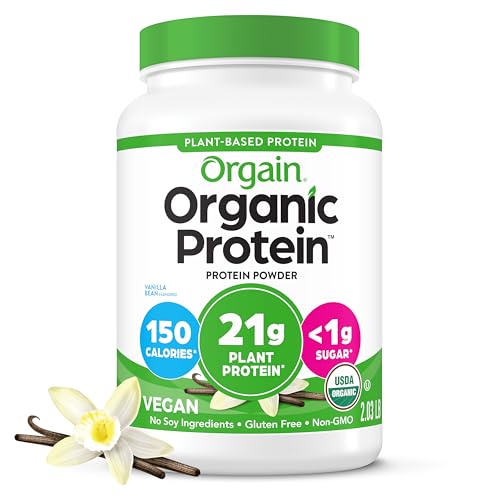
Orgain Organic Vegan Protein Powder, Vanilla Bean – 21g Plant Protein, 6g Prebiotic Fiber, No Lactose Ingredients, No Added Sugar, Non-GMO, for Shakes & Smoothies, 2.03 lb (Packaging May Vary)
CLEANER INGREDIENTS: 21g of Organic plant based protein and 1g sugar. Our protein blend contains Organic peas, brown…
As an affiliate, we earn on qualifying purchases.
As an affiliate, we earn on qualifying purchases.
Frequently Asked Questions
Can Plant Proteins Provide Complete Amino Acids for Muscle Growth?
Yes, plant proteins can provide complete amino acids for muscle growth when you combine diverse sources. While some plant proteins have lower digestibility, mixing beans, grains, and seeds ensures you get all essential amino acids. This approach supports vegan muscle nutrition effectively. By paying attention to plant protein digestibility and combining foods strategically, you can meet your amino acid needs for ideal muscle development.
How Do Plant-Based Proteins Compare to Animal Proteins in Muscle Building?
Research shows plant proteins are 70-90% digestible, slightly lower than animal proteins, but they still support muscle growth effectively. You might notice differences in taste preferences, but many find plant options more enjoyable and versatile. While animal proteins often have higher protein density, combining various plant sources can deliver complete amino acids. So, with proper planning, plant-based proteins can match animal proteins in supporting your muscle-building goals.
Are Plant Proteins Suitable for Post-Workout Recovery?
Yes, plant proteins are suitable for post-workout recovery. Consuming soy benefits your muscles by providing high-quality, complete protein, making it an excellent option for muscle repair. Timing matters, so aim to include plant protein within 30-60 minutes after your workout to maximize benefits. Incorporate options like tofu, legumes, or plant-based shakes to help your muscles recover efficiently and support your overall fitness goals.
What Are the Best Plant Protein Combinations for Complete Amino Acids?
Think of your plant proteins as puzzle pieces—fitting together to create a complete picture. Pair soy and quinoa, or lentils and rice, to guarantee you get all essential amino acids. These combinations are like a well-orchestrated symphony, harmonizing flavors and nutrients. By mixing these foods, you maximize muscle recovery and growth. It’s a simple, delicious way to fuel your body on a plant-based journey.
How Much Plant Protein Is Needed Daily for Muscle Gain?
You should aim for around 1.2 to 2.0 grams of plant protein per kilogram of your body weight daily for muscle gain. Focus on protein timing by spreading your intake evenly across meals, especially post-workout. Incorporate dietary supplements like plant-based protein powders if needed to meet your goals. Consistent consumption helps maximize muscle repair and growth, making your efforts more effective over time.

SOLO Organic Pea Protein Isolate, Low in Sodium, Canada Grown Peas, 100% Vegan, Non-GMO, Unflavored Plant Based Protein Powder with BCAA, Keto & Paleo Friendly, Easy to Digest, No Additives (2.7 lbs)
EXCEPTIONAL PEAS- Solo Pea Protein is made from organic yellow peas grown in farms in Canada
As an affiliate, we earn on qualifying purchases.
As an affiliate, we earn on qualifying purchases.
Conclusion
Now that you know the top plant-based protein sources, you’re armed with the keys to unleash your muscle-building potential. Think of these foods as your trusty toolkit, transforming your plate into a powerhouse of strength. With each bite, you’re fueling your body like a skilled artisan forging steel. Embrace these vibrant, plant-powered options and watch your muscles grow strong and resilient, turning your plant-based journey into a symphony of health and vitality.

Vega Protein + Recovery, Vanilla – 30g Vegan Protein, Dairy & Gluten Free, Probiotics, NSF Certified, 65.6 oz (45 Servings)
POWERFUL PLANT-BASED MUSCLE SUPPORT: Fuel your active lifestyle with 30g of premium plant-based vegan protein per serving. Perfect…
As an affiliate, we earn on qualifying purchases.
As an affiliate, we earn on qualifying purchases.
Orgain Organic Vegan Protein Powder, Vanilla Bean – 21g Plant Protein, 6g Prebiotic Fiber, No Lactose Ingredients, No Added Sugar, Non-GMO, for Shakes & Smoothies, 2.03 lb (Packaging May Vary)
CLEANER INGREDIENTS: 21g of Organic plant based protein and 1g sugar. Our protein blend contains Organic peas, brown…
As an affiliate, we earn on qualifying purchases.
As an affiliate, we earn on qualifying purchases.