Dumbbells are incredibly versatile tools that let you target every muscle group with just one pair. They support full-body workouts, allowing you to perform upper body lifts, core exercises, and lower body movements seamlessly. Their adjustable grips and multiple exercise options help prevent plateaus and promote balanced strength. Plus, they fit into small spaces, making workouts convenient anywhere. Keep exploring to discover how you can maximize your dumbbell routines for total-body fitness.
Key Takeaways
- Dumbbells allow for a wide range of exercises targeting all major muscle groups in one workout.
- They enable both isolation and compound movements, promoting balanced full-body development.
- Different grip and technique variations with dumbbells customize workouts for strength, endurance, or toning.
- Compact and versatile, dumbbells are suitable for small spaces and can be used anytime, anywhere.
- One pair of dumbbells can effectively replace multiple machines, offering flexibility for full-body training.
Benefits of Using Dumbbells for Whole-Body Training
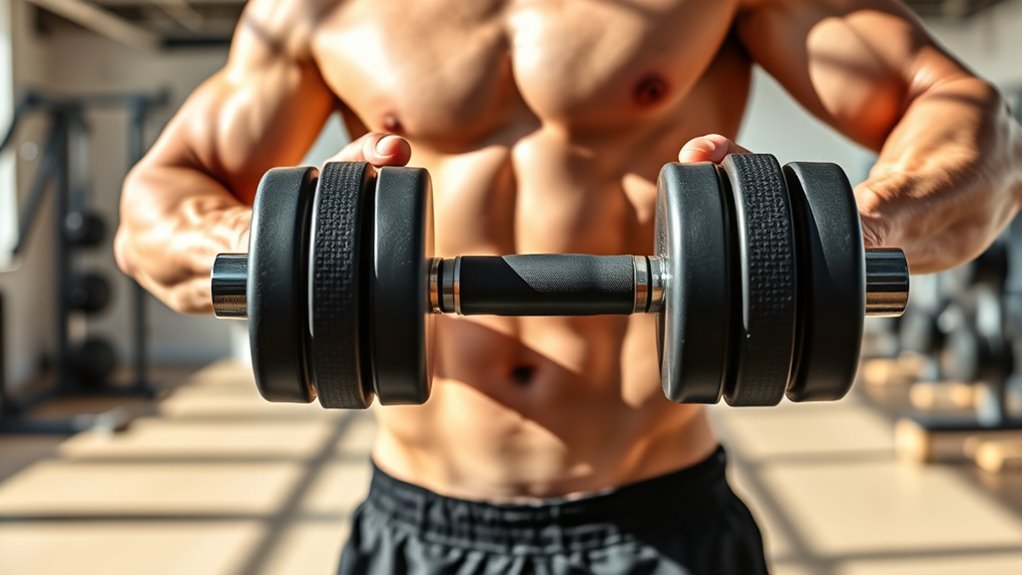
Using dumbbells for whole-body training offers numerous benefits that make them a versatile choice for fitness enthusiasts. Their durability guarantees they withstand frequent use, so you can rely on them for consistent workouts. Dumbbell durability means fewer replacements and a longer lifespan, making your investment worthwhile. Additionally, grip variations allow you to target different muscles and improve grip strength, enhancing overall performance. Whether you prefer a standard hold or a more challenging overhand grip, dumbbells adapt to your needs. This versatility makes them ideal for a wide range of exercises, from strength training to functional movements. Plus, their compact size lets you work out in small spaces, giving you the freedom to train anywhere. Overall, dumbbells are a practical, durable, and adaptable tool for full-body fitness. Incorporating different headphone types can also enhance your workout experience by providing hands-free music and coaching options.
Essential Dumbbell Exercises for Upper Body Strength

To build upper body strength effectively, incorporating essential dumbbell exercises into your routine is key. Using dumbbell grip variations, like overhand, neutral, or underhand grips, targets different muscles and enhances overall development. Focus on muscle isolation techniques by controlling your movements and emphasizing specific muscle groups, such as the biceps, triceps, shoulders, and chest. Exercises like dumbbell shoulder presses, bicep curls, tricep kickbacks, and chest flies are effective for building strength and muscle definition. Varying your grip and technique ensures balanced muscle engagement and prevents plateaus. Keep your movements controlled and deliberate, and don’t neglect proper form. This approach maximizes the efficiency of your workout and helps you achieve upper body strength with just one pair of dumbbells. Additionally, support hours for fitness resources and guidance can be found online to assist with your training schedule. Incorporating proper technique is crucial for preventing injuries and ensuring optimal results. Paying attention to your exercise form can also help you avoid common mistakes that hinder progress. Remember that consistent effort is essential for long-term improvements and muscle development. Including warm-up routines before lifting can further reduce injury risk and prepare your muscles for exertion.
Targeting the Core With Dumbbell Moves

Building a strong core is essential for overall fitness, stability, and athletic performance. Dumbbell moves are excellent for targeting core stabilization and boosting abdominal activation. By holding a dumbbell during exercises like Russian twists or overhead presses, you engage your deep abdominal muscles and improve balance. Incorporate side bends and weighted sit-ups to challenge your obliques and rectus abdominis. These movements not only strengthen your core but also enhance your posture and functional strength. Focus on controlled movements and proper form to maximize activation and prevent injury. Using dumbbells for core work allows you to add resistance, making your workouts more effective while maintaining versatility. Regularly integrating these moves will help you develop a solid, stable core essential for all physical activities.
Lower Body Exercises Using Just One Pair of Dumbbells

You can effectively target your lower body with just one pair of dumbbells by performing a variety of compound and isolation movements. These exercises are perfect for leg day and enhancing glute activation. Think of a routine that challenges your quads, hamstrings, glutes, and calves all at once. For example:
| Exercise | Targeted Muscle | Equipment Needed |
|---|---|---|
| Goblet Squat | Quads, Glutes | Dumbbell |
| Romanian Deadlift | Hamstrings, Glutes | Dumbbells |
| Lunges | Quads, Glutes, Calves | Dumbbells |
| Step-Ups | Glutes, Quads | Dumbbells, Elevated Surface |
This setup offers a thorough lower body workout, helping you maximize glute activation and build strength efficiently. Incorporating efficient workout routines can further optimize your results with minimal equipment. Additionally, adjusting your training intensity can lead to better muscle engagement and progress over time. For optimal results, consider progressive overload to continually challenge your muscles and promote growth. Remember to include proper form in each movement to prevent injury and enhance effectiveness. Developing muscle memory through consistent practice can also improve your workout quality over time.
Combining Movements for Efficient Full-Body Routines

By combining movements, you can target multiple muscle groups at once, making your workout more efficient. Streamlined sequences help you save time while maximizing results. This approach keeps your routines effective and engaging, pushing your fitness forward quickly.
Multi-Muscle Engagement
Incorporating multi-muscle engagement into your dumbbell routines allows you to target multiple muscle groups simultaneously, making workouts more efficient and effective. Instead of focusing solely on muscle isolation, you combine movements that activate various areas at once, maximizing your effort. This approach not only saves time but also enhances functional strength by mimicking real-life activities. With dumbbells, you benefit from their equipment versatility, enabling you to perform compound exercises like deadlifts, squats, and presses that engage multiple muscles. By strategically combining these movements, you create dynamic routines that challenge your entire body in fewer sets, boosting calorie burn and muscle coordination. Understanding muscle activation techniques can further help optimize your workout efficiency. Additionally, employing proper exercise form and technique ensures safety and maximizes results during multi-muscle engagement. To further improve your workouts, paying attention to exercise progression can help you continually challenge your muscles and prevent plateaus. Multi-muscle engagement transforms simple exercises into powerful full-body workouts, helping you achieve results faster and more all-encompassing.
Streamlined Movement Sequences
Streamlined movement sequences maximize workout efficiency by combining multiple exercises into smooth, continuous routines. You can fuse movements like single leg balance with dumbbell presses or squats, reducing rest and boosting intensity. To do this effectively:
- Use proper dumbbell grip techniques to maintain control during progressions.
- Incorporate single leg balance to challenge your stability and engage core muscles.
- Chain exercises together, such as lunges into overhead presses, for seamless flow.
- Focus on maintaining proper form throughout to prevent injuries and maximize results.
Tips for Choosing the Right Dumbbell Weight
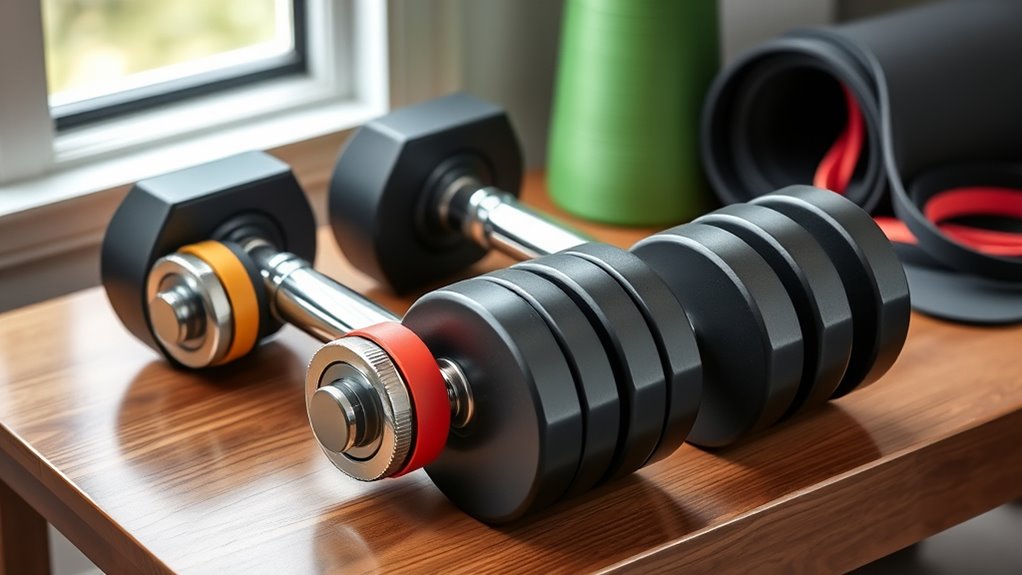
Choosing the right dumbbell weight depends on your current fitness level and what you want to achieve. If you’re just starting out, lighter weights help build proper form, while heavier ones challenge your strength as you progress. Keep your workout goals in mind to select a weight that pushes you without risking injury. Additionally, consider the types of dumbbell machines, as different models can influence how effectively you perform certain exercises. Incorporating digital literacy into your fitness journey can also motivate you through online coaching programs and virtual workout communities. Understanding proper technique is essential for maximizing benefits and preventing injuries during your workouts. Being aware of home security systems can also help protect your home while you focus on your fitness goals. Moreover, using proper equipment ensures safety and effectiveness during your exercises.
Assess Your Fitness Level
To select the right dumbbell weight, you need to honestly assess your current fitness level. Start with simple fitness assessments, like how many reps you can do with a lightweight without losing form. This helps determine your starting point. Next, consider equipment compatibility—make sure the dumbbells you choose fit comfortably in your hands and suit your space. Here are some tips:
- Test a few weights to find what challenges you but allows proper form.
- Pay attention to how your muscles feel during exercises—avoid pain.
- Note your endurance—can you complete sets without excessive fatigue?
- Be truthful about your experience level to prevent injury and optimize progress.
- Understanding your fitness capacity helps you select the appropriate dumbbell weight for safe and effective workouts. Recognizing your strength level can also guide you in progressing safely over time. Additionally, assessing your muscular endurance can inform how much weight you should start with to prevent overexertion.
Assessing your fitness accurately ensures you pick weights that match your ability and support safe, effective workouts.
Consider Workout Goals
Your workout goals play a pivotal role in selecting the right dumbbell weight. Whether you aim to build strength, enhance endurance, or improve muscle tone, choosing the appropriate weight helps you track progress effectively. For strength, heavier weights challenge your muscles, while lighter ones promote endurance and form. To prevent plateaus and keep workouts fresh, incorporate workout variety with different weights. Use this guide to match your goals:
| Goal | Dumbbell Weight | Focus |
|---|---|---|
| Muscle Building | Heavier | Maximize strength gains |
| Endurance | Lighter | Improve stamina |
| Toning | Moderate | Sculpt muscles |
| Progress Tracking | Varies | Adjust weights as you improve |
Structuring a Balanced Dumbbell Workout Plan
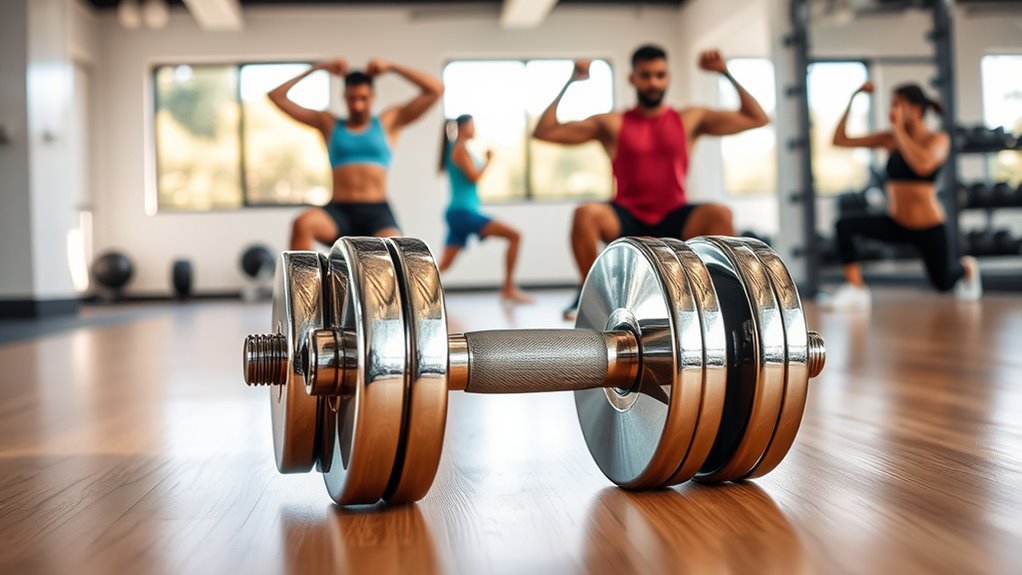
Creating a balanced dumbbell workout plan involves targeting all major muscle groups to guarantee even strength development and prevent imbalances. To do this effectively, focus on these key aspects:
- Progression planning: Gradually increase weight or repetitions to challenge your muscles and promote growth.
- Exercise variety: Incorporate different movements for each muscle group to ensure balanced development.
- Recovery strategies: Schedule rest days and prioritize sleep to allow muscles to repair and grow stronger.
- Workout structure: Mix strength and endurance exercises across sessions, balancing push and pull movements.
Safety and Technique Tips for Dumbbell Exercises

Ensuring proper safety and technique during dumbbell exercises is essential to prevent injuries and maximize effectiveness. Always prioritize proper form over heavier weights; this helps target muscles correctly and reduces strain on joints. Before starting, check your weight safety—choose an appropriate weight that challenges you without compromising control. Maintain a stable stance and engage your core to support your movements. Avoid rushing through reps; controlled, deliberate motions ensure proper muscle engagement. Keep your wrists straight and avoid locking joints to prevent strain. If you’re unsure about your form, consider consulting a trainer or using mirrors for feedback. Remember, safety comes first—using proper form and respecting weight safety will help you achieve your fitness goals more efficiently and safely.
Frequently Asked Questions
Can Dumbbells Replace Machines for Full-Body Workouts?
Yes, dumbbells can replace machines for full-body workouts because of their versatility. With dumbbell versatility, you can perform a wide range of exercises targeting different muscle groups, making them excellent machine alternatives. They allow for natural movements, improve stabilizer muscles, and are adjustable for various fitness levels. Switching to dumbbells provides a flexible, effective workout without needing bulky machines, making them ideal for home or gym training.
How Often Should I Incorporate Dumbbell Exercises Into My Routine?
You should incorporate dumbbell exercises into your routine about 3 to 4 times a week, allowing enough recovery time. This training frequency helps you build strength effectively while minimizing injury prevention risks. Vary your workouts to target different muscle groups and avoid overuse. Consistent, moderate training guarantees progress without overtraining or injury, keeping your routine balanced and sustainable in the long run.
Are There Any Contraindications for Using Dumbbells?
Yes, there are some contraindications for beginners using dumbbells. You should prioritize dumbbell safety by starting with lighter weights and proper form to avoid injury. If you have existing joint issues, cardiovascular problems, or recent injuries, consult a healthcare professional before beginning. Being aware of contraindications helps prevent strain or harm, ensuring your workouts remain safe and effective as you build strength gradually.
What Are the Best Dumbbell Exercises for Beginners?
They say, “Start small to go far,” so for beginner dumbbell exercises, focus on basic moves like bicep curls, shoulder presses, and goblet squats. Always prioritize dumbbell safety by choosing light weights and proper form. Incorporate these beginner workout tips to build confidence and strength gradually. Remember, consistency beats intensity early on, so stick with simple exercises and gradually increase weight as you get stronger.
How Do I Progress With Dumbbell Weight Over Time?
To progress with dumbbell weight over time, focus on progressive overload by gradually increasing resistance. Start by adding small increments once your current weight feels easier, ensuring you’re still maintaining proper form. You can also increase repetitions or sets, but the key is to challenge your muscles consistently. Listen to your body, and aim to push yourself safely to avoid injury while steadily building strength.
Conclusion
Dumbbells are like your trusty sidekick, ready to help you achieve a full-body workout anytime, anywhere. With their versatility and your dedication, you can build strength, improve mobility, and boost endurance all in one session. Keep experimenting with different moves and weights, and stay consistent. Remember, just like a well-tuned instrument, your body will perform best when you care for it with the right tools and technique.