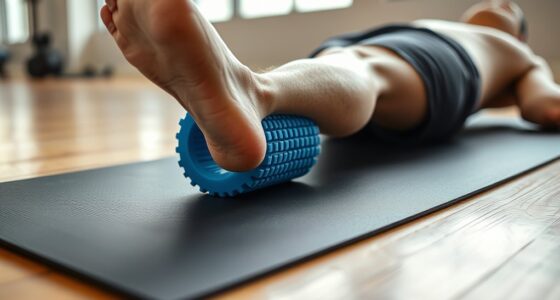
Choosing between a treadmill and outdoor running depends on your priorities. Treadmills offer convenience, consistent pace control, and reduce injury risk with cushioned surfaces, but they can be costly and boring without scenery. Outdoor running provides fresh air, varied scenery, and natural terrain that boost mood and motivation but relies on weather and safety conditions. Explore more to find the best option tailored to your goals and lifestyle.
Key Takeaways
- Treadmills offer convenience, consistent pace control, and impact absorption, while outdoor running provides natural scenery, varied terrain, and environmental benefits.
- Indoor treadmills reduce injury risk with cushioned surfaces but have higher initial costs; outdoor running is cheaper but exposes joints to harder surfaces.
- Outdoor running enhances mental well-being and offers diverse routes, whereas treadmills provide controlled, weather-independent workouts.
- Treadmills allow precise pace and safety features, while outdoor routes require route selection for safety and adaptability.
- Both methods support physical health, but outdoor running offers varied scenery and fresh air, while treadmills provide consistent, customizable training environments.
Convenience and Accessibility

When it comes to convenience and accessibility, running on a treadmill often wins because you can do it anytime regardless of the weather or daylight. With gym convenience, you don’t need to worry about outdoor conditions or crowded parks. Plus, home accessibility makes it even easier—your treadmill is right there in your living space, ready whenever you are. No need to commute or plan around outdoor schedules. You can fit in a quick workout during lunch breaks or late at night, making it ideal for busy lifestyles. This flexibility allows you to stay consistent with your running routine without interruptions. Overall, treadmill workouts offer unmatched convenience, giving you control over when and where you exercise. Additionally, technology integration in modern treadmills can enhance your workout experience through customizable programs and real-time feedback. Incorporating safety features such as emergency stop buttons and cushioning also provides peace of mind during your workouts. Moreover, the ability to monitor your progress with built-in tracking systems can motivate you to maintain your fitness goals more effectively. Furthermore, advancements in motor and belt technology ensure smoother and quieter operation, making workouts more comfortable and less disruptive. Implementing user-friendly interfaces on treadmills further simplifies operation, making it accessible even for beginners.
Impact on Joints and Injury Risk
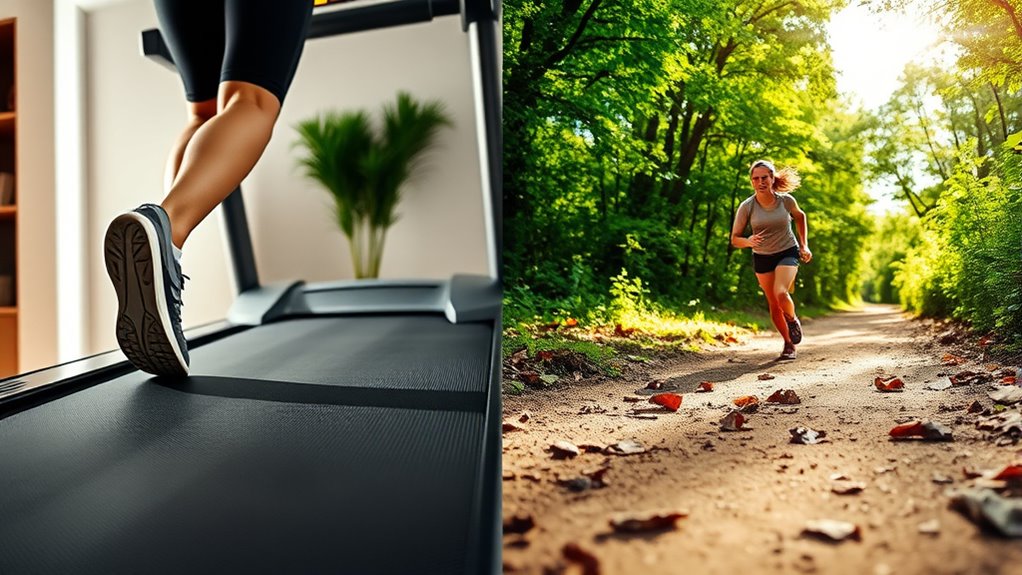
When comparing impact on your joints, consider how surface softness varies between treadmill and outdoor running. Treadmills typically offer better impact absorption, reducing strain, while outdoor surfaces can be harder and more unpredictable. These differences influence injury risk and play a key role in injury prevention strategies. Incorporating proper footwear and maintaining good running form can further minimize potential damage during outdoor runs. Additionally, understanding how shock absorption technology in modern running equipment can help mitigate joint stress is crucial for long-term health.
Surface Softness Differences
Surface softness plays a significant role in how your joints absorb impact during running. Softer surfaces provide better cushioning comfort, reducing the strain on your joints and lowering injury risk. On a treadmill, the cushioned belt offers consistent shock absorption, making it gentler on your body. Outdoor surfaces vary widely in softness, from asphalt to trail dirt, affecting your joint health differently. Consider these points:
- Softer indoor surfaces enhance shock absorption, protecting your joints.
- Hard outdoor surfaces like concrete increase joint stress and injury risk.
- Trail running on softer dirt or grass offers better cushioning comfort.
- Surface hardness influences how your body absorbs impact, affecting injury prevention.
- Choosing the right surface can help you run longer with fewer joint issues, especially when incorporating natural materials that emulate softer terrain.
- The consistency of a controlled surface like a treadmill can also help in injury prevention by minimizing unexpected impacts. Additionally, selecting surfaces that mimic natural terrain can further reduce joint strain and promote healthier running habits. Using shock-absorbing footwear can also provide extra protection when running on harder outdoor surfaces. Studies show that surface variation can help strengthen muscles and improve overall running resilience.
Impact Absorption Levels
Impact absorption levels directly influence how much shock your joints endure during each run. A surface with good shock absorption reduces surface impact, lowering strain on your knees and hips. Treadmills typically have cushioned decks designed to absorb shock, which can minimize joint stress. Outdoor surfaces like concrete or asphalt offer less shock absorption, increasing impact and injury risk over time. To compare, see the table below:
| Surface Type | Shock Absorption Level | Impact on Joints |
|---|---|---|
| Treadmill | High | Reduced joint stress |
| Asphalt/Concrete | Low | Higher joint strain |
| Dirt Trails | Moderate | Balanced impact |
| Grass | High | Gentle on joints |
| Rubber Tracks | Very high | Very low impact |
Choosing surfaces with better shock absorption can help protect your joints and reduce injury risk. Additionally, understanding impact absorption levels can guide you in selecting the safest running environment. Considering dog names that reflect the energy and temperament of your running route can add a fun touch to your exercise routines. Being aware of impact levels can also influence your choice of proper footwear to further protect your joints during runs. Recognizing the significance of impact absorption technology in running surfaces can further optimize your safety and comfort. For example, modern treadmills incorporate shock absorption technology that further reduces joint strain during indoor runs.
Injury Prevention Factors
Choosing the right running environment can substantially reduce your injury risk by minimizing stress on your joints. To prevent injuries, focus on these key factors:
- Use proper footwear that offers adequate cushioning and support, tailored to your gait.
- Maintain a consistent running technique to avoid uneven impact and strain.
- Adjust your pace and distance gradually to prevent overuse injuries.
- Be mindful of your running surface; softer surfaces like grass or rubber mats reduce joint stress compared to harder surfaces.
- Incorporating proper running surfaces can further help in reducing impact-related injuries and promote joint health. Additionally, selecting surfaces that absorb shock naturally can help in reducing joint stress and enhancing overall comfort.
Whether on a treadmill or outdoors, paying attention to footwear and technique helps protect your joints. Proper form and supportive shoes can absorb shock effectively, reducing the risk of injury and long-term joint issues. Using shock-absorbing surfaces can be an effective way to further minimize joint stress during your runs. Regularly checking and maintaining your air purifier filters can also contribute to a healthier indoor environment, complementing your injury prevention efforts.
Weather Conditions and Environmental Factors

Weather conditions can markedly affect your running experience, whether you’re outside or on a treadmill. Outdoor running exposes you to elements like rain, wind, and temperature changes that can impact performance and comfort. Additionally, air quality differences between outdoor environments and indoor gyms can influence your breathing and overall health during workouts. Moreover, retail hours for sporting goods stores can determine the availability of weather-appropriate gear to help you stay comfortable and safe during your runs. Being aware of environmental factors such as pollution levels and pollen counts can also help you plan better and avoid health issues during outdoor exercise.
Weather Impact on Running
When you run outdoors, the weather can considerably influence your performance and comfort. Seasonal variations and weather unpredictability mean you need to adapt quickly. Here are four key impacts:
- Temperature fluctuations can cause overheating or chills, affecting stamina.
- Rain or snow can make surfaces slippery and unsafe.
- Wind resistance can increase effort, especially against strong gusts.
- Humidity levels influence hydration needs and breathing efficiency.
These factors can make outdoor running more challenging during extreme weather, but they also provide opportunities to build resilience. On the other hand, treadmill running remains unaffected by weather, offering a controlled environment. Understanding how weather impacts your run helps you plan better and stay consistent regardless of the season.
Air Quality Differences
Air quality can vary markedly between outdoor and indoor running environments, directly impacting your health and performance. Outdoor air often contains pollution and allergens that can elevate air quality concerns and increase pollution exposure, especially in urban areas. Indoor gyms typically have cleaner air but can accumulate dust or airborne particles if ventilation is poor. Consider this comparison:
| Aspect | Outdoor Running | Indoor Running |
|---|---|---|
| Air Quality Concerns | Higher pollution exposure, allergens | Generally cleaner, but ventilation matters |
| Pollution Exposure | Increased in urban areas | Minimal, controlled environment |
| Weather Impact | Affects air quality, safety risks | Stable, unaffected by weather |
Choosing the right environment depends on your sensitivity to air quality and pollution risks.
Cost and Equipment Requirements
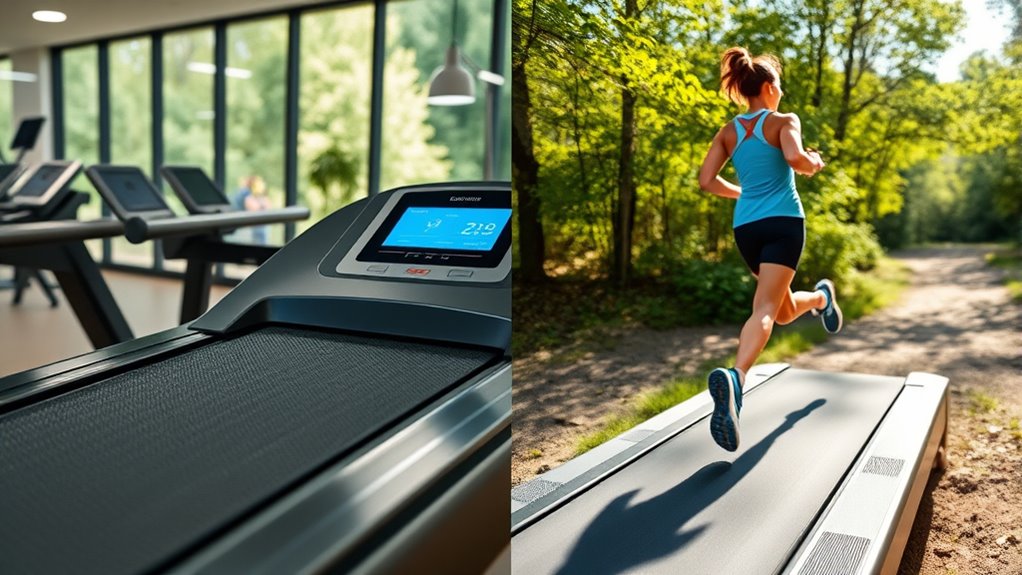
Choosing between a treadmill and outdoor running often comes down to cost and equipment needs. When you compare prices, treadmills typically have a higher initial investment but fewer ongoing expenses. Here are key points to consider:
- Price comparison: Treadmills can cost anywhere from a few hundred to several thousand dollars, while outdoor running requires minimal gear.
- Equipment maintenance: Treadmills need regular upkeep to ensure smooth operation, adding to ongoing costs.
- Space requirements: Treadmills need dedicated space in your home, whereas outdoor running requires only a safe, accessible route.
- Additional gear: Outdoor running might need accessories like proper shoes, but overall, it’s less costly than maintaining a treadmill.
Balancing these factors helps you decide which option fits your budget and living situation best.
Scenery and Mental Stimulation

Running outdoors exposes you to natural scenery that can boost your mood and reduce stress. The variety of visual distractions keeps your mind engaged, making workouts feel less monotonous. Plus, the fresh air and changing views help clear your thoughts and improve mental clarity.
Natural Environment Benefits
Exercising outdoors offers a distinct advantage by immersing you in natural scenery that keeps your mind engaged. This exposure provides nature therapy, reducing stress and boosting your mood. Plus, being in nature encourages eco friendliness, making your workout environmentally conscious. Here are four specific benefits:
- Enhanced mental clarity from natural surroundings
- Reduced anxiety through connection with nature
- Increased motivation from scenic views
- Better overall well-being, thanks to the calming effects of outdoor environments
These elements create a more stimulating workout experience that nurtures both your body and mind. The natural environment acts as a rejuvenating backdrop, helping you stay motivated while supporting eco-friendly practices, making outdoor running a holistic activity.
Visual Distractions Variety
The variety of scenery you encounter outdoors provides constant visual stimulation that keeps your mind engaged and prevents boredom. With changing landscapes, your visual focus shifts naturally, making the run feel less monotonous. This variety helps you manage distractions better because your attention is drawn to different elements in your environment, reducing the urge to fixate on discomfort or fatigue. Outdoor running offers a dynamic backdrop, whether it’s trees, buildings, or passersby, which can boost your mental alertness. This constant change in scenery encourages you to stay present and attentive, making distraction management easier. In contrast, treadmill running offers a static environment that requires more mental effort to maintain focus, often leading to increased boredom or distraction over time.
Mental Clarity Enhancement
When you’re surrounded by changing scenery, your mind stays actively engaged, which enhances mental clarity during your workout. Outdoor running offers a natural environment that encourages mindfulness focus, helping you stay present and reduce stress. The varied visuals stimulate your brain, making it easier to clear mental clutter. To maximize this benefit, consider these aspects:
- Notice the changing sights around you to sharpen mindfulness focus.
- Engage with nature to promote stress reduction and emotional balance.
- Use the scenery as a mental break, improving overall mental clarity.
- Allow the outdoor environment to motivate sustained, focused effort.
Training Specificity and Performance Goals

Choosing between treadmill and outdoor running depends heavily on your specific training goals. If you’re aiming to improve your performance metrics, like speed or endurance, outdoor running offers real-world conditions that help you train within your target training zone more effectively. It challenges your body to adapt to varied terrains and weather, making your workouts more specific to race day scenarios. Conversely, treadmill workouts allow precise control over pace and incline, which can be beneficial for targeting specific training zones without external distractions. For performance goals focused on consistent pace or interval training, the treadmill provides the consistency you need. Ultimately, your choice should align with your objectives, whether it’s optimizing performance metrics or mimicking race-day conditions.
Control Over Pace and Speed Settings

Controlling your pace and speed settings is a key advantage that both treadmill and outdoor running offer, but they do so in different ways. Treadmills excel in providing precise speed control, ensuring you maintain consistent pace and achieve your training goals. Outdoor running, however, offers natural variability, making it harder to keep a steady pace. Consider these points:
- Treadmills provide exact speed adjustments, enhancing pace consistency.
- You can set specific speed targets for interval or tempo runs.
- Outdoor running requires self-regulation, which can challenge your speed precision.
- The treadmill’s control system helps you stick to a chosen pace, reducing fluctuations.
Both options support controlled training, but treadmills give you more reliable control over pace and speed.
Motivation and Distraction Levels

Motivation and distraction levels can markedly influence your running experience, whether on a treadmill or outdoors. A motivation boost might come from setting goals, tracking progress, or listening to energizing music, helping you stay committed. On the other hand, distraction sources vary: outdoors, you might get sidetracked by scenery, passing people, or noise, which can either refresh or interrupt your workout. Indoors, distractions are more controlled but could include TV, phone notifications, or boredom. Your environment impacts your focus and energy levels, making it easier to stay motivated on the treadmill if you use visual cues or entertainment. Outdoors, the changing scenery can stimulate your mind, but it also requires more mental effort to maintain concentration. Ultimately, the level of motivation and distraction shapes how enjoyable and effective your runs are.
Safety and Security Considerations

Safety and security are critical factors to contemplate when deciding between treadmill and outdoor running. Your personal safety and theft prevention should be top priorities. When running outdoors, consider these points:
- Choose well-lit, populated routes to reduce risks.
- Avoid isolated areas to minimize personal safety concerns.
- Always lock up your belongings to prevent theft.
- Run with a partner or inform someone of your route and schedule.
On a treadmill, your safety is less threatened by external factors, but ensure your equipment is in good condition to prevent accidents. Being aware of your surroundings and taking precautions helps you stay secure, whether indoors or outdoors. Prioritize safety to enjoy your runs confidently.
Variety and Customization Options

When it comes to variety and customization, outdoor running offers a broader range of options to keep your workouts interesting. You can easily vary your route, explore different terrains, and incorporate scenic changes that prevent boredom. This flexibility allows you to tailor your runs to match your fitness goals, whether it’s steady-state cardio or interval training. With outdoor running, you can adjust your pace, choose challenging hills, or add sprints seamlessly into your route. Treadmills, on the other hand, have preset programs and limited scenery, which can restrict your options. While some models offer customizable workouts, they often lack the spontaneous diversity of outdoor routes. For a truly adaptable experience, outdoor running provides unmatched route customization and the ability to mix up your training effectively.
Frequently Asked Questions
How Does Running Terrain Affect Long-Term Muscular Development?
Running terrain greatly impacts your muscular development over time. Uneven outdoor surfaces challenge stabilizer muscles more, helping prevent muscle imbalance and promoting balanced growth. However, inconsistent terrain can increase joint stress, risking injury. On a treadmill, you get a more controlled environment, reducing joint stress but possibly limiting muscle activation. Your choice influences long-term muscular development, so consider balancing both for ideal strength and joint health.
Can Treadmill Running Improve Outdoor Running Performance?
Think of treadmill training as your secret weapon that can boost outdoor endurance. It helps you build stamina, improve pacing, and develop consistent running habits. While it doesn’t perfectly mimic outdoor terrain, the fitness gains translate well when you hit the pavement. Incorporating treadmill sessions into your routine can sharpen your overall running performance, making outdoor runs feel easier and more controlled. Just remember to vary your workouts for the best results.
What Are the Psychological Effects of Indoor Versus Outdoor Running?
Indoor running often offers a controlled environment, helping you focus through mindfulness training, which can reduce stress and improve mental clarity. Outdoor running, however, boosts your social motivation as you connect with others and enjoy nature’s scenery. Both settings influence your psychological well-being differently—indoor runs foster concentration, while outdoor runs enhance mood and motivation. Choose based on your mental health goals to maximize your running’s psychological benefits.
How Do Different Weather Conditions Impact Outdoor Running Safety?
Different weather conditions can markedly impact your outdoor running safety. Weather hazards like rain, snow, or high heat increase the risk of slips, dehydration, or heatstroke. To stay safe, you should check the forecast, wear appropriate gear, and take safety precautions like running during cooler parts of the day or choosing shaded routes. Always listen to your body and be prepared to adjust your plans if conditions worsen.
Are There Specific Injury Patterns Unique to Treadmill Versus Outdoor Runners?
You might notice different injury patterns between treadmill and outdoor running. Treadmill runners often face overuse injuries like Achilles tendinitis due to repetitive, controlled motions, while outdoor runners are more prone to joint stress from uneven surfaces and sudden impacts. Don’t ignore these risks; understanding them helps you prevent injuries. Stay mindful of your form and listen to your body, whether on the treadmill or outdoors, to keep running safely.
Conclusion
Whether you prefer the convenience of a treadmill or the fresh air of outdoor running, each offers unique benefits. Did you know that outdoor runners burn about 5–10% more calories than treadmill runners? Ultimately, it comes down to your goals and preferences. Try mixing both to keep things fresh and stay motivated. Whichever you choose, staying consistent is key to reaping the health benefits and enjoying the journey.