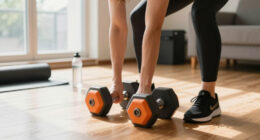

If you’re serious about lifting or running, using the right shoes makes a big difference. Weightlifting shoes have a firm, flat sole with an elevated heel to boost stability and power during heavy lifts, while running shoes offer cushioning and support for impact absorption. Wearing the correct footwear helps improve performance and reduces injury risks. Curious how to choose what’s best for your workouts? Keep exploring to discover more tips tailored to your needs.
Key Takeaways
- Weightlifting shoes offer stability and minimal cushioning, ideal for heavy lifts, while running shoes prioritize cushioning and shock absorption for running.
- Proper footwear with correct arch support and heel height enhances safety and performance during specific activities.
- Using the appropriate shoe type reduces injury risk and improves technique, making special lifting shoes necessary for weightlifting.
- Running shoes are unsuitable for heavy lifting due to their cushioning and lack of stability; lifting shoes are designed for that purpose.
- Choosing the right shoes tailored to each activity optimizes performance and prevents discomfort or injury.
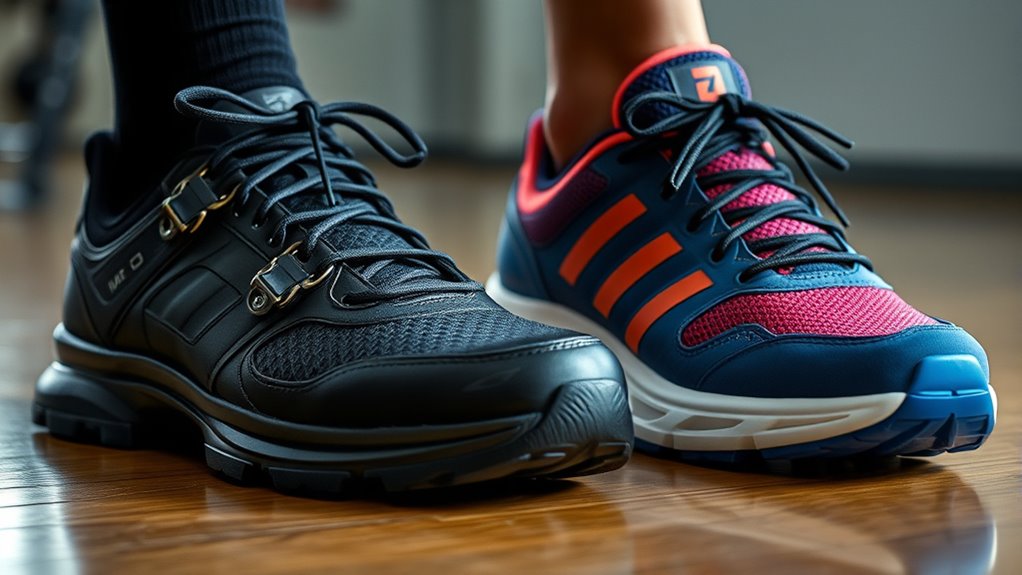
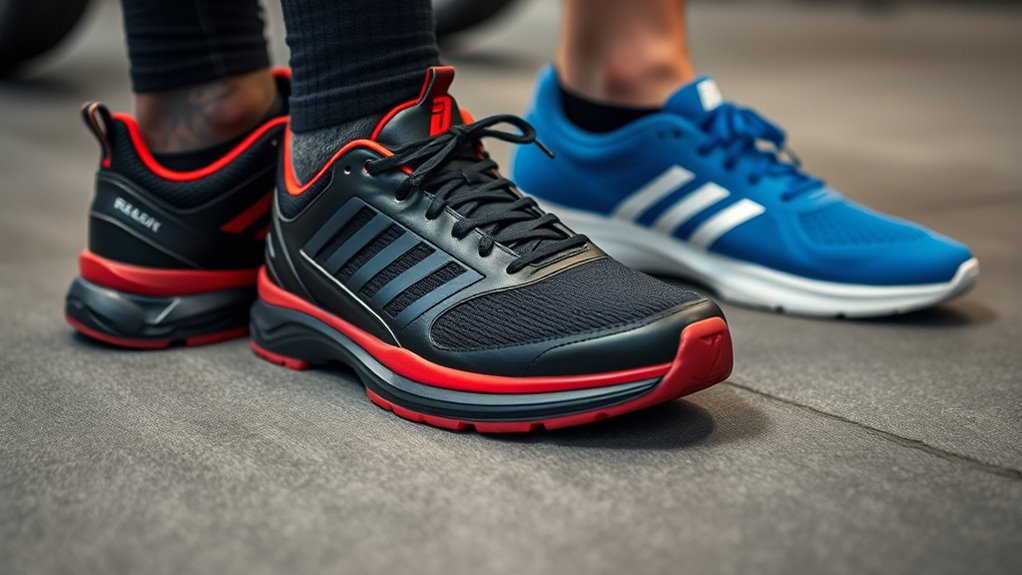
When it comes to choosing the right footwear for your fitness routine, understanding the differences between weightlifting shoes and running shoes is essential. Each type is designed with specific movements and support in mind, making it imperative to select the right pair to optimize performance and prevent injury. One of the key factors to consider is proper arch support. Weightlifting shoes typically have a firm, flat sole with minimal arch support, which stabilizes your foot during heavy lifts. This lack of arch support isn’t a flaw but a feature that encourages a more grounded stance, allowing you to generate maximum force during squats or deadlifts. Running shoes, on the other hand, usually have more cushioning and arch support to absorb impact when your foot strikes the ground repeatedly. If you use running shoes for lifting, you might find that the cushioning causes your foot to shift or become unstable under heavy loads, reducing your power and increasing injury risk.
Heel height is another critical aspect that differentiates these shoes. Weightlifting shoes often feature an elevated heel, sometimes as high as one to two inches, which helps you maintain an upright torso position during squats and other lifts. This heel height allows for a greater ankle dorsiflexion range, making it easier to descend deeper into your squat with proper form. Conversely, running shoes generally have a low heel-to-toe drop designed to promote a natural stride and efficient forward motion. If you wear running shoes for weightlifting, the low heel can limit your ankle mobility, making certain lifts more challenging and less safe. On the flip side, using weightlifting shoes for running isn’t advisable because the elevated heel can alter your gait, potentially causing discomfort or strain during your runs.
As an affiliate, we earn on qualifying purchases.
Frequently Asked Questions
Can Running Shoes Be Safely Used for Weightlifting?
Running shoes aren’t perfect for weightlifting because they lack the stability and firm sole needed for safe lifting. While they offer some cross-training benefits, their shoe durability isn’t designed for heavy loads or controlled movements. Using running shoes can compromise your form and increase injury risk. For ideal performance and safety, it’s better to invest in proper lifting shoes that provide a solid base and support during heavy lifts.
How Do Weightlifting Shoes Improve Squat Performance?
Think of weightlifting shoes like a sturdy foundation for a house; they markedly enhance your squat biomechanics. By providing firm sole stability and a slight heel lift, they help you maintain proper depth and alignment. This improved footwear stability allows you to generate more power, stay balanced, and prevent injuries. As a result, your squat performance improves because you can focus on form and strength, making each lift safer and more effective.
Are There Specific Brands Recommended for Lifting Shoes?
You should consider brands like Adidas, Nike, and Reebok for lifting shoes, as they’re known for quality and innovative shoe technology. These brands offer models with solid heel support, durable straps, and a stable base, helping you maintain proper form. When choosing, look for brand recommendations based on your specific needs, comfort, and budget. Investing in reputable brands guarantees you get reliable shoes that enhance your lifting performance.
Do Lifting Shoes Help Prevent Injuries During Lifts?
Imagine feeling solid and grounded during each lift, like your ankles are wrapped in unwavering support. Lifting shoes do help prevent injuries by providing superior ankle support and grip enhancement, reducing the risk of slips or instability. This stability allows you to focus on proper form, lowering strain on joints and muscles. With the right shoes, you build strength safely, empowering you to lift heavier and push your limits confidently.
Can I Wear Running Shoes for Deadlifts?
You can wear running shoes for deadlifts, but it’s not perfect. Running shoes often have softer soles and less stability, which can compromise your lift. Plus, their durability may wear out quickly with heavy lifting. Lifting shoes offer better grip and support, and their aesthetics are designed for performance. For safety and ideal results, investing in proper lifting shoes is a smarter choice for deadlifts.
As an affiliate, we earn on qualifying purchases.
Conclusion
Choosing the right shoes is like selecting the right foundation for a towering building—you need stability and support to reach new heights. Weightlifting shoes provide that solid ground, helping you push your limits safely. Running shoes, on the other hand, are like wings, designed for speed and flexibility. Know your goal, and pick your shoes wisely—because in the end, your footwear is the bridge between effort and achievement, guiding you toward your peak.
lifting shoes with elevated heel
As an affiliate, we earn on qualifying purchases.
As an affiliate, we earn on qualifying purchases.
cross-training shoes for weightlifting
As an affiliate, we earn on qualifying purchases.
As an affiliate, we earn on qualifying purchases.