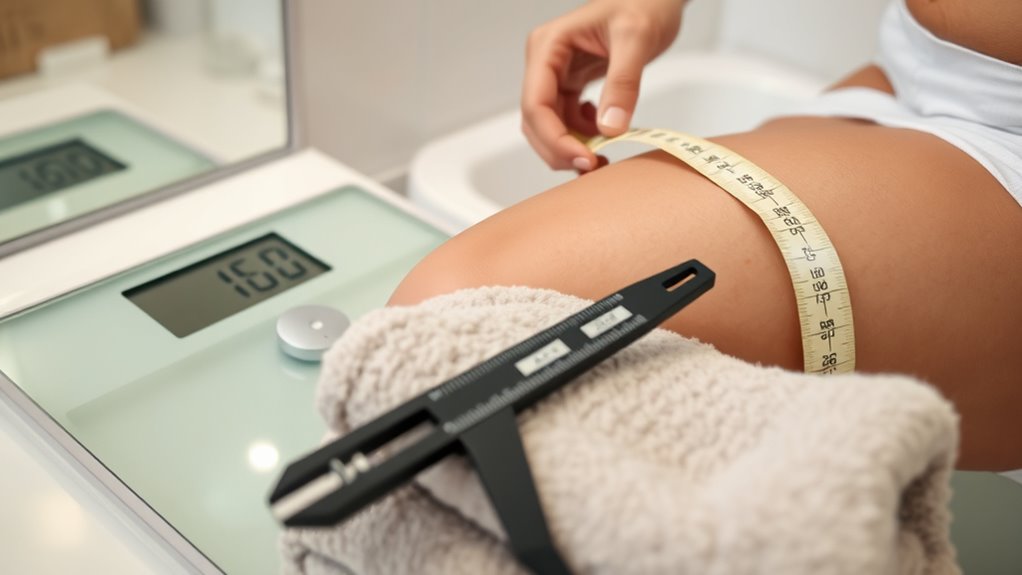

You can measure your body fat at home using bioelectrical impedance scales or skinfold calipers. Scales send a small electrical current through your body, estimating fat based on resistance, but hydration and time of day can affect accuracy. Calipers require pinching specific skin points and consistent technique for best results. Combining these methods with measurements like waist size or photos gives a clearer picture of your progress. Keep exploring for tips to improve your tracking accuracy.

Get workout gear delivered free — and shop member deals
- Fast, free delivery on millions of items
- Access to Prime Big Deal Days deals on October 6–7
- Prime Video, Amazon Music and more included
Key Takeaways
- Use bioelectrical impedance scales consistently at the same time daily for quick, non-invasive body fat estimates.
- Employ skinfold calipers with proper technique and consistent site measurement for more precise results.
- Combine multiple methods, like waist measurements or progress photos, to get a comprehensive view of body composition.
- Ensure proper hydration, fasting, and morning testing to improve the accuracy of home body fat measurements.
- Regularly track results over time with the same device or technique to monitor progress reliably.
Are you wondering how to track your body fat percentage without visiting a gym or clinic? Luckily, there are several effective methods you can try at home, with minimal equipment and fuss. One popular approach involves using bioelectrical impedance scales. These scales send a small, harmless electrical current through your body when you stand on them. Since muscle and water conduct electricity better than fat, the scale estimates your body fat percentage based on the resistance it encounters. While these scales are convenient and easy to use, keep in mind that factors like hydration levels, recent food intake, and time of day can influence the readings. For the most accurate results, use the scale consistently at the same time each day, preferably in the morning before eating or drinking.
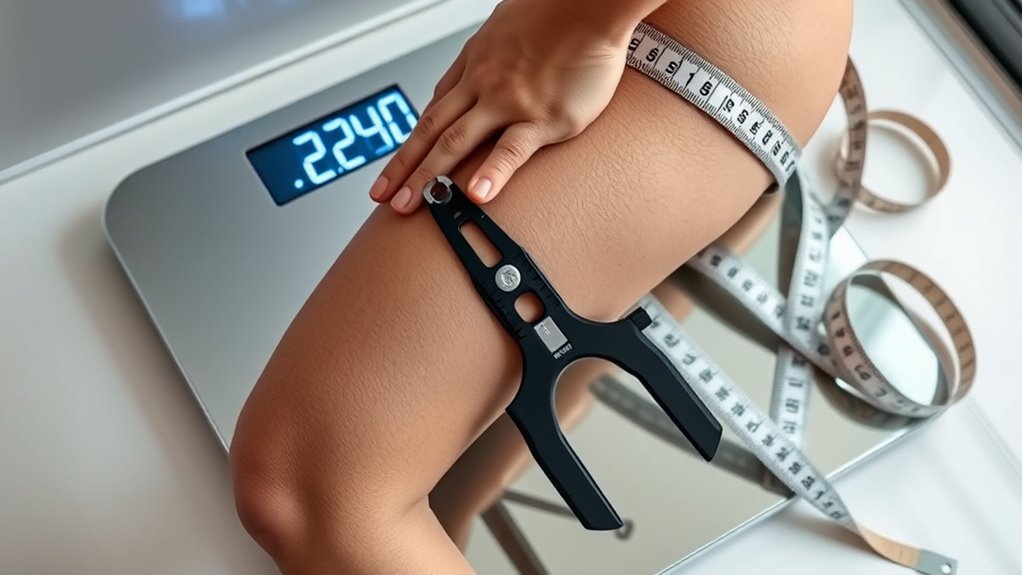
Another accessible method involves measuring skinfold thickness with calipers. This technique requires a bit more skill but offers a fairly precise estimate of body fat when done correctly. You pinch a fold of skin and underlying fat at specific sites on your body—common locations include the triceps, abdomen, and thigh—and use the calipers to measure the thickness of the fold in millimeters. These measurements are then plugged into formulas to calculate your body fat percentage. To get reliable results, you need to learn proper pinching technique, or even better, have someone assist you. Consistently measuring the same sites and applying the same pressure ensures your readings are comparable over time. Additionally, understanding body composition can help you interpret these measurements more effectively.
Both bioelectrical impedance devices and skinfold calipers give you a snapshot of your body composition, but they each have their limitations. Bioelectrical impedance scales are quick and non-invasive, making them great for regular tracking, but their accuracy can fluctuate. Skinfold measurements, on the other hand, can be very accurate if performed correctly but require some practice and consistency. Combining these methods with other indicators like waist circumference or progress photos can give you a more thorough view of your fitness journey.
Frequently Asked Questions
How Accurate Are Home Body Fat Measurement Methods?
Home body fat measurement methods can vary in accuracy. You might find scales and calipers helpful, but calibration challenges and user error often affect results. If you don’t follow instructions carefully or forget to calibrate regularly, your readings may be off. While these tools give a general idea of your body composition, for precise measurements, consider consulting professionals. Always verify proper technique to improve your measurement accuracy.
Can Body Fat Measurement Devices Be Reused Frequently?
Absolutely, you can reuse body fat measurement devices frequently, but don’t forget: calibration frequency influences device longevity. Think of your device as a trusted companion—regular calibration keeps it accurate and reliable, preventing it from losing its edge over time. By caring for your device and understanding its limits, you ensure consistent readings and a long lifespan, turning each measurement into a meaningful step toward your health goals.
What Are the Best Times of Day to Measure Body Fat?
You should measure your body fat in the morning, ideally before eating or drinking, to get the most consistent results. The time of day matters because fasting provides a baseline, reducing variability caused by recent meals. Avoid measurements post-meal, as digestion and water retention can skew readings. Consistently measuring at the same time of day helps track progress accurately over time.
How Do Hydration Levels Affect Body Fat Readings?
Like a delicate dance, your hydration levels sway fluid fluctuations, directly impacting your body fat readings. When you’re well-hydrated, your measurements might seem lighter, as water masks fat. Dehydration, however, can make you appear more fat-laden. The hydration impact is real—stay consistently hydrated for accurate, reliable readings. Don’t let fluid fluctuations cloud your progress; keep your water intake steady and your results true.
Are There Age-Specific Considerations for Measuring Body Fat?
Yes, age-specific considerations matter when measuring body fat. As you age, you experience developmental changes like muscle loss and increased fat, which can affect readings. These age-related changes mean your body composition differs from younger individuals, so use methods tailored for your age group. Keep in mind that consistent measurement techniques help track your progress accurately, considering these developmental considerations over time.
Conclusion
Measuring your body fat at home empowers you to take control, to track progress, and to stay motivated. It’s about more than numbers; it’s about your health, your confidence, your journey. Whether you use scales, calipers, or other methods, remember that consistency matters. Celebrate every small victory. Embrace every challenge. Keep pushing forward. Because your commitment to measuring, understanding, and improving yourself is the key to a healthier, stronger, more confident you.
Fall Picks
fall essentials
As an affiliate, we earn on qualifying purchases.