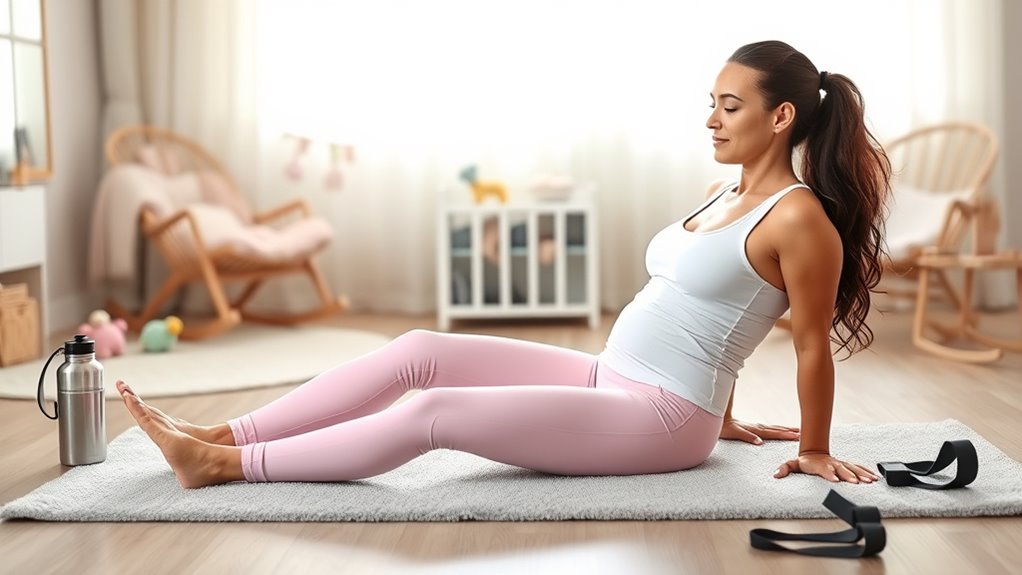

To safely get back in shape postpartum, focus on gentle, targeted exercises that strengthen your pelvic floor, like Kegels, and avoid intense core moves until you heal. Pay attention to diastasis recti by steering clear of sit-ups and instead practicing gentle core activation. Gradually reintroduce low-impact activities like walking and stretching as your body improves. If you keep building your foundation carefully, you’ll support your recovery and regain strength effectively. There’s more to learn to make this journey smooth and safe.
Key Takeaways
- Start with gentle pelvic floor exercises like Kegels early postpartum, with healthcare approval.
- Focus on core-rebuilding moves such as deep breathing and pelvic tilts, avoiding traditional crunches initially.
- Incorporate low-impact activities like walking and stretching gradually as strength improves.
- Prioritize listening to your body and consult healthcare providers if you experience discomfort or unusual symptoms.
- Be patient, give your body time to heal, and build a foundation of stability before progressing to more strenuous workouts.
Are you wondering when and how to safely resume fitness after childbirth? It’s normal to want to get back in shape, but your body needs time to heal. The first step is to focus on gentle, targeted exercises that support your recovery. Pelvic floor exercises, such as Kegels, are essential to rebuild strength in the muscles that support your bladder, uterus, and bowels. These exercises help prevent issues like incontinence and prolapse, making them a vital part of your postpartum routine. You can start doing pelvic floor exercises as soon as you feel comfortable, often within days after delivery, but always check with your healthcare provider before beginning. Incorporate these exercises gradually, aiming for multiple short sessions throughout the day, and focus on proper technique to maximize benefits.
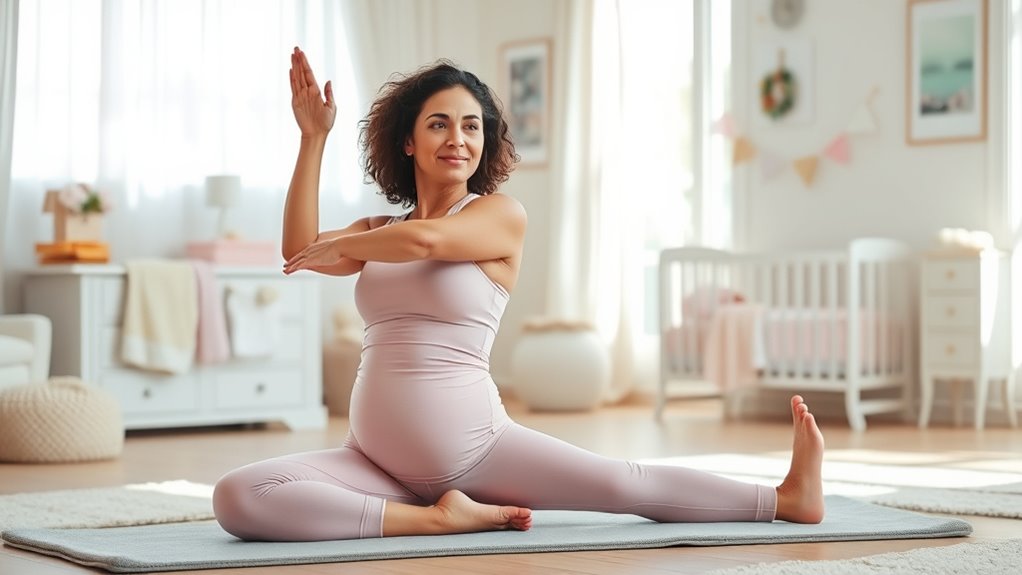
Another key aspect of postpartum recovery is addressing diastasis recti, a condition where the abdominal muscles separate during pregnancy. It’s common and can cause a bulge or weakness in your core. To support diastasis recti recovery, you need to avoid traditional crunches or sit-ups initially, as they can worsen the separation. Instead, focus on gentle core activation exercises that promote proper muscle engagement without putting strain on your abdominal muscles. Exercises like deep belly breathing, pelvic tilts, and transverse abdominis activation are safe starting points. These help to gradually rebuild core strength without risking further separation. Remember, healing takes time, and patience is key—listen to your body and don’t rush into intense workouts too soon. Proper recovery techniques are essential to prevent setbacks and ensure a healthy postpartum journey.
As you start feeling stronger, you can gradually reintroduce low-impact activities like walking or gentle stretching. Keep in mind that your body has undergone significant changes, so what worked pre-pregnancy might not be suitable now. Always prioritize listening to your body and consult your healthcare provider if you experience pain, discomfort, or unusual symptoms. It’s important to build a solid foundation of strength and stability before jumping into more strenuous exercises or weight training. Incorporating pelvic floor exercises and focusing on diastasis recti recovery early on will set the stage for a safer, more effective return to full fitness. This approach helps you regain confidence, reduces the risk of injury, and ensures your postpartum journey is healthy and sustainable. Remember, every woman’s recovery is unique, so give yourself grace and patience as you work towards your fitness goals.
Frequently Asked Questions
When Can I Start Running After Childbirth?
You can start running around six to eight weeks postpartum, but only if your pelvic health has improved and you experience no pain. Before hitting the pavement, focus on gentle breastfeeding exercises and pelvic floor strengthening. Listen to your body, and consult your healthcare provider to make sure you’re ready. Gradually reintroduce running, and prioritize pelvic stability to prevent injury and support your recovery.
Are There Specific Exercises for Diastasis Recti?
Think of your core as a fragile bridge needing gentle reinforcement. For diastasis recti, focus on core strengthening with gentle abdominal exercises that avoid straining your separation. Exercises like pelvic tilts, modified planks, and transverse abdominal contractions help close the gap safely. Always listen to your body, and consult a specialist to make sure these exercises support healing without risking further separation.
How Do I Stay Motivated During Postpartum Recovery?
To stay motivated during postpartum recovery, focus on self-care strategies that make you feel good and energized. Celebrate small victories and set achievable goals to keep your spirits high. Lean on your support systems—friends, family, or community groups—to stay accountable and motivated. Remember, progress takes time, so be patient and kind to yourself. Consistently remind yourself of your reasons for wanting to regain strength and health.
Can I Do Yoga if I Have Pelvic Floor Issues?
Yes, you can do yoga if you have pelvic floor issues, but focus on pelvic health first. Choose gentle poses that avoid putting pressure on your pelvic area, and always listen to your body. Make sure to incorporate exercise modifications, like avoiding deep twists or intense core work, to protect your pelvic floor. Consult with a healthcare professional or pelvic floor therapist to create a safe yoga routine tailored for your recovery.
What Are Signs I Should Stop Exercising Postpartum?
If you experience sharp pelvic floor pain, severe dizziness, or overwhelming fatigue, it’s time to stop exercising immediately. Excessive exercise intensity can strain your pelvic floor and delay recovery. Watch for persistent bleeding, unusual pain, or leakage during workouts. Trust your body—if it signals distress, pause and consult your healthcare provider. Prioritize gentle postpartum exercises to protect your pelvic floor and make certain of a safe, effective recovery.
Conclusion
Getting back in shape after childbirth takes time and patience. Trust your body’s signals and start slow, knowing that Rome wasn’t built in a day. With consistency and gentle effort, you’ll see progress without risking your health or your baby’s. Remember, every step forward counts, even if it feels small. Keep your eyes on the prize and stay motivated—you’re stronger than you think, and soon you’ll be back in your groove.