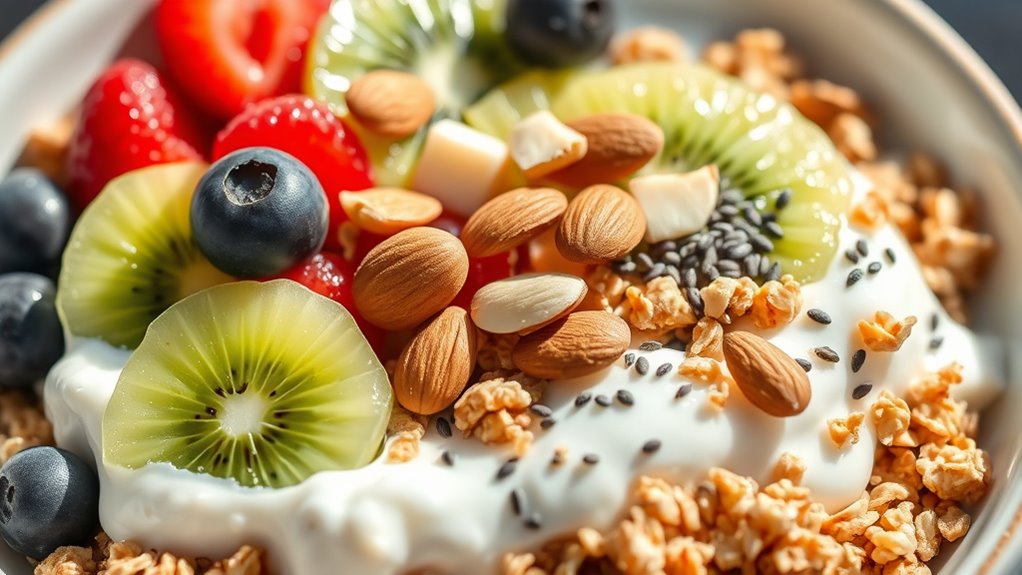

Fiber is a powerful tool for supporting weight loss and overall health. It slows digestion, keeps you feeling full longer, and reduces cravings. Fiber helps stabilize blood sugar, preventing energy crashes and unhealthy snacking. It also promotes healthy digestion and gut health, which are key to feeling well. Incorporating a variety of fiber-rich foods like fruits, vegetables, and whole grains makes it easier to stay motivated on your health journey. Keep going to discover more about harnessing fiber’s benefits.
Key Takeaways
- Fiber promotes satiety and fullness, reducing overall calorie intake for weight loss.
- It stabilizes blood sugar levels, supporting metabolic health and preventing cravings.
- Fiber enhances digestion and gut health by increasing intestinal motility and beneficial bacteria growth.
- Soluble fiber forms a gel-like substance that slows digestion and prolongs feelings of fullness.
- Incorporating fiber-rich foods supports overall wellness, including skin health and sustainable healthy habits.
fiber supplement for weight loss
As an affiliate, we earn on qualifying purchases.
As an affiliate, we earn on qualifying purchases.
Understanding Dietary Fiber and Its Types
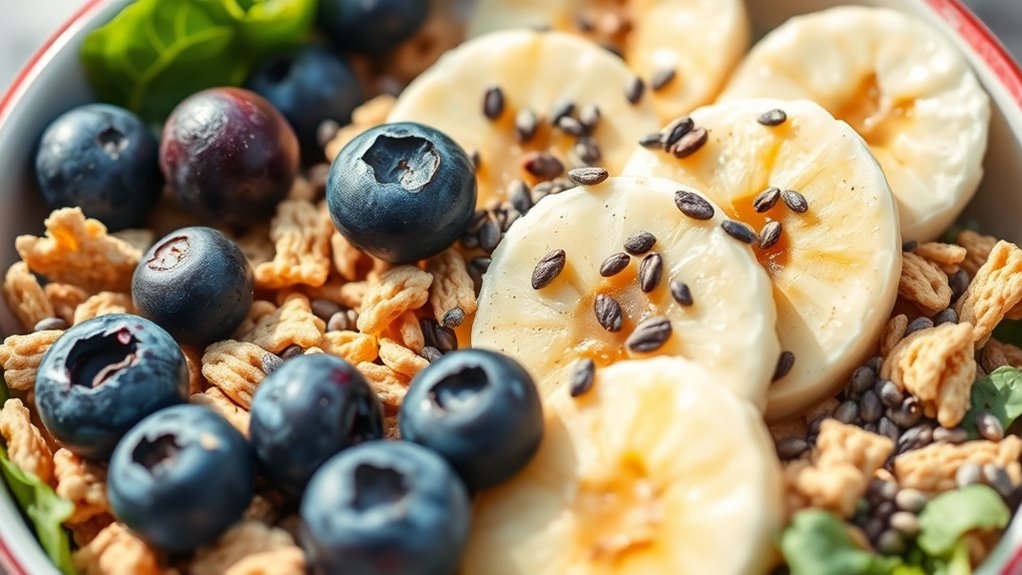
Dietary fiber is a type of carbohydrate found in plant foods that your body can’t digest or absorb. There are two main types: soluble fiber and insoluble fiber. Soluble fiber dissolves in water, forming a gel-like substance in your digestive system. It can help lower cholesterol levels and stabilize blood sugar. Insoluble fiber, on the other hand, doesn’t dissolve in water. It adds bulk to your stool, helping it move through your intestines more quickly. Both types are essential for overall health and support your weight loss efforts by promoting fullness and reducing overeating. You can find soluble fiber in oats, beans, and fruits, while insoluble fiber is abundant in whole grains, nuts, and vegetable skins. Understanding these types helps you make better dietary choices. Adding fiber to your diet can also improve your gut health and aid in nutrient absorption. Additionally, water interactions with fiber are crucial for its beneficial effects on digestion and satiety, and research shows that gut health plays a significant role in overall well-being and weight management.
soluble and insoluble fiber capsules
As an affiliate, we earn on qualifying purchases.
As an affiliate, we earn on qualifying purchases.
How Fiber Affects Digestion and Gut Health

Since fiber passes through your digestive system largely unchanged, it plays a crucial role in maintaining healthy digestion and gut function. It supports gut bacteria by providing fermentable material that promotes beneficial microbial growth. This, in turn, helps balance your gut microbiome, which is essential for overall health. Additionally, fiber increases intestinal motility, making it easier for waste to move through your digestive tract. This helps prevent constipation and promotes regular bowel movements. Soluble fiber forms a gel-like substance that softens stool, while insoluble fiber adds bulk, stimulating the intestines. Incorporating a variety of fiber sources is important for gut microbiome diversity, which is vital for a resilient and healthy digestive system. Consuming fiber-rich foods also promotes digestive enzyme activity, aiding nutrient absorption and overall gut health. Moreover, the presence of fiber can influence peristalsis, the wave-like muscle contractions that propel food through your digestive system.
high fiber dietary supplement
As an affiliate, we earn on qualifying purchases.
As an affiliate, we earn on qualifying purchases.
The Role of Fiber in Weight Management
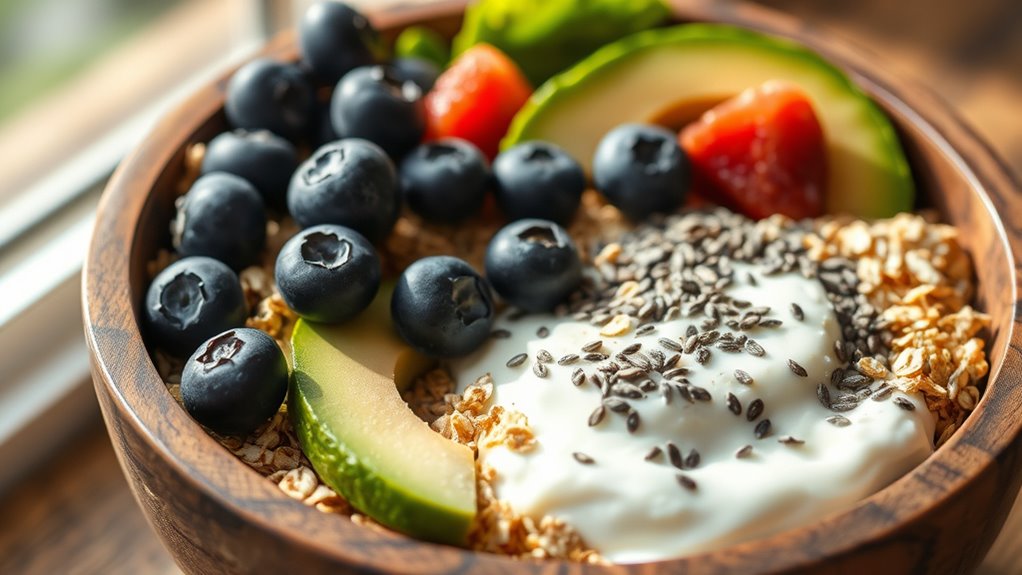
Fiber plays a key role in weight management by helping you feel fuller for longer, which can reduce overall calorie intake. This is because fiber’s role in slowing digestion allows you to stay satisfied between meals, preventing overeating. High-fiber foods tend to be less energy-dense, meaning you get more volume with fewer calories, supporting weight control. Additionally, fiber helps stabilize your appetite, making it easier to stick to healthy eating habits. Incorporating fiber-rich foods like fruits, vegetables, whole grains, and legumes into your diet can assist you in maintaining a healthy weight. By promoting satiety and reducing cravings, fiber becomes an essential tool in your weight management strategy. Its natural properties support sustained weight control without the need for extreme restrictions.
fiber powder for digestion
As an affiliate, we earn on qualifying purchases.
As an affiliate, we earn on qualifying purchases.
Fiber’s Impact on Blood Sugar Control

Fiber helps regulate blood sugar levels by slowing the absorption of sugar into your bloodstream. This moderation reduces the glycemic response after meals, preventing sharp blood sugar spikes. When your blood sugar stays stable, your body doesn’t need to produce large amounts of insulin, supporting better insulin sensitivity over time. Soluble fiber, in particular, forms a gel-like substance that delays digestion and sugar absorption. As a result, you experience more consistent energy levels and fewer cravings. Maintaining steady blood sugar is essential for managing diabetes risk and promoting overall health. By incorporating fiber-rich foods into your diet, you help your body better control blood sugar fluctuations, ultimately supporting weight loss and long-term metabolic health.
Incorporating Fiber-Rich Foods Into Your Diet
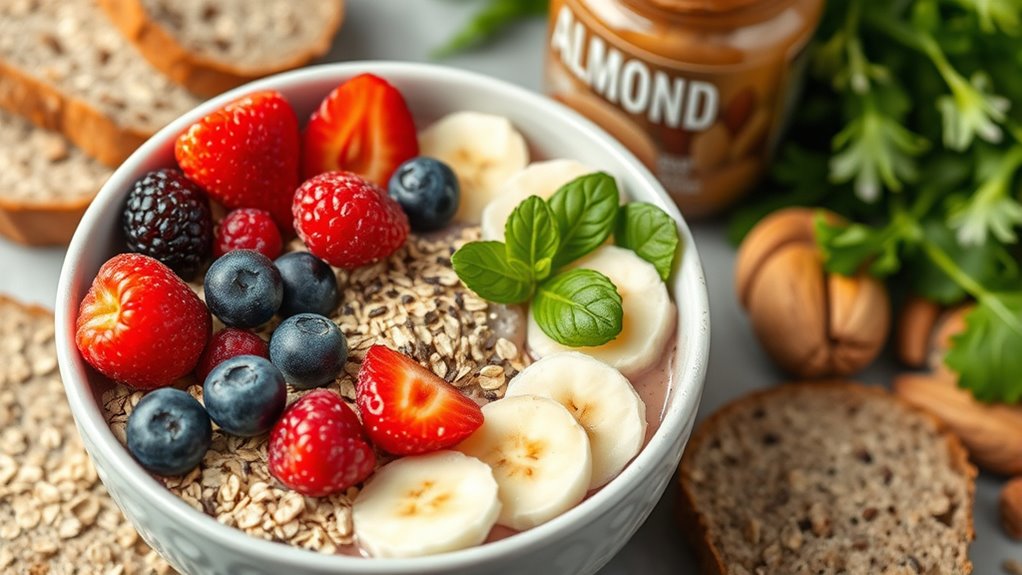
Adding fiber-rich foods to your meals is easier than you think, with options like oats, beans, and fruits readily available. You can also get creative by mixing seeds into yogurt or adding vegetables to your favorite dishes. These simple ideas make it effortless to boost your fiber intake and support your weight loss goals. Incorporating fiber-rich foods into your diet can also help you improve your digestion and overall health. Incorporating bicycle maintenance into your routine can help you keep your bike in top shape for outdoor activities that promote a healthy lifestyle. Regular vehicle tuning can also enhance your car’s performance, ensuring a smooth and efficient ride during your active pursuits. Additionally, participating in hackathons can foster innovative thinking and collaborative problem-solving that benefits various aspects of health and wellness initiatives.
Easy Fiber Sources
Incorporating fiber-rich foods into your diet doesn’t have to be complicated. You can easily boost your intake with simple, everyday options. Whole grains like oats and brown rice, fruits such as apples and berries, vegetables like carrots and broccoli, beans, and nuts are all great sources. While fiber supplements exist, they shouldn’t replace natural sources, as they often lead to fiber myths about quick fixes. Relying solely on supplements can cause digestive discomfort and miss out on other nutrients. Incorporating these foods gradually to avoid bloating and ensure your body adapts is also beneficial, especially since digestive health methods can help create a more balanced and organized approach to your meals. Additionally, understanding how fiber supports weight loss can motivate you to include more of these foods regularly. Emphasizing meal planning can help you consistently incorporate fiber-rich options into your daily routine, making healthy eating more manageable and sustainable. Remember, the key is consistency, not perfection. Making small, sustainable changes helps you enjoy the benefits of fiber without feeling overwhelmed.
Creative Meal Ideas
Looking for ways to enjoy fiber-rich foods without feeling like you’re stuck in a dietary rut? Get creative by adding fiber supplementation to smoothies or yogurt for a quick boost. Incorporate high-fiber vegetables like kale, broccoli, or carrots into stir-fries and salads to diversify your meals. Swap out refined grains for whole grains such as oats, quinoa, and barley to increase fiber intake effortlessly. Remember, fiber works best when paired with adequate hydration, so drink plenty of water throughout the day. You can also experiment with fiber-rich beans and lentils in soups and wraps for added variety. These ideas help you enjoy the benefits of fiber without sacrificing taste, making your meals both nourishing and exciting. Additionally, choosing sulfate-free shampoos can help maintain your highlighted hair’s vibrancy and health while supporting your overall wellness. Incorporating fiber-rich ingredients like collagen and hyaluronic acid into skincare routines can further enhance skin hydration and appearance. Moreover, integrating fiber into payment solutions can streamline your dietary shopping experience, making healthy eating more convenient.
The Connection Between Fiber and Satiety
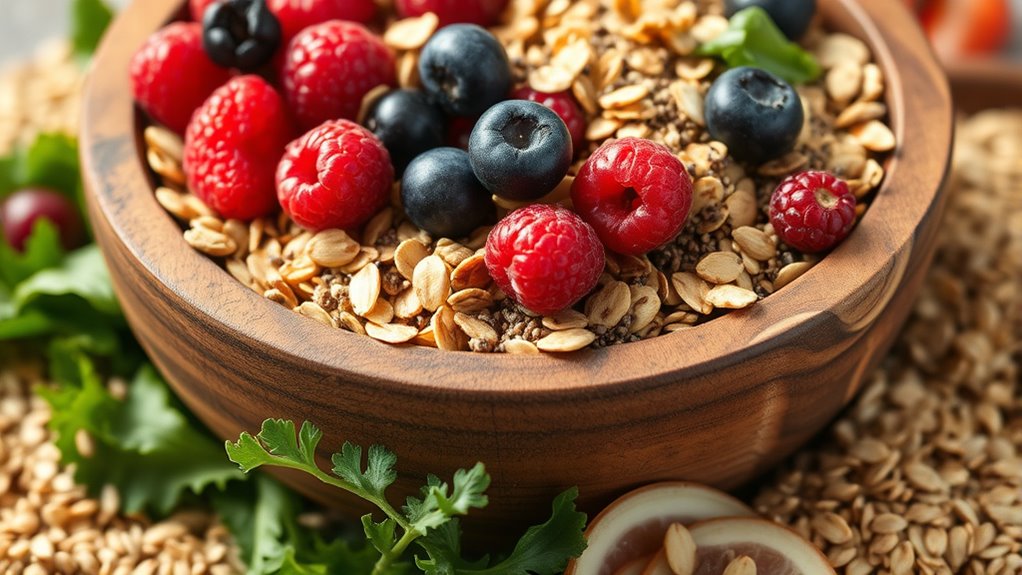
Fiber helps control your appetite by making you feel full longer. It slows down your digestion, so you stay satisfied between meals. Naturally, this reduces your urge to overeat and supports your weight loss goals.
Fiber’s Impact on Appetite
Have you ever wondered why fiber helps curb hunger? It’s because fiber appetite plays a key role in hunger suppression. When you eat fiber-rich foods, they add bulk to your stomach, signaling fullness and reducing the urge to snack. This makes it easier to stick to your calorie goals. Plus, fiber slows down digestion slightly, helping you feel satisfied longer. Here are some ways fiber impacts your appetite:
- Increases feelings of fullness after meals
- Controls portion sizes naturally
- Stabilizes blood sugar levels to prevent crashes
- Reduces cravings for sugary or processed foods
- Promotes consistent energy levels throughout the day
- Incorporating a shower can boost your overall wellness and support your health goals.
Slows Digestion Process
When fiber adds bulk to your meals, it doesn’t just make you feel full—it also influences how quickly your body processes food. Fiber slows digestion by forming a gel-like substance that delays gastric emptying. This extended digestion is partly due to fiber fermentation in your gut, which produces short-chain fatty acids that support intestinal motility. As a result, nutrients are absorbed more gradually, helping you stay satisfied longer. This process stabilizes blood sugar levels and reduces cravings. The slower digestion also gives your body more time to signal fullness, aiding in weight management.
| Effect | Explanation |
|---|---|
| Fiber fermentation | Produces fatty acids that enhance motility |
| Slower gastric emptying | Extends digestion, prolonging satiety |
| Improved intestinal motility | Supports steady nutrient absorption |
Promotes Fullness Naturally
Because fiber adds bulk to your meals, it naturally enhances feelings of fullness without adding extra calories. This makes it easier to control your appetite and eat less overall. Fiber-rich foods, or even fiber supplements, can help you stay satisfied longer and prevent overeating. Some people turn to appetite suppressants or fiber supplements to boost fullness, especially when trying to lose weight. Incorporating high-fiber foods like fruits, vegetables, and whole grains can be a simple way to keep hunger at bay. Plus, fiber slows digestion, helping you feel full longer. Whether through diet or supplements, fiber is a powerful tool for naturally promoting satiety and supporting your health goals.
Common Sources of Dietary Fiber
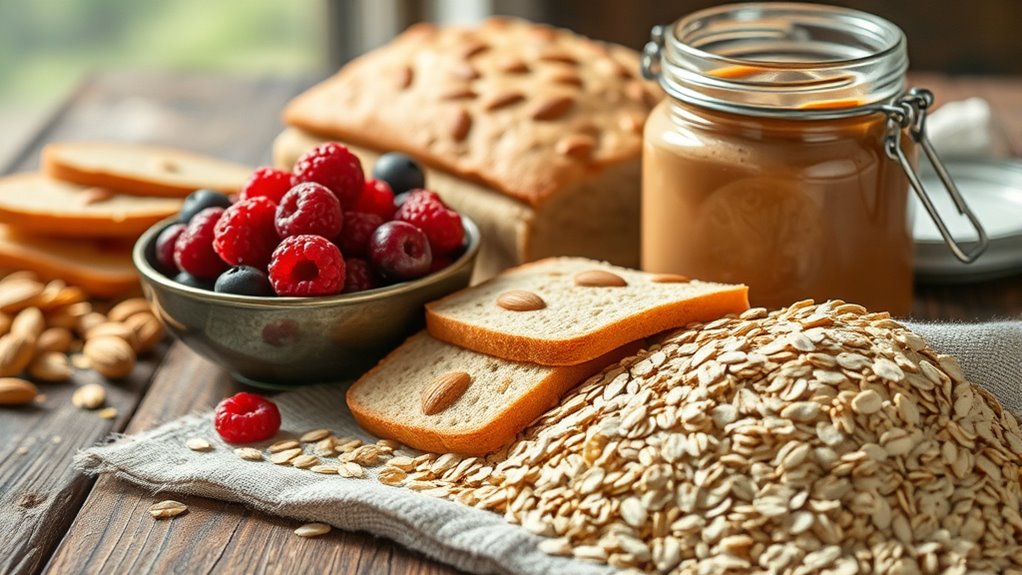
Many foods naturally pack a punch of dietary fiber, making it easy to incorporate into your daily meals. Fruits and vegetables are excellent sources, providing not only fiber but essential vitamins and minerals. Berries, apples, carrots, and leafy greens are simple additions to snacks or salads. Whole grains are another rich source—think oats, brown rice, quinoa, and whole wheat bread. These foods deliver soluble and insoluble fiber, supporting digestion and fullness. Legumes like beans, lentils, and chickpeas also boost your fiber intake while adding protein. Incorporating a variety of these options ensures you get a mix of fiber types, supporting your weight loss and overall health. Making these foods a regular part of your diet helps you reap the full benefits of dietary fiber.
Tips for Increasing Your Daily Fiber Intake
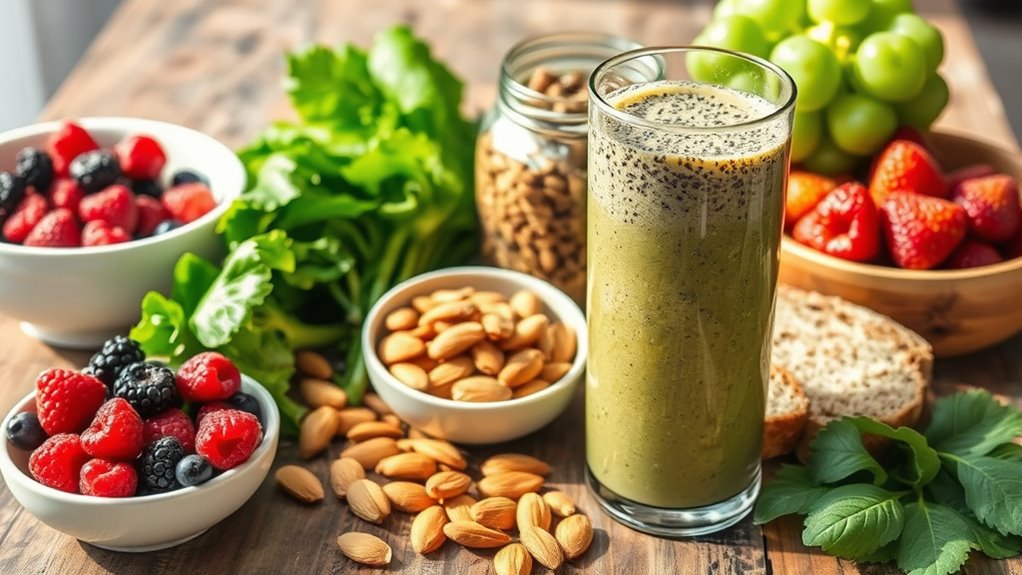
Boosting your daily fiber intake is easier than you might think by making simple adjustments to your meals and snacks. Start by adding fiber-rich foods like whole grains, fruits, and vegetables to every meal. You can also incorporate fiber supplements if you’re struggling to meet your goals, but remember that they shouldn’t replace whole foods. Be mindful of fiber myths—more isn’t always better, so increase gradually to avoid digestive discomfort. To make it enjoyable, try these tips:
Boost your fiber intake gradually with tasty whole foods and smart swaps for better health.
- Swap white bread for whole-grain options
- Snack on nuts, seeds, or berries
- Mix chia or flaxseed into yogurt or smoothies
- Choose high-fiber cereals or oatmeal
- Incorporate beans or lentils into salads and soups
Small changes can considerably boost your fiber intake and support your health.
Potential Risks of Excessive Fiber Consumption

While increasing your fiber intake offers numerous health benefits, consuming too much can lead to adverse effects. Fiber overconsumption, especially from fiber supplements, can cause bloating, gas, and stomach discomfort. In some cases, excessive fiber intake may interfere with mineral absorption, leading to deficiencies in calcium, iron, and magnesium. Too much fiber can also cause constipation or, conversely, diarrhea, disrupting your digestive balance. If you suddenly increase your fiber intake without enough fluids, you risk blockages or impaction. It’s important to moderate your fiber consumption and avoid relying solely on supplements for fiber, as overuse can harm your digestion. Always balance fiber intake with hydration and a varied diet to prevent these potential risks.
Frequently Asked Questions
Can Fiber Supplements Replace Natural Fiber Sources Effectively?
Fiber supplements can effectively replace natural fiber sources, but they might not offer all benefits. Natural fibers undergo fermentation in your gut, promoting healthy gut bacteria and better supplement absorption. Supplements provide convenience and consistent intake, but they may lack the diverse nutrients found in whole foods. For ideal health, combine fiber supplements with natural sources to maximize fiber fermentation benefits and support your digestion and overall wellness.
Does Fiber Intake Affect Cholesterol Levels Besides Blood Sugar?
Who knew fiber’s secret weapon isn’t just blood sugar control? It also boosts heart health by lowering bad cholesterol, ironically making your arteries happier. Plus, fiber fuels gut bacteria, creating a healthier gut environment that supports overall wellness. So, yes, fiber intake directly influences cholesterol levels and heart health, proving that adding more fiber isn’t just about digestion—it’s a smart move for your entire cardiovascular system.
Are There Specific Fibers Better for Weight Loss?
Certain fiber types, like soluble fiber from oats, beans, and fruits, are better for weight loss because they promote satiety and slow digestion. Incorporate dietary sources rich in soluble fiber to help control appetite and reduce calorie intake. Insoluble fiber from whole grains and vegetables also aids digestion, but soluble fiber more effectively supports weight management. Mix these fiber types for ideal weight loss benefits and overall health.
How Does Fiber Influence Nutrient Absorption?
Fiber influences nutrient absorption by slowing down fiber digestion, which guarantees your body more time to extract nutrients from food. It also enhances nutrient bioavailability by forming a gel-like substance that traps minerals and vitamins, making them easier for your intestines to absorb. This process supports overall health and ensures you get the most benefit from your meals, boosting energy and maintaining proper nutrition.
Can High Fiber Intake Cause Digestive Discomfort?
Yes, high fiber intake can cause digestive discomfort if you have digestive sensitivities or fiber intolerance. You might experience bloating, gas, or cramping as your body adjusts. To avoid this, increase fiber gradually and stay well-hydrated. If symptoms persist, consider consulting a healthcare professional to determine if you have fiber intolerance and to develop a suitable diet plan.
Conclusion
Think of fiber as a trusted guide on your health journey, gently steering you toward better digestion, weight management, and blood sugar control. Just like planting seeds today can grow into a thriving garden tomorrow, adding fiber-rich foods now can lead to a healthier, more vibrant you. Remember, small changes—like swapping out processed snacks for fruits and veggies—can make a big difference in reaching your wellness goals. Start today, and watch your health flourish.