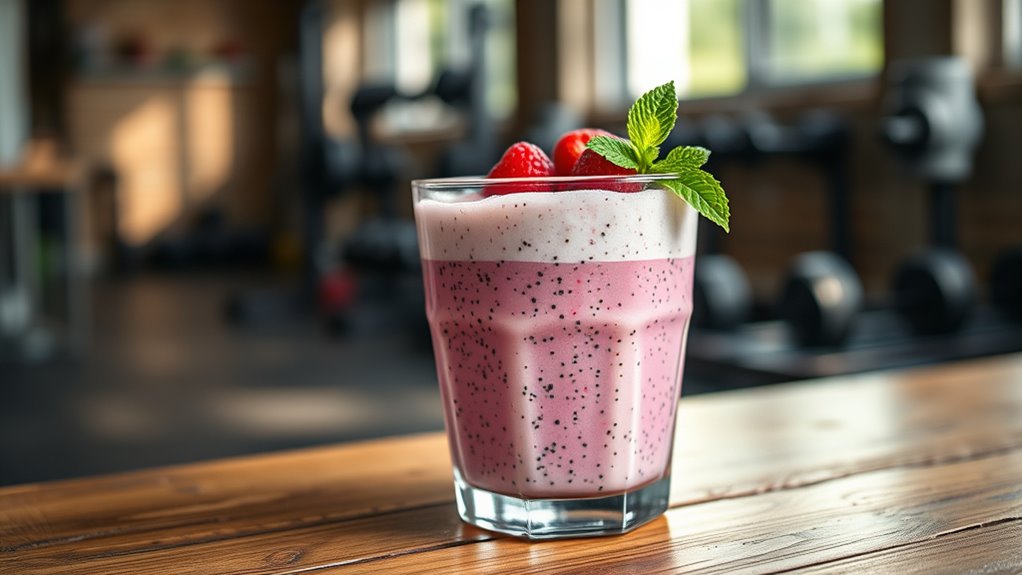

You don’t need to consume protein immediately after your workout, as your overall daily intake is more important for muscle recovery and growth. While a protein-rich shake shortly after exercising can help kickstart repair, it’s not strictly necessary if you plan to eat more soon after. Focus on maintaining consistent protein consumption throughout the day. If you want to know how to optimize your post-exercise nutrition for better results, keep exploring this topic.
Key Takeaways
- Immediate protein intake after exercise is not strictly necessary; overall daily protein is more important for muscle repair.
- Consuming protein shortly post-workout can support recovery, especially if fasting beforehand.
- Including carbs with protein in a shake enhances glycogen replenishment and muscle synthesis.
- The post-workout window extends several hours; timing is flexible based on your schedule.
- Prioritize consistent daily protein and carbohydrate intake over exact post-exercise timing for optimal results.

After a tough workout, your body needs nutrients to recover and rebuild muscle. This is when post-workout shakes come into play, but understanding whether you need protein immediately after exercise depends on a few key factors. One of the most important concepts is protein timing, which refers to when you consume protein to maximize muscle repair and growth. While some believe there’s a strict “anabolic window” right after training, recent research suggests that the timing isn’t as critical as once thought—what matters most is your overall daily protein intake. Still, having a source of protein shortly after your workout can help jump-start muscle recovery, especially if you haven’t eaten for a while before exercising. Additionally, the total amount of protein you consume throughout the day is more impactful than precise timing, emphasizing the importance of consistent intake to support your fitness goals.
Post-workout nutrition is about overall daily intake, not just immediate protein timing.
Carbohydrate intake is equally essential in your post-workout nutrition. When you exercise intensely, your glycogen stores get depleted, and replenishing them quickly can improve recovery and prepare you for your next session. Combining carbohydrates with protein in your post-workout shake can be highly effective. Consuming carbs alongside protein not only helps restore glycogen but also enhances protein synthesis, the process your body uses to build muscle. A good rule of thumb is to aim for a ratio of about 3:1 or 4:1 carbs to protein, which can be achieved with ingredients like fruit, honey, or oats mixed with protein powder.
Timing your intake of carbs and protein can influence how efficiently your body recovers. While the so-called “post-workout window” may be longer than once believed—up to several hours—having your shake within 30 to 60 minutes after training can still be beneficial, especially if you’re aiming for ideal recovery. If you’re not hungry right away or prefer to eat a larger meal later, it’s okay to delay your shake, but try to include a balanced mix of carbs and protein in your next meal.
Ultimately, consistency over time matters more than perfectly timing your post-workout nutrition. Prioritize getting enough protein throughout the day to support muscle repair, and don’t forget to replenish your carbs to restore energy stores. A well-rounded post-workout shake that combines the right amount of protein and carbohydrate intake can make a significant difference in your recovery process, helping you bounce back faster and perform better in your next workout. Remember, the key isn’t just the immediate post-exercise window but maintaining a balanced diet that supports your fitness goals long-term.
Top picks for "post workout shak"
Open Amazon search results for this keyword.
As an affiliate, we earn on qualifying purchases.
Frequently Asked Questions
Can I Skip Protein if I Eat a Balanced Meal Later?
Yes, you can skip protein right after exercise if you plan to have a balanced meal later. Meal timing isn’t strict; what matters most is your overall dietary balance throughout the day. Focus on consuming enough protein within your meals, so your muscles recover and grow. As long as your later meal includes quality protein, missing a post-workout shake isn’t a big deal. Just make certain your daily intake meets your needs.
Are Plant-Based Proteins Just as Effective as Animal-Based Ones?
Think of plant-based proteins as resilient trees and animal-based proteins as mighty oaks. Both can stand strong, but they offer different benefits. Plant-based benefits include fiber and antioxidants, while animal-based differences highlight complete amino acids. You can achieve your fitness goals with either, but choosing depends on your dietary preferences. Both options are effective, so select what aligns best with your lifestyle and nutritional needs.
How Much Protein Do I Need Immediately After Exercising?
You should aim for about 10-20 grams of protein immediately after exercising to support ideal protein absorption and muscle synthesis. This amount helps kick-start recovery without overwhelming your system. If your workout was intense or lasted longer, consider slightly increasing your intake. Consuming protein promptly ensures your muscles get the nutrients they need to repair and grow, maximizing your workout results and speeding up recovery.
Does Timing of Protein Intake Affect Muscle Recovery?
Timing of protein intake can influence muscle synthesis, but it’s not the only factor. You benefit from consuming protein within a window around your workout, as nutrient timing helps optimize recovery. However, what’s most important is your overall daily protein intake. If you focus on consistent, adequate protein consumption, your muscles will recover and grow effectively, regardless of whether you hit that perfect window immediately post-exercise.
Can I Get Enough Protein From Whole Foods Without Shakes?
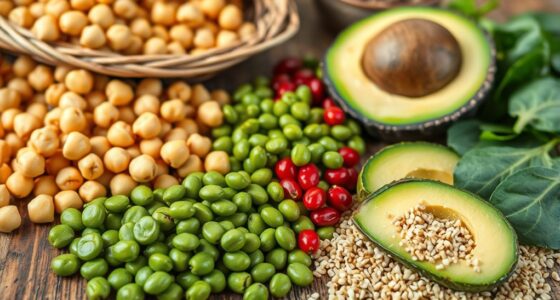
In a world where a knight’s feast could fuel any hero, you can definitely get enough protein from whole foods without shakes. Focus on diverse protein sources like lean meats, eggs, dairy, beans, and nuts. These foods provide all essential amino acids needed for muscle repair and recovery. So, yes, you don’t need shakes if you incorporate a variety of whole foods into your diet; they’re just a convenient option.
Conclusion
In summary, while having a protein shake after your workout can aid muscle recovery, it’s not an absolute must for everyone. Studies show that consuming protein within two hours of exercise can boost muscle synthesis by up to 24%. So, if you enjoy your post-workout shake, go for it—it’s a tasty way to support your goals. But remember, overall daily protein intake matters most, so find what works best for you and stay consistent.