
Sodium, or salt, is essential for your workout because it helps maintain fluid balance, supports muscle contractions, and prevents dehydration and cramps. When you sweat, you lose sodium, which can lead to fatigue and decreased performance if not replenished. Proper sodium intake keeps your electrolytes balanced, ensuring your muscles work efficiently and you stay hydrated. Knowing how sodium impacts your exercise can help you optimize your performance—keep going to discover more.
Key Takeaways
- Sodium maintains electrolyte balance, preventing muscle cramps and fatigue during exercise.
- It supports hydration by regulating fluid levels inside and outside cells.
- Adequate sodium intake enhances muscle function and nervous system responsiveness.
- Replenishing sodium lost through sweat helps prevent dehydration and hyponatremia.
- Timing sodium consumption around workouts optimizes performance and accelerates recovery.
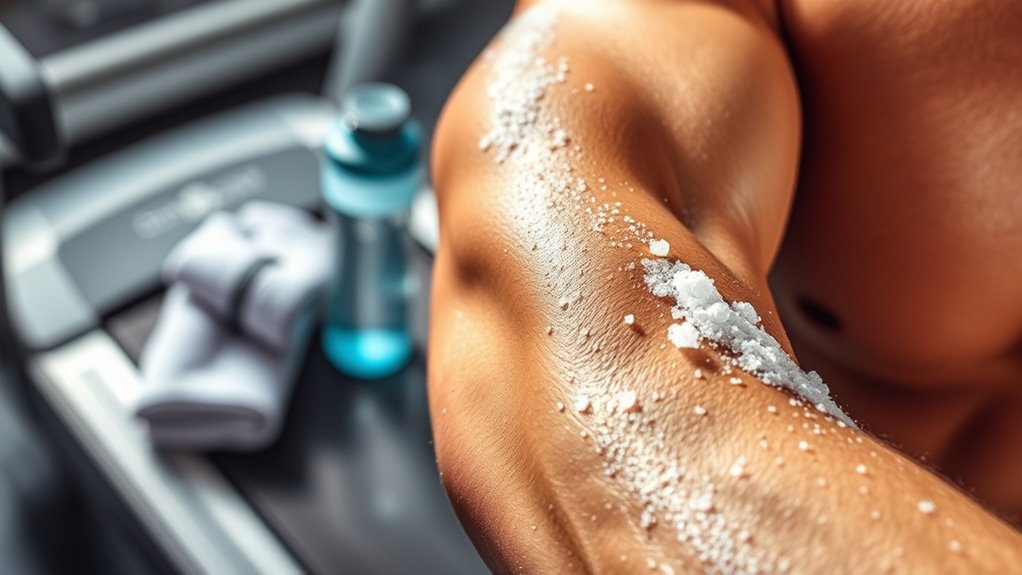
Salt and sodium play a essential role in your workout performance, especially when it comes to maintaining hydration and preventing cramping. These minerals are fundamental components of electrolyte balance, which is critical for your muscles to function properly and for your body to stay hydrated during physical activity. When you exercise, you lose electrolytes through sweat, and if these aren’t replenished, your performance can decline, and you might experience issues like muscle cramps or fatigue. That’s why understanding hydration strategies that incorporate sodium intake is key to enhancing your workouts.
Maintaining proper electrolyte balance ensures your muscles contract efficiently and your nervous system stays responsive. Sodium helps regulate fluid levels both inside and outside your cells, supporting blood volume and blood pressure. Without enough sodium, your body struggles to retain water, leading to dehydration even if you’re drinking fluids. Conversely, consuming too much sodium can cause water retention and high blood pressure, so finding the right balance is essential. During extended or intense workouts, especially in hot conditions, your electrolyte levels can dip quickly, making it important to include sodium-rich foods or drinks in your hydration strategies.
Proper electrolyte balance supports muscle function and prevents dehydration during intense workouts.
Your hydration strategies should consider your sweat rate, workout duration, and environmental conditions. If you sweat heavily, plain water might not suffice because it dilutes sodium levels in your body, potentially leading to hyponatremia — a dangerous condition marked by low sodium levels. Incorporating sports drinks containing electrolytes, including sodium, can help replenish lost minerals efficiently. Eating snacks like salted nuts, cheese, or pickles before or after exercise can also support electrolyte balance naturally. The goal is to replace what you lose without overdoing it, so pay attention to how much you sweat and adjust your intake accordingly.
Timing matters too. Drinking fluids with sodium before, during, and after your workout enhances hydration strategies by maintaining electrolyte levels and preventing dehydration. Consuming small amounts of sodium at regular intervals can help sustain your energy and muscle function throughout your workout. Remember, your body adapts to your activity level and environment, so listen to how you feel and adjust your sodium intake accordingly. Proper hydration with balanced electrolytes lets you perform at your best, recover faster, and reduce the risk of cramps and fatigue. Ultimately, understanding the role of sodium in your hydration strategies empowers you to take control of your workout performance and maintain optimal electrolyte balance.
electrolyte sports drinks with sodium
As an affiliate, we earn on qualifying purchases.
As an affiliate, we earn on qualifying purchases.
Frequently Asked Questions
How Does Salt Intake Affect Muscle Recovery?
Salt intake helps your muscle recovery by maintaining electrolyte balance, which is essential for proper muscle function. When you consume enough sodium, it supports effective hydration strategies, preventing cramps and fatigue after workouts. You should monitor your salt intake to make certain your body stays balanced, especially during intense exercise or hot weather. Proper electrolyte levels boost recovery, helping you bounce back faster and perform better in your next workout.
Can Salt Help Prevent Dehydration During Intense Exercise?
Yes, salt can help prevent dehydration during intense exercise by maintaining your electrolyte balance. When you sweat, you lose sodium, which is essential for hydration. Incorporate salt into your hydration strategies, like sports drinks or snacks, to replenish lost electrolytes. This helps your body absorb water more efficiently, keeps you hydrated longer, and reduces the risk of cramps or fatigue during demanding workouts.
What Are Signs of Sodium Deficiency During Workouts?
You might notice muscle cramps, dizziness, or a pounding headache—that’s your body signaling electrolyte imbalance and shifting hydration status. These signs appear when sodium levels dip too low, disrupting your electrolyte balance and causing dehydration. Ignoring these cues can turn your workout into a sinking ship. Keep an eye out for these warning signs, and replenish your sodium to maintain ideal hydration and keep your performance steady and strong.
Is There an Ideal Salt Consumption Level for Athletes?
You should aim for about 1.2 to 2.0 grams of sodium daily, depending on your activity level, to maintain electrolyte balance. Incorporate dietary sources like salt, seaweed, and processed foods to meet these needs. During intense workouts or prolonged exercise, consider additional sodium to replace losses through sweat. Listening to your body’s signals and consulting a sports nutritionist can help you determine the ideal salt intake for your specific training.
How Does Sodium Influence Endurance Performance?
Imagine sodium as a loyal compass guiding your endurance journey. It keeps your electrolyte balance steady and prevents dehydration from draining your energy. When you maintain proper hydration strategies, sodium helps your muscles fire smoothly and your stamina stays strong. Without it, your performance can stumble like a boat without a rudder. Prioritizing sodium guarantees your body stays fueled, sharp, and ready to conquer long-distance challenges.
salted nuts for workout hydration
As an affiliate, we earn on qualifying purchases.
As an affiliate, we earn on qualifying purchases.
Conclusion
So, next time you reach for that salty snack before a workout, remember—your muscles actually crave sodium to perform their best. Ironically, what’s often seen as the villain may be your secret weapon for stamina and recovery. Too little salt, and you might find yourself drained and sluggish. It’s funny how something so simple can make such a big difference. Embrace the salt, and watch your workouts reach new heights—who knew?
sodium tablets for athletes
As an affiliate, we earn on qualifying purchases.
As an affiliate, we earn on qualifying purchases.
replenishment electrolyte powders
As an affiliate, we earn on qualifying purchases.
As an affiliate, we earn on qualifying purchases.