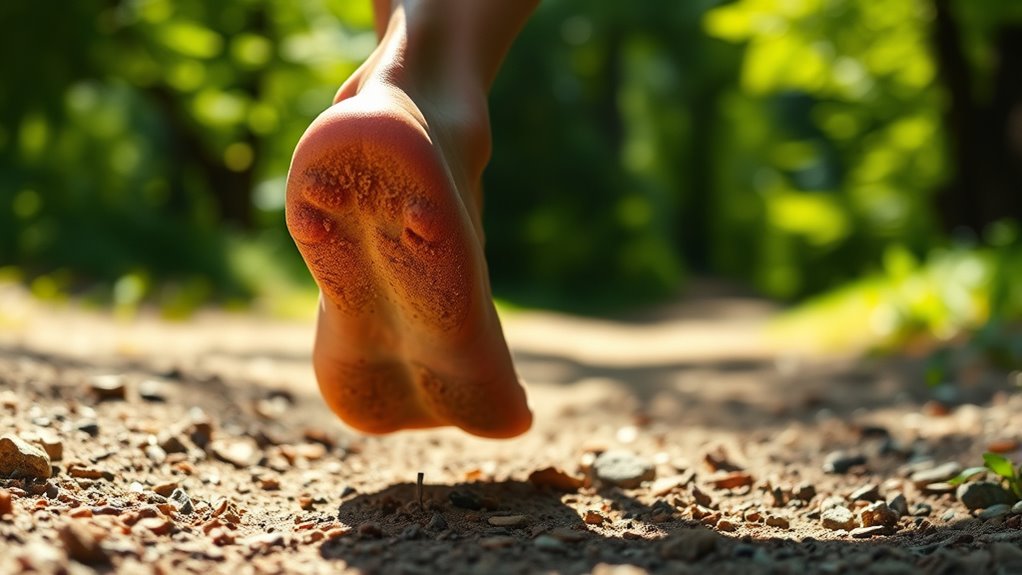
Running barefoot encourages a natural gait, often shifting your strike to the forefoot or midfoot, which can boost efficiency and lessen some impact injuries. It also enhances ground feel and proprioception, helping you avoid obstacles and improve foot strength over time. However, it increases the workload on your feet and requires gradual adaptation to prevent overuse injuries. If you want to understand how to switch safely and maximize benefits, you’ll find helpful insights ahead.
Key Takeaways
- Barefoot running promotes a natural forefoot or midfoot strike, improving gait and reducing impact on joints.
- It strengthens foot muscles and arches but may cause discomfort if the foot isn’t conditioned properly.
- Benefits include enhanced proprioception and ground feel, aiding better foot placement and injury prevention.
- Risks involve overuse injuries like plantar fasciitis and potential stress fractures if transitioned too quickly.
- Transitioning should be gradual, with expert guidance to match individual foot structure and needs.
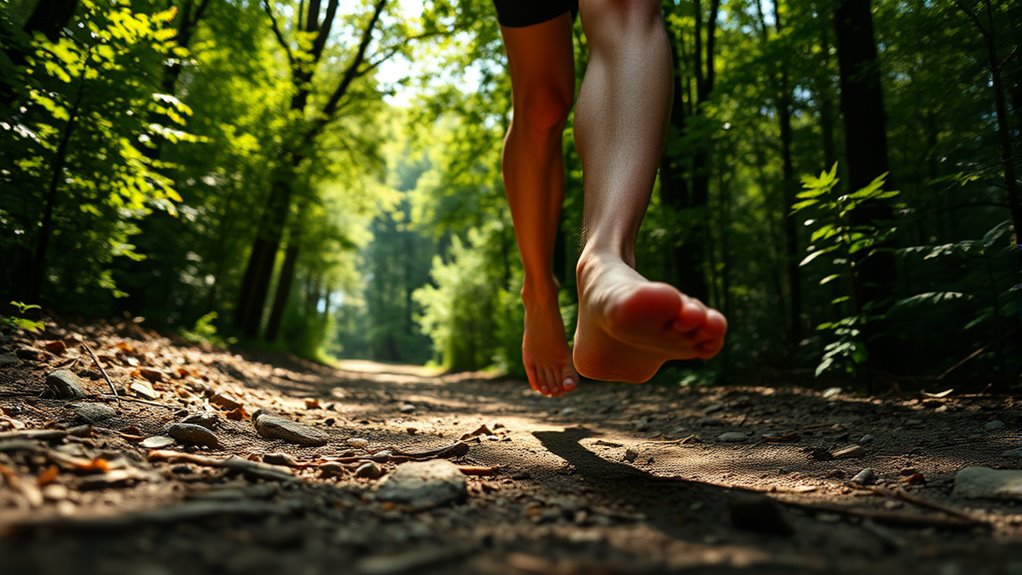
Have you ever wondered if running without shoes could improve your performance and reduce injury? The idea of barefoot running has gained popularity, but it’s essential to understand how it influences your foot strike and arch support. When you run barefoot, your foot naturally shifts to a forefoot or midfoot strike, rather than the heel strike common with traditional shod running. This change can lead to a more efficient stride, as it promotes better shock absorption and can decrease the impact forces on your joints. However, it also means your feet are doing more work, relying heavily on your muscles, tendons, and ligaments rather than external cushioning. Without the padding of shoes, your foot’s natural arch becomes more engaged, which can help strengthen the muscles that support it. Over time, this may improve arch stability and reduce issues related to flat feet or overpronation. But, it’s essential to recognize that not everyone’s feet are suited for this shift, and the lack of arch support in barefoot running can initially cause discomfort or stress if your feet aren’t conditioned.
One of the main benefits of barefoot running is the potential for better proprioception. Without shoes, your feet can better feel the ground beneath you, helping you adjust your stride more efficiently and avoid uneven surfaces or obstacles. This heightened awareness can lead to a more balanced gait and, potentially, fewer injuries caused by improper foot placement. Plus, by naturally adjusting your foot strike, you might reduce the repetitive stress that heel striking can cause, such as shin splints or stress fractures. On the other hand, the absence of arch support means your feet must work harder to stabilize themselves, which can be problematic for people with pre-existing foot conditions or weak intrinsic foot muscles. Transitioning too quickly can lead to overuse injuries, like plantar fasciitis or metatarsal stress fractures, especially if your arches aren’t strong enough to handle the increased workload. Incorporating sound science into your training approach can help you understand how external stimuli influence your biomechanics and health.
While barefoot running might seem simple and beneficial, it’s not a one-size-fits-all solution. Your foot strike pattern and arch support needs are deeply personal, and what works for one person might not work for another. If you’re considering making the switch, it’s wise to start gradually, allowing your feet to adapt by running on soft surfaces and building strength over time. Consulting with a specialist or physical therapist can help you assess your foot health and develop a safe transition plan. Ultimately, barefoot running can enhance your natural gait and reduce some injuries, but it demands proper preparation and awareness of your individual biomechanics.
Frequently Asked Questions
How Does Barefoot Running Affect Foot Arch Development?
Barefoot running can strengthen your foot arch by encouraging natural movement and muscle engagement. As you run without shoes, your foot muscles work harder to maintain stability, promoting arch support development over time. This process may improve foot arch strength, but it also requires gradual adaptation to prevent strain. With consistent barefoot running, your arches can become more resilient, enhancing overall foot health and reducing reliance on external arch support.
Are There Specific Injuries Linked to Barefoot Running?
Yes, barefoot running can lead to injuries like stress fractures, Achilles tendinitis, and plantar fasciitis if you’re not careful. Your foot strike patterns may shift, increasing strain on certain areas. While barefoot running can strengthen your arches through arch strengthening, improper technique or overuse can cause issues. To avoid injuries, shift gradually, pay attention to your foot strike, and focus on proper form to benefit from arch development safely.
Can Barefoot Running Improve Overall Running Efficiency?
Imagine revealing a secret to smoother runs—barefoot running can enhance your efficiency by promoting a natural foot strike and increasing running cadence. Without shoes, your body adapts, encouraging a lighter step and better shock absorption. This often leads to improved form and quicker response times. As your foot muscles strengthen and your stride becomes more economical, you’ll likely notice a more effortless, energy-efficient running style.
What Are the Best Surfaces for Barefoot Running?
You should stick to smooth, natural surfaces like grass, sandy beaches, and packed dirt for barefoot running, as they offer minimal impact and reduce injury risk. Avoid rough terrain, sharp rocks, or asphalt, which can cause cuts or stress on your feet. Incorporate terrain variety gradually, and consider footwear alternatives like minimalist shoes if you need extra protection. This approach helps you enjoy barefoot running safely while maximizing its benefits.
How Should Beginners Transition to Barefoot Running Safely?
To shift safely into barefoot running, start gradually by incorporating proper footwear that mimics barefoot feel, like minimalist shoes. Focus on maintaining good running form—landing softly on your midfoot and keeping your stride light. Increase your barefoot running time slowly, listening to your body, and avoid hard surfaces initially. This approach helps prevent injury and builds strength, ensuring a smoother transition into barefoot running.
Conclusion
As you explore barefoot running, you might find yourself unexpectedly reconnecting with your surroundings, noticing every texture and sound beneath your feet. Sometimes, the simple act of going without shoes reveals more than just physical benefits—it uncovers a deeper awareness of your body and environment. In embracing this practice, you may realize that sometimes, the best discoveries happen when you least expect them, reminding you that the journey is as important as the destination.