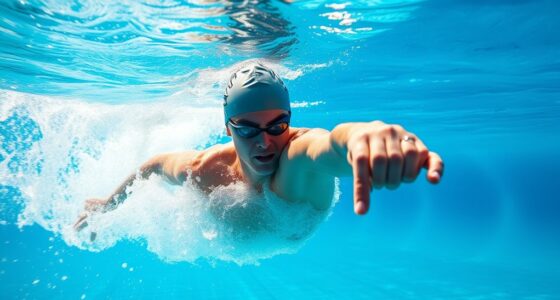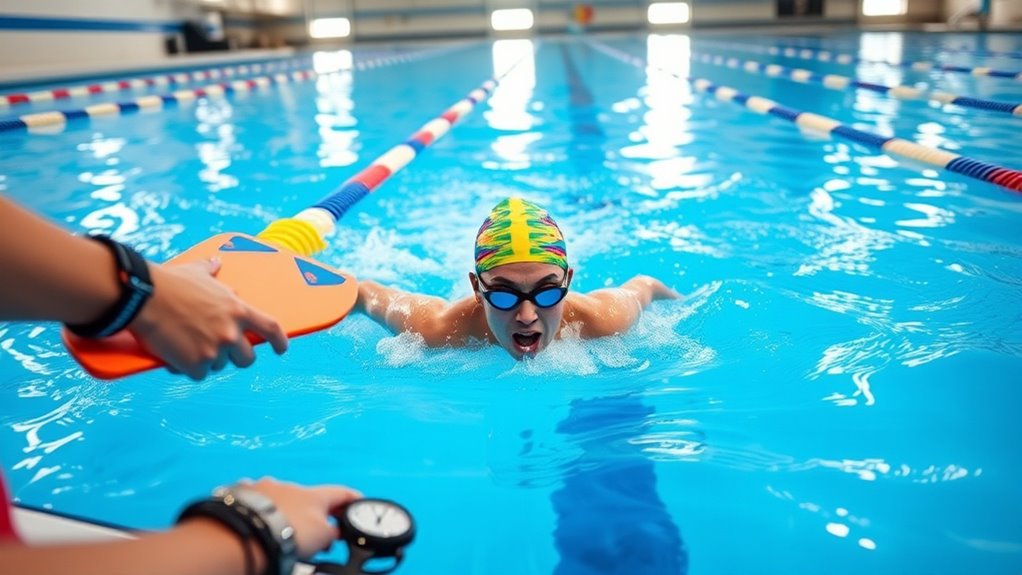

To build endurance in breaststroke as a beginner, focus on consistent, manageable sessions that emphasize proper technique. Start with 15-20 minute swims, resting briefly between sets, and gradually increase the duration each week. Incorporate drills to master arm pulls, kicks, and breathing, while keeping safety in mind. Stay patient and persistent, and you’ll find yourself swimming longer and more comfortably over time. Keep exploring for more tips to accelerate your progress.

Get workout gear delivered free — and shop member deals
- Fast, free delivery on millions of items
- Access to Prime Big Deal Days deals on October 6–7
- Prime Video, Amazon Music and more included
Key Takeaways
- Start with 15-20 minute sessions focusing on steady pace and consistent technique to gradually build endurance.
- Incorporate interval training, alternating swimming and rest periods, to improve stamina safely.
- Use drills like kick sets and pull buoy exercises to strengthen muscles and enhance overall endurance.
- Gradually increase session duration and intensity each week, listening to your body to prevent overtraining.
- Practice open water safety skills alongside swimming routines to ensure confidence and safety during outdoor endurance swims.

Starting a swim workout as a beginner can feel overwhelming, but with simple, structured routines, you’ll build confidence and improve your skills quickly. One of the best ways to boost your endurance is to focus on mastering foundational strokes like breaststroke techniques. Breaststroke is often recommended for beginners because it’s slower and more controlled, allowing you to focus on breathing, timing, and glide efficiency. Proper technique not only helps you conserve energy but also minimizes fatigue, which is essential when aiming to increase endurance. As you practice, pay attention to your arm pull, kick, and breathing rhythm. Streamlining your body and maintaining a steady pace will help you swim longer without feeling exhausted too quickly. Incorporate drills that focus on each element separately to build muscle memory, then combine them smoothly. This approach ensures you develop a solid, sustainable technique that supports endurance over time. Developing a good breaststroke technique early on will also improve your efficiency and reduce the risk of injury during training. Building endurance isn’t just about swimming longer distances; it’s also about understanding open water safety if you plan to swim outdoors. Open water swimming introduces different challenges—currents, waves, and limited visibility—so safety should always come first. Before venturing into open water, make sure you’re comfortable with basic swimming skills and confident in your ability to tread water and perform safe exits. Always swim with a buddy or in designated areas supervised by lifeguards. Familiarize yourself with open water safety protocols, such as spotting hazards, understanding water temperature, and using safety equipment like a swim buoy. Practice sighting techniques to keep track of your position, and learn how to handle unexpected situations like cramps or sudden fatigue. Developing these safety skills alongside endurance training ensures you’re prepared for outdoor swims and can enjoy the experience without unnecessary risks. To gradually increase endurance, start with short, manageable sessions, like 15-20 minutes, focusing on consistent pacing rather than speed. Incorporate rest intervals to recover briefly between sets, then gradually reduce those breaks as your stamina improves. Mix in different drills—such as kick sets or pull buoy exercises—to strengthen various muscle groups and prevent boredom. As your confidence grows, extend your swimming sessions by a few minutes each week, always listening to your body. Remember, consistency is key; regular workouts will help you see progress faster and keep you motivated. Combining a focus on proper breaststroke techniques with an understanding of open water safety will give you a strong foundation to build endurance safely and effectively. With patience and persistence, you’ll find yourself swimming longer distances with ease and enjoying every moment in the water.
As an affiliate, we earn on qualifying purchases.
Frequently Asked Questions
How Often Should Beginners Swim to See Progress?
You should aim to swim at least 3 to 4 times a week to see steady progress. Consistent training frequency helps build endurance faster, so try to stick to this schedule. Remember to track your progress regularly—note your swim times and how you feel during workouts. This way, you can adjust your routines as needed and stay motivated on your journey to becoming a stronger swimmer.
What Equipment Is Essential for Beginner Swim Workouts?
For beginner swim workouts, you need essential swimming gear like goggles, a well-fitting swim cap, and a comfortable swimsuit to guarantee water safety. These items help you see clearly, protect your hair, and stay comfortable during your swim. Prioritize water safety by choosing gear that fits well and keeps you confident. Having the right equipment makes your workouts more enjoyable, safer, and more effective as you build endurance.
How Can I Prevent Injuries During Swim Training?
To prevent injuries during swim training, focus on injury prevention and swim safety by warming up properly and stretching before each session. Listen to your body and avoid pushing through pain, which can cause strains or overuse injuries. Keep good technique, stay within your skill level, and rest adequately between workouts. Wearing appropriate gear and staying hydrated also help minimize the risk of injuries, ensuring you enjoy safe, effective swim workouts.
Should Beginners Focus on Technique or Endurance First?
Imagine your strokes as delicate brushstrokes on water’s canvas—you should prioritize technique mastery first. Focusing on proper form creates a strong foundation, making endurance building easier and more effective later. When your techniques are precise, you conserve energy and reduce injury risk. So, dedicate your early swim sessions to refining your technique, then gradually increase your endurance. This balanced approach guarantees steady progress and a safer, more enjoyable swimming journey.
How Do I Stay Motivated to Swim Regularly?
To stay motivated to swim regularly, use mental strategies like visualizing your progress and celebrating small wins. Set clear, achievable goals to keep yourself focused and driven. Remind yourself of the benefits, such as improved endurance and health, which can boost your enthusiasm. Keep your routine enjoyable by varying workouts, and consider swimming with a buddy for accountability. These approaches make it easier to stay committed and motivated over time.
As an affiliate, we earn on qualifying purchases.
Conclusion
As you immerse yourself in these beginner swim routines, think of each session as planting seeds in a vast, shimmering pond. With patience and consistency, your endurance will grow like ripples spreading outward, transforming your beginner strokes into steady, confident strokes across the water. Remember, every lap is a brushstroke painting a stronger, more resilient swimmer in the canvas of your journey. Keep moving forward—soon, you’ll glide effortlessly, turning your swimming goals into a beautiful, flowing current.
As an affiliate, we earn on qualifying purchases.
As an affiliate, we earn on qualifying purchases.
Fall Picks
fall essentials
As an affiliate, we earn on qualifying purchases.