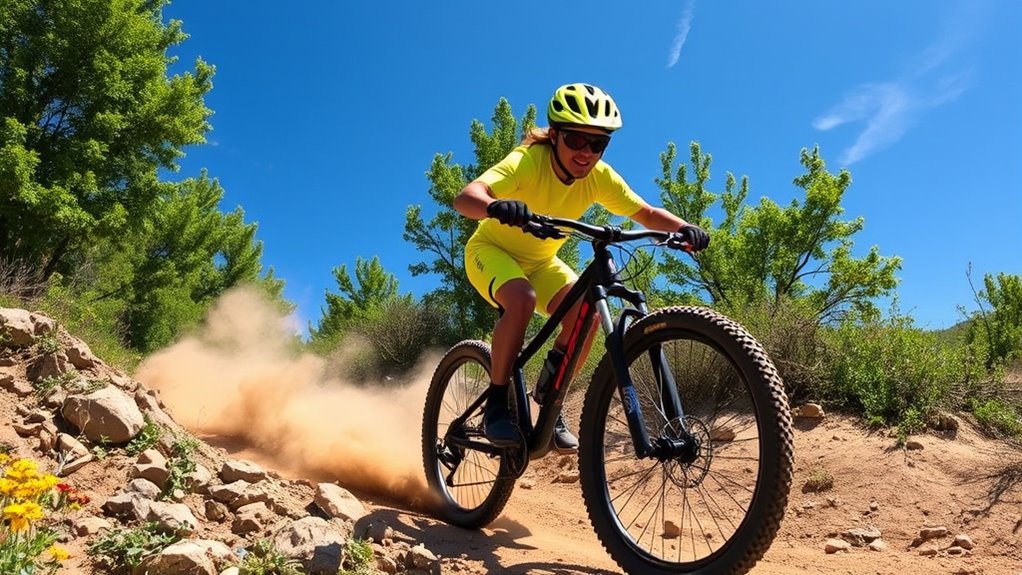

To start mountain biking on rugged trails, first see to it your bike is well-maintained—check tire pressure, lubricate the chain, and test brakes. Stay on designated paths to protect the environment and yield to others. Use proper techniques like wide turns and controlled braking to stay safe. Practice trail etiquette by being courteous and signaling your presence. If you want to become more confident and conserve your equipment, keep exploring these essential tips to enhance your ride.
Key Takeaways
- Start with a well-maintained bike, checking tire pressure, brakes, and gears before each ride.
- Practice proper trail etiquette, including yielding and riding responsibly to preserve trail conditions.
- Learn to control your speed around corners and blind spots for safety on uneven terrain.
- Use appropriate gear such as helmets, gloves, and protective clothing for off-road riding.
- Gradually build skills by choosing beginner-friendly trails and practicing basic techniques like balance and braking.

If you’re new to mountain biking, starting can feel overwhelming, but with the right approach, it’s an exciting adventure. One of the first things to focus on is understanding the importance of bike maintenance. Keeping your bike in good shape ensures safe riding and helps prevent breakdowns on the trail. Regularly check your tires for proper inflation and tread wear, as under-inflated tires can cause flats or make handling more difficult. Make sure your brakes are functioning smoothly; squeaky or unresponsive brakes should be addressed immediately. Lubricate your chain frequently to keep it running quietly and efficiently, and inspect your gears to ensure smooth shifting. Learning basic bike maintenance might seem intimidating at first, but it builds confidence and saves you money in the long run. Carrying a small repair kit on your rides, including a pump, spare tube, and multi-tool, is also a smart move, so you’re prepared for minor repairs. Proper bike maintenance not only ensures safety but also enhances your overall riding experience.
As you gain confidence, it’s equally important to adopt good trail etiquette. Respect the environment by staying on designated trails and avoiding shortcuts that can damage vegetation and disturb wildlife. Yield to other trail users—step aside when bikers, hikers, or horses approach—and communicate clearly, whether by ringing a bell or calling out. Keep your speed in check, especially around blind corners or when approaching other riders, to avoid accidents. Trash belongs in bins, so pack out all your waste, including energy wrappers or water bottles. Being courteous and considerate helps keep trails open and enjoyable for everyone.
Getting the basics right early on sets a strong foundation for your mountain biking journey. Proper bike maintenance minimizes mechanical issues and extends the life of your bike, while practicing trail etiquette preserves the natural beauty of your riding environment and fosters a respectful riding community. As you become more familiar with your bike and the trails, you’ll find it easier to handle different terrains and navigate technical sections. Remember, mountain biking is as much about respecting nature and fellow riders as it is about mastering your skills. With patience, attention to detail, and a responsible attitude, you’ll enjoy every ride while keeping yourself safe and protecting the trails you love. Soon enough, mountain biking will become a rewarding pursuit that challenges and excites you—just keep learning and practicing along the way.
Frequently Asked Questions
What Is the Best Mountain Bike Brand for Beginners?
If you’re starting out, consider brands like Trek or Specialized, which offer great beginner mountain bikes. Look for a bike with a sturdy frame that suits your size and riding style. Suspension features are key; a front suspension fork helps absorb shocks on rough trails, making your ride smoother and more comfortable. These brands provide reliable options with user-friendly designs, helping you build confidence on off-road adventures.
How Do I Choose the Right Mountain Biking Trail?
A journey of a thousand miles begins with a single step, so choose your trail wisely. Start by evaluating trail difficulty to match your skill level, and look for trail features that excite you, like rocks, roots, or climbs. Read trail reviews or maps beforehand. Stick to beginner-friendly trails until you’re comfortable, then gradually explore more challenging paths. Always ride within your limits and enjoy the ride!
What Safety Gear Should I Wear for Off-Road Cycling?
You should wear protective clothing like a helmet, gloves, knee and elbow pads, and sturdy shoes to stay safe off-road. Don’t forget to stay hydrated by following hydration tips, such as drinking water regularly during your ride. This gear helps prevent injuries and keeps you comfortable, so you’re ready to tackle new trails confidently. Always check your equipment before heading out to guarantee everything fits properly and is in good condition.
How Can I Improve My Mountain Biking Stamina?
Think of your stamina like a muscle that needs regular workouts. You can boost it through interval training, alternating intense pedaling with recovery periods. Pair this with solid nutrition strategies, like proper hydration and balanced carbs, to fuel your rides. Consistently pushing your limits while listening to your body will gradually increase endurance, making each trail feel like a walk in the park. Keep riding and fueling smartly to see steady progress!
Are There Beginner-Friendly Mountain Biking Events or Groups?
Yes, you can find beginner-friendly mountain biking events and groups in your area. Check out local biking clubs, which often organize rides suitable for newcomers. These clubs provide a welcoming environment where you can learn from experienced riders and build confidence. Look for beginner-friendly events or group rides that focus on skill-building and fun. Joining these groups not only helps improve your skills but also makes mountain biking more enjoyable and social.
Conclusion
Now you’re ready to conquer the trails—just remember, falling isn’t failure, it’s just your bike’s way of giving you a hug. Embrace the mud, the rocks, and those questionable snack stops; they’re all part of the adventure. With a little practice (and a lot of patience), you’ll soon be carving through dirt like a pro—until next time, when you’ll realize you actually know nothing. Happy riding, and don’t forget to enjoy the glorious chaos!