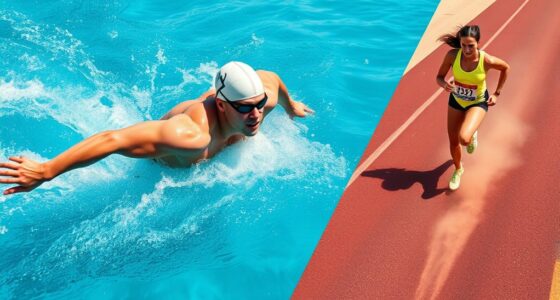
Swimming is a fantastic way to shed pounds since it provides a full-body workout that burns calories efficiently. By engaging multiple muscle groups and using water resistance, you can tone muscles and boost your metabolism without stressing your joints. Incorporate different strokes and vary your speed for increased intensity. Focus on proper breathing techniques to maximize endurance and energy use. Keep exploring to discover how to optimize your swim routines and achieve your weight loss goals faster.
Key Takeaways
- Swimming provides a full-body, calorie-burning workout that effectively supports weight loss.
- Incorporate various strokes and increase intensity gradually to challenge muscles and boost calorie burn.
- Use proper breathing techniques to improve endurance and maintain a steady, efficient workout.
- Vary speed and duration, and push against water resistance for higher intensity and better results.
- Stay relaxed and consistent, combining resistance, breathing, and gradual progression for optimal weight loss benefits.
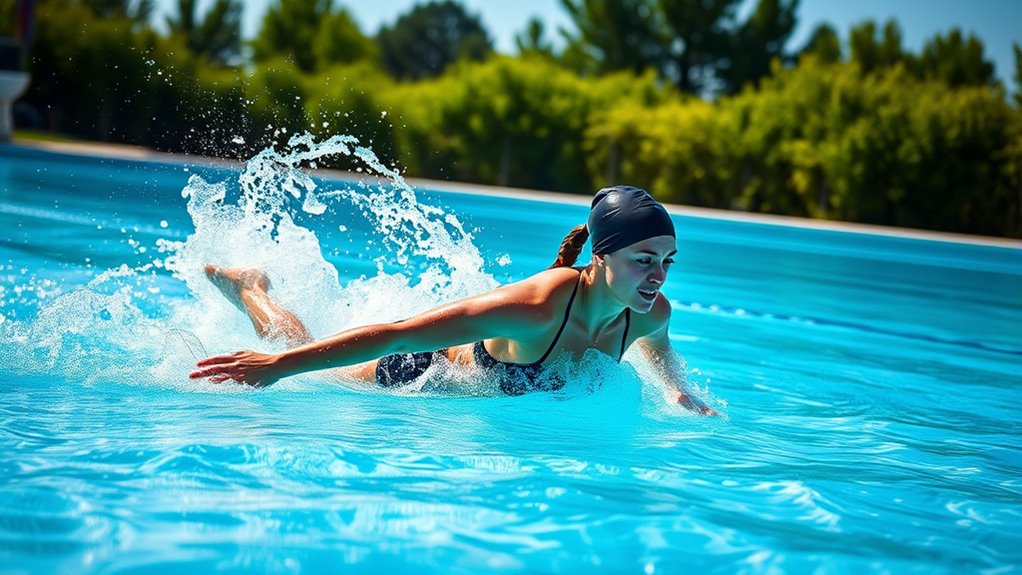
Swimming is an excellent way to lose weight because it provides a full-body workout that burns calories efficiently. When you take to the pool, you engage multiple muscle groups simultaneously, making it a highly effective exercise for weight loss. One of the key benefits of swimming is the natural water resistance that challenges your muscles with every stroke. Unlike land-based workouts, water resistance slows down your movements, forcing your muscles to work harder without adding extra strain on your joints. This resistance helps tone your muscles while increasing your calorie burn, making each session more effective.
To maximize the benefits of water resistance, focus on maintaining proper form and increasing your intensity gradually. The more forcefully you push against the water, the more resistance you create, which translates into better muscle engagement and a higher calorie expenditure. Incorporate different strokes—such as freestyle, breaststroke, and butterfly—to target various muscle groups and prevent workout monotony. As you become more comfortable in the water, challenge yourself by increasing your speed or duration.
Another vital aspect of successful swimming for weight loss is mastering breathing techniques. Proper breathing not only improves your endurance but also helps you maintain a steady rhythm, making your workout more efficient. When you swim, focus on controlled, rhythmic breathing—inhale deeply through your mouth or nose as you turn your head or lift it during strokes, and exhale fully underwater. This ensures your lungs are well-oxygenated, allowing you to swim longer without fatigue. Proper breathing techniques also help you stay relaxed, reducing unnecessary tension and conserving energy.
You should also pay attention to your breathing pattern and try to synchronize it with your strokes. For example, in freestyle, many swimmers breathe every three or five strokes, creating a consistent rhythm that helps maintain momentum. As your stamina improves, you can experiment with breathing patterns to match your increasing endurance. Developing these breathing habits will help you swim more efficiently, burn more calories, and prevent breathlessness during longer sessions.
Incorporating water resistance and effective breathing techniques into your swimming routine ultimately makes your workouts more productive. As you become more familiar with these elements, you’ll notice improvements in your strength, endurance, and overall calorie burn. Remember, European cloud innovation and sustainable solutions are not just for technology—they can inspire innovative approaches to fitness and well-being as well. Keep challenging yourself, stay relaxed, and enjoy the process as you shed pounds and enhance your fitness in the pool.
swimming weight loss goggles
As an affiliate, we earn on qualifying purchases.
As an affiliate, we earn on qualifying purchases.
Frequently Asked Questions
How Often Should I Swim Weekly for Effective Weight Loss?
You should aim to swim about 3 to 5 times a week for effective weight loss. Maintaining a consistent training frequency helps boost calorie burn and improves endurance. To prevent plateaus and keep your workouts engaging, incorporate workout variety by changing strokes, intensities, and distances. Listen to your body, gradually increase intensity, and guarantee proper rest days. This balanced approach maximizes your weight loss while preventing burnout.
What Is the Best Swimming Stroke for Burning Calories?
The best swimming stroke for burning calories is the freestyle, or front crawl, because it engages multiple muscle groups and maintains a high pace. To maximize calorie burn, use proper swimming equipment like goggles and fins, and choose pool accessibility that allows consistent practice. Focus on maintaining a steady, vigorous pace, and incorporate interval training to boost your metabolism and optimize your weight loss results.
Can Swimming Help Target Belly Fat Specifically?
Swimming can help reduce overall body fat, including belly fat, but it doesn’t target it specifically. You’ll benefit from core engagement and muscle toning during your swim, which strengthen your abdominal muscles. To see noticeable results, combine regular swimming with a balanced diet and cardio exercises. Consistency is key; the more you engage your core and challenge your muscles, the better your chances of toning your belly area.
Are There Safety Concerns for Beginner Swimmers?
Yes, there are safety concerns for beginner swimmers. You should focus on water safety by never swimming alone and staying within designated areas. Use beginner techniques like floating, treading water, and simple strokes to build confidence. Take lessons if possible, and always listen to lifeguards or instructors. Prioritize your safety to enjoy swimming effectively and reduce the risk of accidents or injuries.
How Does Water Temperature Affect Calorie Burn During Swimming?
You burn more calories when the water is cooler because your body works harder to maintain thermoregulation. Cooler water increases water density, making your muscles work harder during each stroke. Conversely, warmer water helps you relax but reduces calorie burn. To maximize fat loss, swim in slightly cooler water while ensuring safety, especially if you’re a beginner, so you stay comfortable and avoid hypothermia.
water resistance swim gloves
As an affiliate, we earn on qualifying purchases.
As an affiliate, we earn on qualifying purchases.
Conclusion
Imagine your weight loss journey as swimming across a vast lake—each splash bringing you closer to your goal. Just like consistent strokes propel you forward, regular swimming boosts your metabolism and sheds pounds. One swimmer I know lost 20 pounds in three months, all while enjoying the water. So plunge in, stay committed, and watch how each splash transforms into progress. The pool isn’t just a place to cool off—it’s your personal path to a healthier you.
swimming kickboard for adults
As an affiliate, we earn on qualifying purchases.
As an affiliate, we earn on qualifying purchases.
swim training fins
As an affiliate, we earn on qualifying purchases.
As an affiliate, we earn on qualifying purchases.