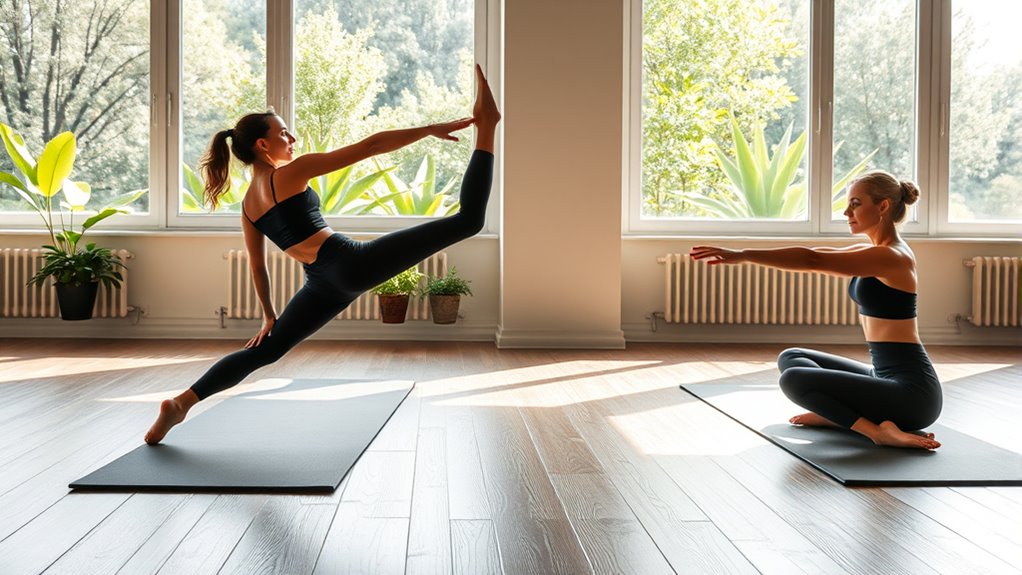

Choosing between yoga and Pilates depends on your goals. If you seek relaxation, flexibility, and holistic wellness, start with yoga to boost mindfulness and reduce stress. If you want to strengthen your core, improve posture, and get an intense workout, Pilates is a great choice. Both practices promote a mind-body connection, so consider what suits your lifestyle best. To find out more and make the best decision, explore further to discover which practice aligns with your needs.

Get workout gear delivered free — and shop member deals
- Fast, free delivery on millions of items
- Access to Prime Big Deal Days deals on October 6–7
- Prime Video, Amazon Music and more included
Key Takeaways
- Choose yoga first if you seek relaxation, mindfulness, and holistic wellness focused on flexibility and mental clarity.
- Opt for Pilates initially if your goal is core strength, muscle tone, and improving posture through controlled, physical movements.
- Consider yoga if you prefer minimal equipment and a calming environment; select Pilates for a more intense workout with equipment options.
- Try yoga first for stress reduction and emotional balance; choose Pilates for physical fitness and muscular endurance.
- Match your personal goals and lifestyle—relaxation and mindfulness or physical strength and control—to decide which practice to start with.
As an affiliate, we earn on qualifying purchases.
Understanding the Core Principles of Yoga and Pilates

Although Yoga and Pilates share similarities, their core principles differ considerably. Yoga emphasizes spiritual growth, mindfulness, and holistic well-being, often incorporating meditation techniques and breathing exercises like Pranayama. These practices help you cultivate mental clarity and inner calm. Additionally, mind-body connection is a fundamental aspect of Yoga, fostering a deep awareness of physical and mental states. Pilates, on the other hand, focuses on strengthening core muscles, improving posture, and enhancing physical control through precise movements. It prioritizes physical fitness over spiritual elements. While both disciplines promote body awareness, Yoga encourages you to connect breath with movement in a mindful way, fostering relaxation and mental focus. Pilates emphasizes controlled, low-impact exercises that develop muscular endurance. Understanding these core principles helps you choose which practice aligns better with your goals—whether it’s mental tranquility or physical strength. Additionally, emotional distance and avoidance of intimacy can be signs of a partner who might be less receptive to the mindful and open communication often cultivated in Yoga practice.
As an affiliate, we earn on qualifying purchases.
Comparing Physical Benefits and Focus Areas

Both Yoga and Pilates offer distinct physical benefits that cater to different fitness goals. Yoga emphasizes flexibility, balance, and meditation benefits, helping you improve mental clarity and reduce stress. It encourages deep breathing and mindful movement, which enhances your overall well-being. Additionally, Yoga can incorporate body awareness techniques that improve your connection with physical sensations, supported by the practice’s focus on mindfulness. These techniques also support stress reduction by promoting relaxation and mental calmness. Incorporating breath control techniques from both practices can further enhance your physical and mental health. Pilates, on the other hand, focuses on core strength, muscle tone, and posture improvement. It targets specific muscles to build stability and support for daily activities. If you’re seeking relaxation and mental clarity, Yoga might be your best choice. If you’re aiming for a more intense workout that enhances posture and builds muscle, Pilates could be more suitable. Both practices promote body awareness and can complement each other, but understanding their focus areas helps you decide which aligns better with your fitness goals.
As an affiliate, we earn on qualifying purchases.
Assessing Accessibility and Equipment Needs
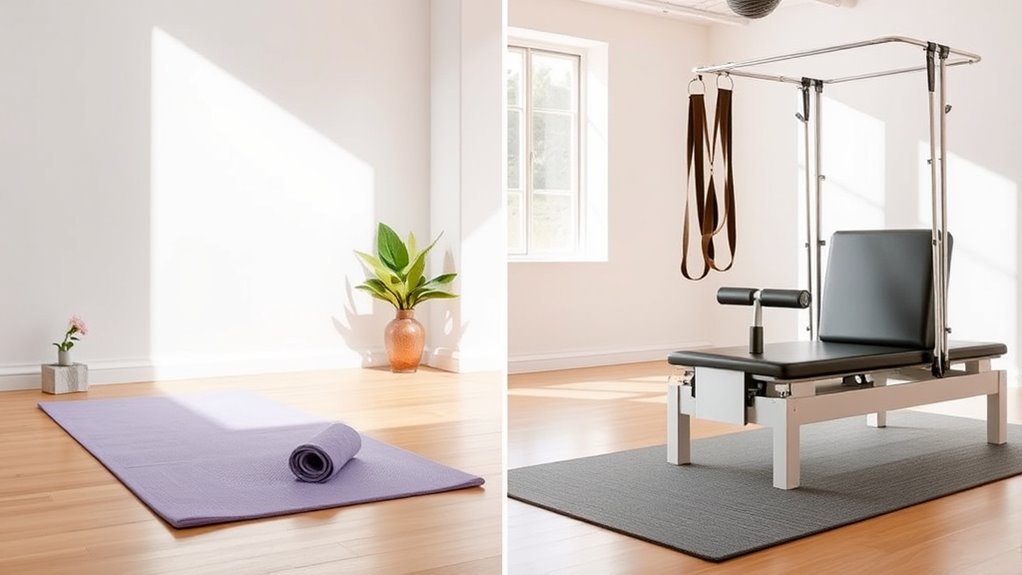
When choosing between yoga and Pilates, consider your equipment needs; yoga typically requires minimal gear, while Pilates often involves specialized apparatus. Think about the space you have available, as some exercises need more room to move freely. Evaluating these factors helps ensure your practice fits your lifestyle and accessibilities. Additionally, understanding quality assurance practices in fitness programs can help you select reputable classes or instructors that prioritize safety and effective training. Ensuring proper equipment maintenance and instructor credentials further supports a safe and beneficial exercise experience. Moreover, staying informed about market growth in fitness tech can provide insights into innovative tools that enhance your workout routines, and being aware of space optimization strategies can help you create an efficient exercise environment at home. Incorporating grocery savings strategies can also help you allocate funds toward quality fitness equipment or classes, supporting your overall health journey.
Equipment Requirements
Yoga generally requires minimal equipment, making it highly accessible for most people. All you really need is a comfortable foam mat to provide cushioning and traction during poses. Some styles may use small props like blocks or straps, but they’re optional. Pilates, on the other hand, often involves more equipment, such as resistance bands, small weights, or specialized apparatus like reformers. However, many beginner routines can be done with just a foam mat and resistance bands, which are affordable and easy to store. This equipment flexibility means you can start either practice at home without a significant investment. Additionally, understanding the equipment requirements can help you choose which practice aligns better with your budget and setup. Because both practices can adapt to available resources, you can tailor your workout environment to suit your needs and gradually incorporate more equipment if desired. Being aware of equipment versatility can further assist in customizing your fitness journey to match your evolving goals and circumstances. Moreover, considering the accessibility and affordability of equipment can make it easier to commit to your chosen practice over the long term.
Space Flexibility
Have you considered how much space you need to comfortably practice either yoga or Pilates? Both require enough room to move freely without feeling cramped. Yoga typically needs a clear, open area for stretches and poses, often just a mat’s width. Pilates can require a bit more space, especially if you incorporate equipment like reformers or stability balls. Your environment should allow for breath control and meditation techniques, which are key to both practices. A quiet, clutter-free space enhances focus and relaxation. If you’re practicing at home, ensure your area isn’t crowded and has enough room to lie down, stretch, and perform controlled movements. Additionally, space flexibility is crucial to accommodate different postures and movement ranges, making your practice more comfortable. Creating a dedicated practice zone can also help improve consistency and deepen your engagement with either practice. Proper space planning can optimize your overall experience and safety during your workouts. Considering the familiarity with your environment can also influence your comfort level and confidence during practice. Ultimately, choosing a space that supports your breathing and mindfulness will make your practice more effective and enjoyable.
As an affiliate, we earn on qualifying purchases.
Considering Your Personal Fitness Goals
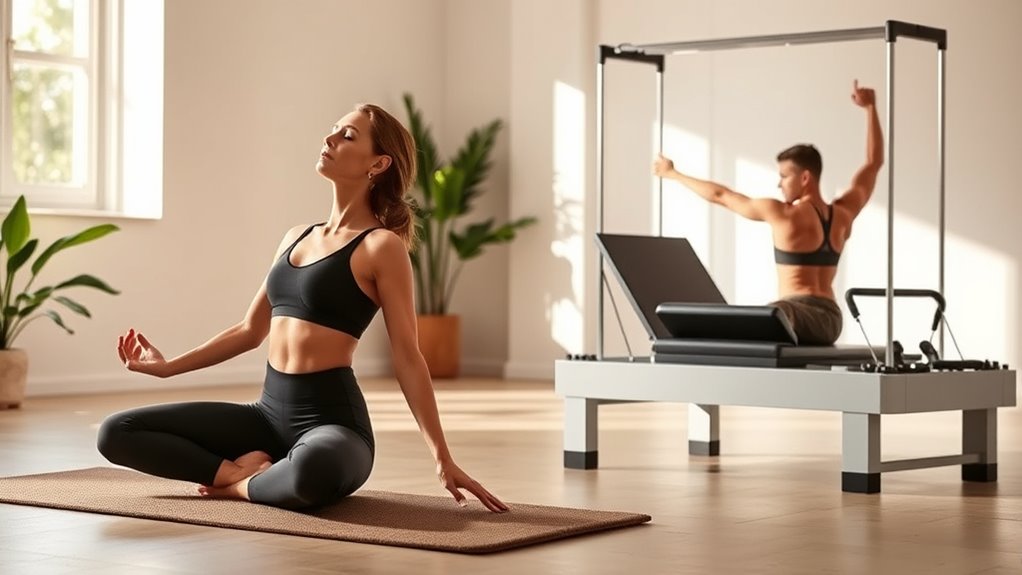
Think about what you want to achieve with your workouts—are you aiming to build strength, improve flexibility, or both? Yoga often emphasizes flexibility and balance, while Pilates focuses on core strength and muscle tone. Matching your goals with the right practice helps you stay motivated and see better results. Additionally, considering quality recommendations can help you select classes or instructors that align with your fitness objectives. Understanding the different techniques involved in each method can also guide your decision-making process. Exploring the benefits of each practice, such as mental clarity or physical endurance, can further inform your choice.
Aligning Goals With Practice
Choosing between yoga and Pilates depends largely on your specific fitness goals. If you’re seeking mental clarity and stress relief, yoga’s emphasis on meditative breathing can help you attain that balance. For goals centered around improving posture alignment and core stability, Pilates might be more suitable. Pilates focuses on precise movements and controlled breathing, which directly target posture and muscle control. Consider what you want to accomplish: if you aim to cultivate mindfulness along with physical strength, yoga aligns well. On the other hand, if you want to enhance muscular endurance and postural support, Pilates offers targeted exercises. Matching your goals with the right practice ensures you stay motivated and see the results you’re after.
Strength and Flexibility Focus
When considering your personal fitness goals, focusing on strength and flexibility can help you determine which practice suits you best. Yoga emphasizes breath control and mental focus, helping you develop flexibility through holding poses and deep stretching. It improves joint mobility and encourages a mindful approach to movement. Pilates, on the other hand, targets core strength and muscle toning, using controlled, precise movements that enhance overall stability. While it may not emphasize flexibility as much as yoga, Pilates still offers significant gains in muscle elasticity through focused exercises. If your goal is to improve both strength and flexibility with an emphasis on breath control and mental focus, yoga might be your best choice. But if building core strength is your priority, Pilates is a strong contender.
Recognizing the Mind-Body Connection and Stress Relief Aspects

Both yoga and Pilates emphasize the importance of connecting your mind and body, which can substantially enhance stress relief. By practicing mindfulness meditation and breathing techniques, you develop greater awareness of your emotions and physical sensations. This awareness helps you stay grounded during challenging moments, reducing anxiety and promoting relaxation. As you focus on breath control or meditation, you create a calming routine that fosters emotional resilience. Here’s how the emotional impact unfolds:
| Feelings Before Practice | Feelings After Practice |
|---|---|
| Stress and tension | Calm and centered |
| Restlessness | Clarity and peace |
| Anxiety | Relaxation and ease |
| Overwhelm | Emotional balance |
This connection deepens your ability to manage stress, making your practice more than just physical exercise.
Deciding Which Practice Fits Your Lifestyle and Preferences

Since both yoga and Pilates foster mindfulness and emotional balance, the next step is to contemplate which practice aligns best with your lifestyle and personal preferences. If you enjoy deep meditation techniques and want to incorporate spiritual elements, yoga’s focus on meditation and breathing exercises might suit you better. Yoga encourages a slower, more introspective pace, often integrating mindfulness into each pose. Conversely, if you prefer a more intense workout that emphasizes core strength and physical control, Pilates could be a better fit. It also includes breathing exercises, but with a focus on precision and muscle engagement. Consider your daily schedule, fitness goals, and whether you seek relaxation or physical challenge, to choose the practice that seamlessly fits into your lifestyle.
Frequently Asked Questions
Can Beginners Easily Start Either Yoga or Pilates Without Prior Experience?
You can definitely start either yoga or pilates as a beginner. Both offer beginner-friendly routines that focus on foundational movements, making it easy to get started. Use skill progression strategies to gradually increase difficulty, ensuring you build confidence and strength safely. With proper guidance, you’ll find both practices accessible and enjoyable, helping you develop flexibility, core strength, and mindfulness at your own pace.
How Do Yoga and Pilates Differ in Terms of Injury Risk?
Yoga generally has a lower injury risk because it emphasizes gentle stretching and mindfulness, helping you prevent injuries through proper alignment. Pilates, focusing on core strength and controlled movements, can pose higher risk factors if you push too hard or use improper form. To reduce injury, always prioritize injury prevention by listening to your body, practicing proper techniques, and gradually increasing intensity in either practice.
Are There Specific Health Conditions That Favor One Practice Over the Other?
If you’re managing chronic pain or aiming to boost your cardiovascular health, yoga might be your gentle ally, offering soothing stretches and mindful breathing. Pilates, however, can help strengthen your core and improve posture if you have back issues or joint concerns. Both practices are adaptable, so consider your health goals and consult a professional to find the one that best supports your well-being and enjoyment.
Which Practice Offers Better Long-Term Health Benefits?
You’ll likely find yoga offers better long-term health benefits for mental clarity and flexibility improvement. Yoga emphasizes mindfulness and breathing, which help reduce stress and enhance mental focus over time. It also promotes gentle stretching, gradually increasing flexibility. Pilates, while excellent for core strength and posture, may not provide as much mental clarity. Incorporate yoga into your routine if long-term mental and flexibility benefits are your goals.
How Do Yoga and Pilates Compare in Terms of Cost and Class Availability?
You’ll find that yoga classes often have more studio accessibility and a wider range of pricing variations, making it easier to find options that fit your budget and schedule. Pilates studios tend to be more specialized, which can affect availability and cost. Depending on your location, you might encounter more affordable or convenient classes for yoga, while Pilates might require a bit more research to find the right studio near you.
Conclusion
Choosing between yoga and Pilates is like deciding between a calming walk in nature or a focused workout at the gym. Both offer unique benefits—one soothes your mind, the other tones your muscles. Think about what resonates with your goals and lifestyle. Whichever you pick, you’ll find a practice that helps you feel stronger and more centered. So, take that first step; your body and mind will thank you.
Fall Picks
fall essentials
As an affiliate, we earn on qualifying purchases.