
To build grip strength that carries over everywhere, focus on progressive exercises like farmer’s carries, dead hangs, and squeeze grips, using equipment like thick bars or grip trainers. Start light and gradually increase weight or duration, paying attention to proper form to prevent injury. Incorporate variety and consistency, and take care of your hands with stretching and recovery. Stick with it, and you’ll see improvements in daily tasks, sports, and lifts — and there’s more to discover on how to maximize your grip!
Key Takeaways
- Incorporate a variety of grip exercises like farmer’s carries, dead hangs, and squeezes to develop overall grip strength.
- Gradually increase resistance and duration to challenge muscles and promote continuous adaptation.
- Focus on proper technique and hand positioning to maximize effectiveness and prevent injuries.
- Prioritize grip training consistently alongside other strength routines for balanced development.
- Maintain hand and wrist health through warm-ups, stretching, and recovery practices to sustain long-term strength.
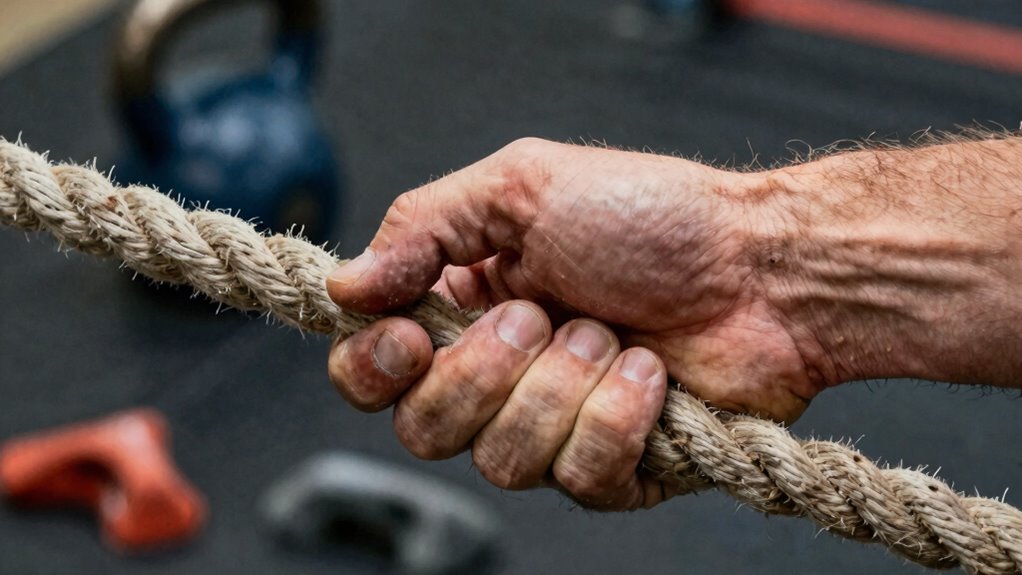
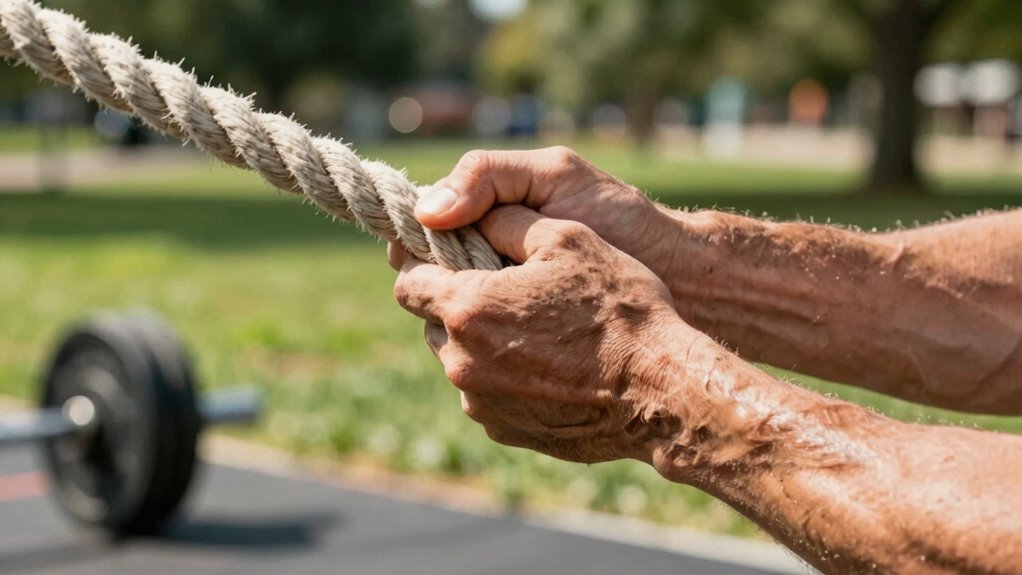
Building grip strength is essential for improving your overall strength, endurance, and athletic performance. When you focus on developing your grip, you’re not just enhancing your ability to hold onto objects—you’re also promoting hand health, which is vital for preventing injuries and ensuring long-term functionality. To do this effectively, you need to pay attention to equipment selection, choosing tools that challenge your grip without causing strain or discomfort. The right equipment, like thick-handled barbells, grip trainers, or even everyday objects like towels or buckets, can make a significant difference in your progress.
Building grip strength enhances overall performance while promoting hand health and injury prevention through proper equipment and technique.
Start by incorporating exercises that target your grip directly, such as dead hangs, farmer’s carries, or squeezing tennis balls. These movements build your grip endurance and strength, but it’s important to do them with proper form to avoid unnecessary strain on your hands and wrists. When selecting equipment, opt for options that suit your current strength level and allow for gradual progression. For example, if you’re just starting out, use lighter grip trainers or resistance bands. As your strength improves, move on to heavier implements or thicker bars, which force your hand muscles to work harder. Additionally, understanding the importance of contrast ratio in your training can help you gauge the effectiveness of your grip exercises, ensuring you’re pushing your limits safely.
Furthermore, paying attention to hand health is key. Overtraining or using equipment that’s too aggressive can lead to blisters, calluses, or even injuries. Make sure to warm up your hands before intense grip workouts, and don’t forget to stretch and mobilize your wrists and fingers afterward. Incorporating proper recovery techniques such as hand massages or using hand creams can help maintain your skin’s integrity and prevent overuse injuries. Incorporating hand health practices into your routine is crucial for sustainable progress. Staying mindful of your grip’s capacity can also help you avoid overexertion and setbacks.
As you progress, challenge yourself by increasing the duration of hangs, adding weight to farmer’s carries, or trying different grip positions. Variety keeps your muscles adapting and prevents plateaus. Remember, building grip strength isn’t just about squeezing harder; it’s about creating a balanced approach that promotes hand health and leverages the right equipment for your goals. Consistency is key—stick with your routine, pay attention to your hands’ signals, and gradually increase the difficulty. Over time, you’ll notice your grip improving in everyday tasks, sports, and lifting, making your overall strength more reliable and your performance more confident.
grip strength trainer
As an affiliate, we earn on qualifying purchases.
As an affiliate, we earn on qualifying purchases.
Frequently Asked Questions
How Often Should I Train My Grip for Optimal Results?
You should train your grip 2-3 times a week for ideal results, allowing ample recovery. Focus on exercises that boost grip endurance and hand flexibility, like dead hangs or squeezing tennis balls. Consistency is key; gradually increase intensity and duration to build strength without overtraining. Incorporate variety to target different muscles and guarantee steady progress, helping your grip carry over effectively into other activities and sports.
Are There Specific Foods That Improve Grip Strength?
Think of your grip as a fortress that needs nourishing from within. To strengthen it, focus on nutrition tips like eating foods rich in magnesium, potassium, and calcium—think bananas, nuts, leafy greens, and dairy. Incorporate dietary supplements like magnesium or fish oil if needed. These help improve nerve function and muscle recovery, making your grip more powerful and resilient every day. Your body’s strength begins with what you feed it.
Can Grip Exercises Help Prevent Wrist Injuries?
Yes, grip exercises can help prevent wrist injuries by improving wrist flexibility and hand endurance. When you regularly strengthen your grip, you enhance the stability of your wrist joints, reducing strain during daily activities or sports. Plus, increased hand endurance means your wrists are less prone to fatigue, which often leads to injuries. Consistent grip training can promote better wrist health, making injuries less likely and keeping you active longer.
What Equipment Is Best for Building Grip Strength?
You’re really hitting the nail on the head by asking about the best equipment for grip strength. Grip accessories like hand grippers, thick bars, and grip trainers are excellent choices, improving both strength and hand mobility. These tools target different muscles and enhance your overall grip. Adding variety keeps things fresh, and with consistent effort, you’ll see strength carry over into other activities and daily tasks.
How Long Does It Take to See Improvements in Grip Strength?
You’ll typically notice improvements in grip strength within 4 to 6 weeks of consistent training. As you work on increasing hand endurance and finger dexterity, your grip will become stronger and more precise. Keep challenging yourself with various exercises, like deadlifts or grip squeezes, and stay dedicated. With regular effort, you’ll see progress in your grip, making everyday tasks easier and enhancing your overall strength.
farmer's carry handles
As an affiliate, we earn on qualifying purchases.
As an affiliate, we earn on qualifying purchases.
Conclusion
Building grip strength is like planting seeds that grow stronger roots in every aspect of your life. As you consistently train, you’ll notice your grip becoming a sturdy anchor, supporting everything from lifting weights to everyday tasks. Keep pushing yourself, and watch your grip transform into an unshakable force that carries over everywhere you go. With patience and perseverance, your hands will become your greatest tool—ready to conquer any challenge that comes your way.
dead hang grip trainer
As an affiliate, we earn on qualifying purchases.
As an affiliate, we earn on qualifying purchases.
hand grip exerciser
As an affiliate, we earn on qualifying purchases.
As an affiliate, we earn on qualifying purchases.