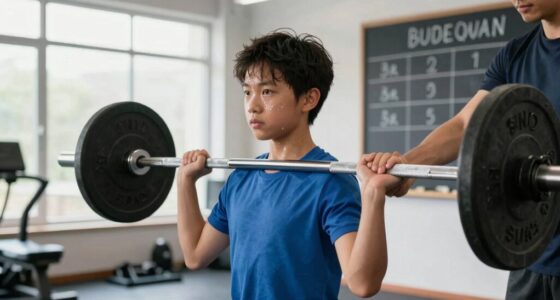

To build more muscle and strength, use rest periods strategically based on your goals. Opt for 2-5 minutes of rest between heavy lifts to promote recovery and maximal strength gains, or shorten rests to 30-60 seconds for hypertrophy, keeping muscles under tension. Monitor your energy and fatigue levels, adjusting rest as needed. Combining proper nutrition with smart rest enhances results. Keep these tips in mind, and you’ll access even more ways to optimize your training.
Key Takeaways
- Adjust rest durations based on your training goals: longer for strength, shorter for hypertrophy.
- Use strategic rest periods to maximize workout intensity without risking overtraining.
- Monitor your energy and fatigue levels to personalize rest, ensuring optimal recovery.
- Combine proper nutrition during rest to enhance muscle repair and energy replenishment.
- Incorporate planned rest intervals into your training schedule to promote consistent strength gains.

Rest periods are a critical, yet often overlooked, component of effective strength training. They give your muscles the chance to recover, which is essential for making gains in both size and strength. But how you manage these rest periods can substantially influence your results. When you pay attention to your rest, you’re fundamentally fine-tuning your workout timing to maximize muscle growth. Proper rest isn’t just about taking a break; it’s about strategic pauses that push your training to the next level.
Strategic rest periods are key to maximizing muscle growth and strength gains.
One key aspect to contemplate is how nutrition strategies intersect with your rest. During these periods, your body is actively repairing muscle tissue and replenishing energy stores. Consuming the right nutrients—like protein and carbohydrates—before and after your workout helps optimize recovery during rest. For example, having a protein-rich snack or shake post-workout can jump-start muscle repair, making your rest periods even more effective. Hydration also plays a pivotal role, as staying well-hydrated supports muscle function and recovery. If you’re intentional about your nutrition strategies, your rest periods become more productive because your body is better prepared to rebuild and strengthen. Additionally, understanding the importance of recovery strategies can help you optimize your rest periods and overall training efficiency. Recognizing training specificity can further refine how you tailor your rest intervals to suit your individual goals.
Workout timing is another essential factor. The length of your rest periods should align with your specific training goals. If you’re aiming for strength, longer rests—say, 2 to 5 minutes—give your muscles enough time to recover so you can lift heavier weights or perform more reps. On the other hand, if your goal is hypertrophy (muscle size), shorter rest periods of about 30 seconds to 1 minute can keep muscle fatigue high, encouraging growth. Adjusting your rest based on your workout timing allows you to target different fitness outcomes more effectively. You don’t want to rush through your rest, but you also don’t want to extend it unnecessarily, as that can diminish the intensity of your workout. Paying attention to your contrast ratio and how it impacts your performance can help you determine the optimal rest duration for your training style. Incorporating training periodization into your program can further enhance how you manipulate rest for specific goals.
You should also pay attention to how your body responds during rest. If you’re feeling ready to lift again sooner, don’t hesitate to shorten your rest slightly. Conversely, if you’re still fatigued, give yourself extra time. By actively monitoring your energy levels and recovery, you’re customizing your workout timing for maximum benefit. This approach ensures that your rest periods serve as a strategic tool rather than a passive pause. Recognizing the importance of muscle recovery can help you optimize this process and prevent overtraining. When you combine mindful nutrition strategies with smart workout timing, you create a balanced system that fosters muscle growth and strength development. Rest periods become an integral part of your training, not just a break, helping you train smarter and see better results.
protein shake for muscle recovery
As an affiliate, we earn on qualifying purchases.
As an affiliate, we earn on qualifying purchases.
Frequently Asked Questions
How Long Should Rest Periods Be for Optimal Muscle Growth?
For ideal muscle growth, rest periods should be around 30 to 90 seconds, depending on your goals. Shorter rests boost hypertrophy by maintaining muscle tension, while longer rests improve strength. During rest, focus on nutrition timing—fuel your muscles with quick carbs or protein—and stay mentally focused to maximize recovery. This balance ensures you stay energized and ready for the next set, promoting better gains over time.
Does Rest Time Vary Between Different Types of Exercises?
Did you know that rest time can vary by up to 50% depending on the exercise? Yes, rest periods differ between exercises to optimize workout pacing and muscle engagement. For example, compound movements like squats may need longer rest than isolation exercises like bicep curls. Incorporating exercise variation guarantees you maintain proper recovery, prevent fatigue, and maximize hypertrophy and strength gains. Adjust your rest to match the specific demands of each workout element.
Can Shorter Rest Periods Increase Overall Workout Intensity?
Shorter rest periods can indeed boost overall workout intensity, but they may lead to cardio fatigue and challenge your mental focus. By reducing rest, you keep your heart rate elevated, intensifying the session. However, watch out for mental fatigue, as it can diminish your performance and form. Balancing rest guarantees you stay energized, maintain focus, and maximize muscle engagement without overwhelming your body.
How Do Rest Periods Affect Muscle Recovery Between Sets?
Rest periods directly impact muscle recovery between sets by influencing muscle endurance and metabolic fatigue. Shorter rests keep your muscles under tension, leading to increased metabolic fatigue and improved endurance over time. Longer rests allow more complete recovery, reducing fatigue and enabling you to lift heavier weights or do more reps. Adjusting rest intervals based on your goals helps optimize recovery, preventing excessive fatigue while maintaining enough challenge to stimulate growth.
Is There an Ideal Rest Period for Hypertrophy Versus Strength Training?
Think of rest periods as the pause in a symphony that shapes its harmony. For hypertrophy, aim for 30-60 seconds to keep muscles under tension, fostering growth. For strength, extend rest to 2-5 minutes, allowing full recovery. During these breaks, focus on nutrition timing and mental focus; they fuel your muscles and sharpen your mind, ensuring each set hits its mark. This balance enhances both muscle size and raw power.
adjustable dumbbell set for strength training
As an affiliate, we earn on qualifying purchases.
As an affiliate, we earn on qualifying purchases.
Conclusion
Think of rest periods as the secret fuel that turns your workout engine into a powerhouse. When you give your muscles the time they crave, you’re planting seeds for stronger gains and bigger muscles to bloom. Don’t rush the process—let each pause be a pause for growth. With every well-timed break, you’re crafting a symphony of strength that echoes long after your last rep. Keep your rest smart, and watch your muscles flourish like a well-tended garden.
hydration water bottle for workouts
As an affiliate, we earn on qualifying purchases.
As an affiliate, we earn on qualifying purchases.
timed rest interval timer for gym
As an affiliate, we earn on qualifying purchases.
As an affiliate, we earn on qualifying purchases.