If you want a convenient, cost-effective way to stay active anywhere, bodyweight training is great since it uses your own weight and needs no equipment. For building strength and muscle efficiently, weight training offers precise progression with weights and machines. Both methods promote overall fitness, but your choice depends on your goals, resources, and preferences. Want to discover how to optimize your routine? Keep exploring to find what’s best for you.
Key Takeaways
- Bodyweight training offers convenience and safety, requiring no equipment and reducing injury risk, while weight training allows precise resistance and targeted muscle development.
- Weight training enables progressive overload with external weights, facilitating measurable strength gains, whereas bodyweight exercises may need advanced variations for continued challenge.
- Both methods support different fitness goals: bodyweight enhances functional fitness and flexibility, while weight training focuses on building strength and muscle mass.
- Bodyweight routines are highly accessible for beginners and resource-limited individuals, whereas weight training may require investment in equipment or gym access.
- Combining both approaches can provide balanced fitness, leveraging the safety and convenience of bodyweight exercises with the specificity of weight training.
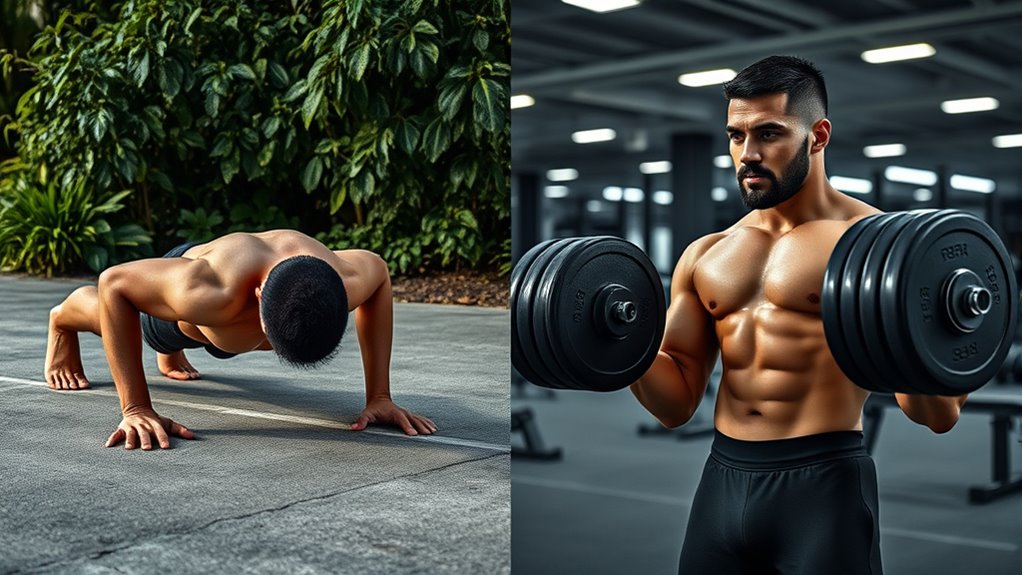
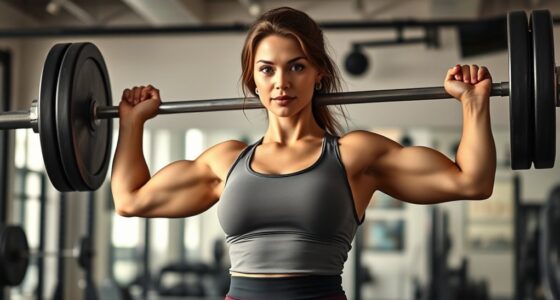
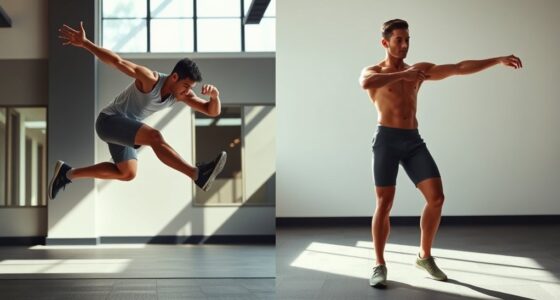
When choosing between bodyweight training and weight training, understanding their differences can help you make the best choice for your fitness goals. Both methods have unique benefits and limitations, so knowing what they entail allows you to tailor your workout routines effectively. Bodyweight training relies on your own weight as resistance, making it highly accessible and versatile. You can perform exercises like push-ups, squats, and planks anywhere, without needing extra equipment. This convenience encourages consistency, especially if you’re just starting out or prefer working out at home or outdoors. On the other hand, weight training involves using external resistance like dumbbells, barbells, or machines to target specific muscle groups. It allows for precise progression, making it ideal if you want to build strength or muscle mass efficiently.
Choosing bodyweight or weight training depends on your goals, resources, and preferences for effective fitness results.
From a nutrition perspective, your diet plays a vital role regardless of which training style you choose. Proper nutrition tips include consuming enough protein to support muscle repair and growth, whether you’re doing bodyweight exercises or lifting weights. Staying hydrated and eating a balanced diet rich in healthy fats, carbs, and micronutrients will optimize your performance and recovery. For bodyweight routines, focus on increasing repetitions, adding more challenging variations, or slowing down movements to maintain intensity. For weight training, progressively increase the weight or reps to continually challenge your muscles. Both methods benefit from structured workout routines; consistency and progression are key to seeing results.
One advantage of bodyweight training is its affordability and flexibility. You don’t need a gym membership or expensive equipment, making it an excellent option if you’re on a budget. It also promotes functional fitness, as many exercises mimic everyday movements. However, bodyweight exercises can become less challenging over time unless you get creative with advanced variations or combine movements into circuits. Weight training offers the potential for targeted muscle development and measurable progress. By adjusting weights, you can isolate specific muscles and progressively overload them. But it requires investment in equipment or gym access, which might be a barrier for some.
In terms of injury risk, bodyweight exercises tend to be safer since they often involve controlled movements and less load. Weight training, if not performed with proper technique, can pose a higher risk of injury due to heavier loads. This makes proper form and possibly consulting a trainer essential when lifting weights. Ultimately, your choice depends on your goals, preferences, and available resources. Both training styles can complement each other, and combining them might offer a balanced approach for overall fitness. Understanding their pros and cons allows you to craft workout routines that suit your lifestyle and help you achieve your desired results effectively.
dumbbell set for strength training
As an affiliate, we earn on qualifying purchases.
As an affiliate, we earn on qualifying purchases.
Frequently Asked Questions
Can Bodyweight Exercises Help Build Maximum Muscle Mass?
Yes, bodyweight exercises can help build maximum muscle mass if you focus on muscle hypertrophy and strength development. You need to challenge your muscles by increasing reps, adding variations, or reducing rest times. Exercises like push-ups, pull-ups, and pistol squats target multiple muscle groups effectively. While they might not produce the same quick gains as weight training, consistent progression and intensity can lead to significant muscle growth.
Which Training Method Is Safer for Beginners?
You’re safer starting with bodyweight exercises because they emphasize proper form and reduce injury risk. Unlike weight training, which can tempt you to lift heavier too soon, bodyweight moves let you master foundational skills first. This approach minimizes strain on your joints and muscles, helping you build strength gradually. As a beginner, focusing on bodyweight workouts creates a solid base, making your fitness journey safer and more sustainable.
How Do Costs Compare Between Bodyweight and Weight Training?
You’ll find that bodyweight training usually costs less since you don’t need equipment or gym memberships. You can do exercises anywhere, saving money on gym fees and gear. Weight training often requires investing in equipment like dumbbells, plates, or machines, plus a gym membership if you prefer working out there. So, if budget is a concern, bodyweight routines are more affordable, but weight training can offer more variety with added costs.
Can Bodyweight Workouts Improve Athletic Performance?
Yes, bodyweight workouts can improve your athletic performance. They boost calorie burning, helping you shed excess weight and enhance endurance. Plus, these exercises promote flexibility enhancement, making your muscles more adaptable and reducing injury risk. By focusing on functional movements, you develop strength, balance, and agility, which translate well to various sports and physical activities. Consistent bodyweight training can elevate your overall athletic capabilities without needing equipment.
How Do Training Progressions Differ Between the Two Methods?
Think of your training journey as climbing a ladder. For bodyweight workouts, you increase progression complexity by adding reps, changing angles, or reducing support, all without equipment dependency. With weight training, you progress by increasing weight, adjusting sets, or trying advanced lifts, but often depend on equipment. Both methods require tailored progression strategies to keep challenging your muscles and prevent plateaus.
adjustable resistance bands
As an affiliate, we earn on qualifying purchases.
As an affiliate, we earn on qualifying purchases.
Conclusion
Whether you choose bodyweight or weight training, both can boost your fitness. Did you know that bodyweight exercises can burn up to 400 calories per hour? It’s all about what fits your goals and lifestyle. If you’re looking for convenience and functional strength, bodyweight workouts are great. For building muscle mass, weight training might be better. Either way, staying active consistently is what really matters to see results.
home workout equipment for bodyweight exercises
As an affiliate, we earn on qualifying purchases.
As an affiliate, we earn on qualifying purchases.
fitness tracker for workout monitoring
As an affiliate, we earn on qualifying purchases.
As an affiliate, we earn on qualifying purchases.