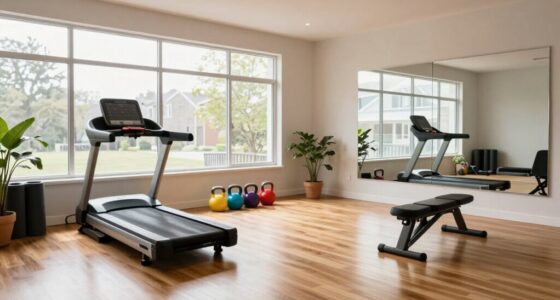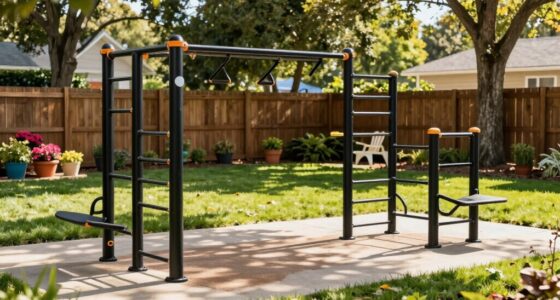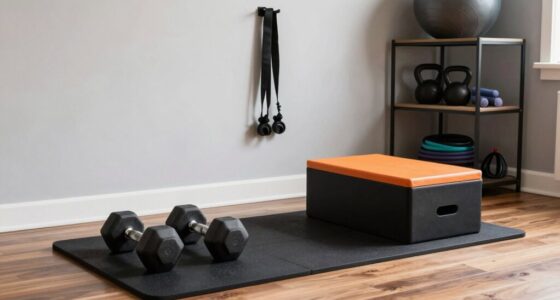
Choosing between a garage gym and a spare room gym depends on your space, environmental needs, and workout style. A garage offers more room for larger equipment and less noise disturbance but requires climate control and protection from dust and humidity. A spare room provides a stable environment that’s easier to maintain and quieter. Consider your priorities and space constraints—exploring further will help you make the best choice for your fitness setup.

Get workout gear delivered free with Prime
- Fast, free delivery on millions of items
- Prime Video, Amazon Music and more included
- Member-only deals all year
Key Takeaways
- Garages offer more space for larger, durable equipment and dynamic workouts, while spare rooms suit compact, multi-purpose setups.
- Environmental factors like humidity and temperature fluctuations are better controlled in spare rooms, protecting sensitive gear.
- Garages’ insulation from house noise makes them ideal for noisy equipment and less disruptive to household activities.
- Proper climate control and ventilation are essential in garages to prevent equipment damage and maintain comfort.
- Choice depends on space availability, environmental protection needs, noise considerations, and preferred workout intensity.

Creating a dedicated workout space at home can significantly boost your motivation and consistency, but choosing the right location is key. When deciding between a garage gym and a spare room, you need to evaluate how each space aligns with your fitness goals and lifestyle. One major factor is equipment durability. In a garage, equipment faces the elements—temperature fluctuations, humidity, and dust—which can affect the longevity of your gear. If you opt for a garage gym, look for high-quality, weather-resistant equipment designed to withstand these conditions. This investment ensures your weights, racks, and cardio machines stay in good condition longer. In contrast, a spare room typically offers more stable conditions, protecting your equipment from environmental damage and extending its lifespan.
Choosing between a garage gym and a spare room depends on your space, durability needs, and lifestyle priorities.
Space optimization is another critical aspect. Garages often have more square footage, giving you room to spread out and incorporate larger machines like squat racks or rowing machines comfortably. This extra space can make your workouts more dynamic and less cramped. However, garages can be cluttered or poorly organized, so you’ll need to plan carefully to maximize the available area. Shelving, wall-mounted storage, and foldable equipment can help keep things tidy and efficient. On the other hand, spare rooms are usually smaller but more manageable. With proper planning, you can make the most of limited space by choosing compact or multi-purpose equipment. For example, adjustable dumbbells or fold-away benches allow you to customize your workout zone without sacrificing space. Proper space planning can make a significant difference in creating an effective workout environment.
Another consideration is noise and disruption. Garages tend to be more isolated, reducing noise transfer to other parts of your house. If you live with family or roommates, this can be a significant advantage. Conversely, a spare room inside the house might lead to noise complaints or interruptions if other household members are around. You can mitigate this by using soundproofing or choosing quieter equipment. Additionally, environmental factors like temperature and humidity in a garage can impact crypto hardware wallets and other sensitive equipment, so climate control might be necessary. Regular maintenance and proper ventilation can help protect your gear and ensure a comfortable workout environment. Moreover, considering climate control solutions can extend the lifespan of both your equipment and your comfort during workouts.
Ultimately, the decision hinges on your priorities. If you value space and durability, and don’t mind the garage environment, setting up there could be the best choice. If you prefer a controlled environment with easier access and less exposure to the elements, a spare room might suit you better. Whichever you choose, focus on optimizing your layout and investing in durable equipment to keep your workouts consistent and effective.
As an affiliate, we earn on qualifying purchases.
Frequently Asked Questions
Which Setup Costs More Initially?
A garage gym typically costs more initially because you need durable equipment to withstand weather and space constraints, and you might invest in noise insulation to reduce sound transfer, especially if you live nearby. In contrast, a spare room gym usually requires less investment in weatherproofing and insulation. Your choice depends on your budget and priorities, but expect the garage setup to have higher upfront costs due to equipment durability and noise considerations.
How Does Each Impact Home Value?
A garage gym can boost your home value due to better aesthetic integration and outdoor access, making it appealing to future buyers. It also offers noise mitigation by distancing workout sounds from living spaces. A spare room gym might have less impact on home value, but it keeps your workout area contained and less intrusive. Both setups influence your home’s appeal, but the garage gym often adds more long-term value.
Which Offers Better Privacy?
Like a fortress, a spare room offers better privacy because you can easily soundproof it with options like acoustic panels and carpets. You also have more control over lighting solutions, making it less intrusive for others. A garage gym might be noisier and more exposed to outdoor sounds, reducing privacy. If privacy matters most, a spare room provides a quieter, more secluded environment for your workouts.
What Are the Common Space Limitations?
You might face space limitations like ceiling height, which affects equipment choices, or insufficient room for proper movement. Sound insulation can be an issue in both setups, so consider how noise might travel through walls or ceilings. Lighting options are also important; a spare room may have better natural light, while a garage might need additional fixtures. Be mindful of these constraints to create a functional, comfortable workout space.
How Do Ventilation and Climate Control Compare?
Ironically, your gym’s ventilation and climate control often depend on its location. In a garage, air circulation can be a challenge, especially with poor insulation, making temperature regulation tricky. Meanwhile, a spare room might offer better airflow and easier temperature control, but only if it’s properly ventilated. Ultimately, the choice hinges on your ability to manage air circulation and temperature, ensuring comfort during every workout.
As an affiliate, we earn on qualifying purchases.
Conclusion
So, which setup truly wins? The garage gym offers space and versatility, but the spare room provides comfort and convenience. But here’s the twist—your perfect gym might surprise you. Will it be the rugged, open-air garage or the cozy, dedicated room? The choice isn’t just about now; it’s about what keeps you motivated long-term. Ready to make the decision that could change your fitness game forever? The answer might just be waiting right around the corner.
As an affiliate, we earn on qualifying purchases.
As an affiliate, we earn on qualifying purchases.
Halloween Picks
halloween
As an affiliate, we earn on qualifying purchases.