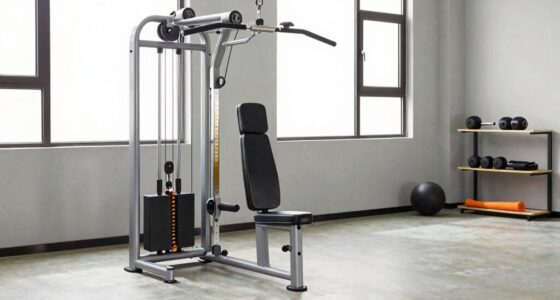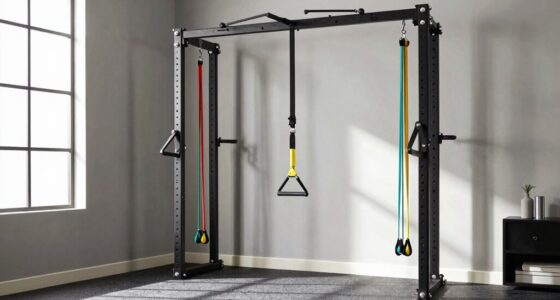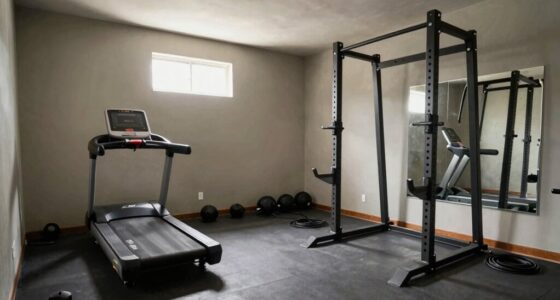

Minimalist home gyms offer an efficient, cost-effective way to stay fit without cluttering your space. They focus on versatile, multi-purpose equipment and smart storage solutions, making your workout area inviting and easy to maintain. With thoughtful layout, natural lighting, and space optimization, you can create a motivating environment that encourages consistent use. If you keep exploring, you’ll uncover even more tips to transform your compact gym into your perfect fitness zone.
Key Takeaways
- Minimalist home gyms are cost-effective, space-efficient, and promote consistent use by reducing clutter barriers.
- Proper storage solutions enhance organization, making the space more inviting and easier to maintain.
- Compact, multi-purpose equipment maximizes space and supports versatile workouts in small areas.
- Thoughtful layout and lighting create a functional environment that boosts motivation and exercise adherence.
- Staying updated on digital fitness trends ensures the gym remains innovative and adaptable to evolving needs.

A minimalist home gym offers an efficient way to stay fit without cluttering your space or breaking the bank. When designing your workout area, focus on smart storage solutions that keep your equipment organized and easily accessible. Compact storage options like wall-mounted racks, under-bed bins, or sleek shelves help maximize your available space. This approach not only keeps your gym tidy but also encourages consistent use since you won’t have to dig through clutter to find what you need. Proper storage solutions are essential in a minimalist setup—they create a sense of order and make your workout space more inviting. Remember, the goal is to keep your gym functional without sacrificing comfort or style.
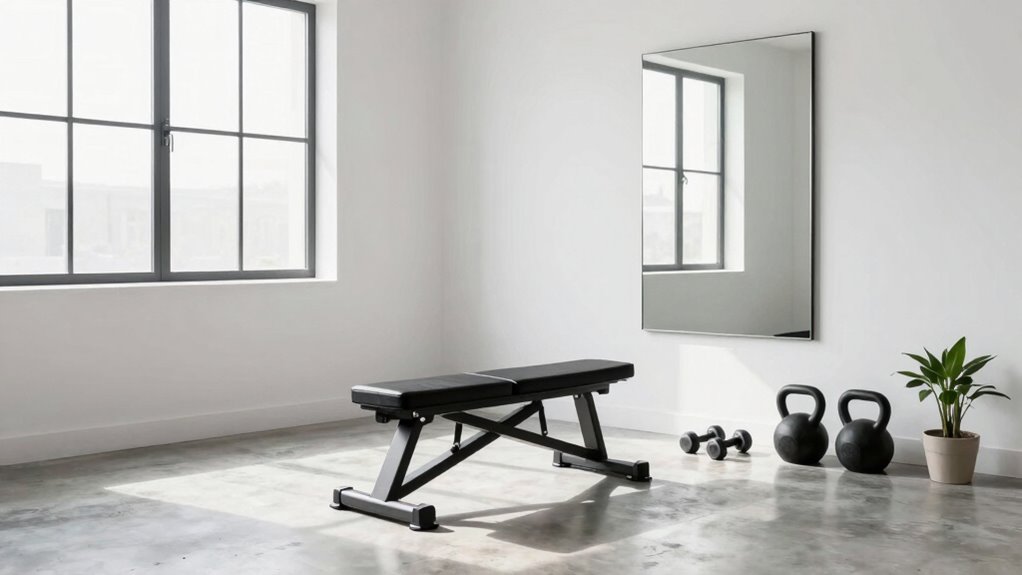
Workout space optimization is key to creating an effective minimalist gym. You want to prioritize versatile equipment that can serve multiple purposes, such as resistance bands, adjustable dumbbells, or a foldable yoga mat. These items take up less room and can be easily stored away after your workout. When arranging your space, think about the flow of movement. Leave enough open area for exercises that require space, like stretching or bodyweight workouts. Use mirrors strategically to make your room feel larger and to help check your form. Good lighting also boosts motivation, so consider natural light or bright, minimal fixtures. Incorporating smart storage solutions like modular furniture can further enhance organization and functionality. Additionally, staying informed about emerging trends in digital fitness can offer innovative ways to enhance your workout experience at home. Exploring innovative storage options can help you adapt your gym as your needs evolve over time. Incorporating battery management tips from LiFePO4 battery care can also help in maintaining your equipment’s longevity, ensuring your gear stays powered and ready for use whenever you need it.
A minimalist gym isn’t just about the equipment you choose; it’s about creating an environment that motivates you to stick with your fitness routine. By integrating smart storage solutions and focusing on workout space optimization, you eliminate distractions and make your workouts more effective. This approach encourages consistency, as you’re less likely to skip sessions when your space feels inviting and streamlined. Plus, it’s easier to clean and maintain, saving you time and effort. Over time, this simplicity helps reinforce healthy habits, making fitness a natural part of your daily life.
In the end, a minimalist home gym proves that you don’t need a lot of gear or a large space to stay fit. Instead, it’s about thoughtful planning—using clever storage solutions, maximizing your workout space, and choosing versatile equipment. With these strategies, you create a dedicated area that motivates you while keeping your home looking neat and stylish. The truth is, a minimal setup can be just as effective, if not more so, than a crowded gym filled with clutter. It’s all about working smarter, not harder, in a space that supports your fitness journey.
compact resistance bands set
As an affiliate, we earn on qualifying purchases.
As an affiliate, we earn on qualifying purchases.
Frequently Asked Questions
What Is the Average Cost of Setting up a Minimalist Home Gym?
You can set up a minimalist home gym for around $300 to $1,000, depending on your choices. Fitness trends favor versatile, durable equipment like resistance bands and dumbbells, which offer excellent durability and functionality. You’ll want to invest in quality gear that withstands frequent use, ensuring your setup remains reliable. Keep it simple with essential, durable equipment, and you’ll create an effective workout space without overspending.
How Much Space Is Needed for a Minimalist Gym Setup?
You’ll want about 50 to 100 square feet for a minimalist gym, which is enough to optimize space and keep your workout versatile. Curiously, studies show that small spaces can boost motivation. Focus on space optimization by choosing multi-use equipment like adjustable dumbbells and resistance bands. This setup allows you to perform various exercises without clutter, making your gym both functional and efficient within a compact area.
Can Minimalist Gyms Effectively Replace Commercial Gyms?
Yes, a minimalist gym can effectively replace commercial gyms if you focus on personalized workout routines and create a motivational environment at home. With just essential equipment, you can tailor your exercises to your goals and maintain consistency. Plus, the convenience of working out at home helps you stay committed, making it easier to achieve results without the distractions often found in commercial gyms.
What Are the Best Storage Solutions for Small Gym Equipment?
To maximize space and keep your small gym equipment organized, opt for smart storage solutions that focus on space optimization. Use wall-mounted racks or pegboards for weights and accessories, and consider under-bed or vertical storage units for larger items. Baskets and stackable containers also help keep smaller items tidy. These strategies make your workout area more functional, clutter-free, and easy to access, encouraging consistent use of your minimalist home gym.
How Often Should I Update or Upgrade My Minimalist Gym Gear?
You should update or upgrade your minimalist gym gear every 1-2 years, depending on your training routines and equipment durability. Regularly assess if your equipment still meets your fitness goals and remains in good condition. If it shows signs of wear or no longer fits your routines, it’s time to contemplate an upgrade. Staying attentive ensures your gear supports your progress and keeps your workouts effective and safe.
foldable yoga mat
As an affiliate, we earn on qualifying purchases.
As an affiliate, we earn on qualifying purchases.
Conclusion
Building a minimalist home gym is like planting a small seed that blossoms into a personal sanctuary of strength. You don’t need endless equipment—just a few versatile pieces, like a kettlebell or a yoga mat, can nurture your fitness journey. I once set up a simple corner in my apartment, and within weeks, it became my oasis of energy and focus. Remember, less truly is more—your best workout can start with just one mindful step.
wall-mounted dumbbell rack
As an affiliate, we earn on qualifying purchases.
As an affiliate, we earn on qualifying purchases.
adjustable dumbbells for small space
As an affiliate, we earn on qualifying purchases.
As an affiliate, we earn on qualifying purchases.