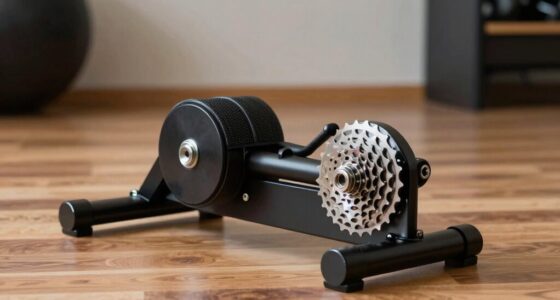
Speed training helps you move faster and more efficiently by focusing on explosive exercises like plyometrics, sprints, and resistance work. It trains your nervous system to activate muscles quickly and improves your overall running economy. Following proper form, gradually increasing intensity, and prioritizing rest reduce injury risk. Consistent practice builds strength and resilience, making everyday movements easier and more powerful. Keep exploring to learn how to incorporate these techniques into your routine effectively.

Get workout gear delivered free with Prime
- Fast, free delivery on millions of items
- Prime Video, Amazon Music and more included
- Member-only deals all year
Key Takeaways
- Speed training enhances muscle power, agility, and efficiency even for non-athletes, improving daily movement and fitness.
- Explosive drills like plyometrics and hill sprints develop strength and quickness applicable to everyday activities.
- Proper technique and gradual progression reduce injury risk while building speed and resilience.
- Regular speed training improves movement economy, making daily tasks easier and more efficient.
- Consistent routines promote long-term fitness gains, boosting overall athleticism and reducing injury chances.

Ever wonder how athletes consistently burst past their opponents on the field? The secret lies in effective speed training, which isn’t just for professionals. You can improve your speed too by understanding how training techniques work and how they help prevent injuries. Speed training isn’t about sprinting all-out every day; instead, it involves targeted exercises that boost your muscles’ power, improve your stride, and enhance overall agility. These exercises focus on quick, explosive movements that train your nervous system to activate muscles faster, making your runs more efficient.
Speed training boosts your muscles’ power, agility, and efficiency with targeted explosive exercises.
One of the most essential aspects of speed training for everyday athletes is adopting proper training techniques. This means incorporating drills like plyometrics, hill sprints, and resistance work into your routine. Plyometric exercises, such as box jumps or bounding, help develop explosive power by training your fast-twitch muscle fibers. Hill sprints are excellent for building strength and speed because they force your muscles to work against gravity, making each stride more powerful. Resistance training, like sprinting with a sled or resistance bands, adds extra load, encouraging your muscles to become stronger and more responsive. By following these techniques consistently, you’ll notice improvements in acceleration, top speed, and overall running economy.
But speed training isn’t just about pushing yourself harder; injury prevention plays an essential role. When you focus on proper form and gradual progression, you reduce the risk of strains, pulls, and other common injuries. Warming up thoroughly before each session prepares your muscles and joints for the explosive work ahead, decreasing the likelihood of tears or sprains. Incorporating flexibility and mobility exercises into your routine helps maintain the range of motion necessary for maximum stride length and reduces tension in muscles and tendons. Rest and recovery are equally important, giving your body time to repair minor damage and adapt to the increased workload. Overtraining can lead to fatigue and injury, so listening to your body, staying hydrated, and fueling properly are key components of injury prevention. Additionally, understanding the importance of proper training strategies can help you optimize your progress while minimizing risks.
In the end, consistent training that emphasizes proper techniques combined with smart injury prevention strategies will maximize your speed gains. Whether you’re running for fitness or sport, these methods help you move faster, more efficiently, and with less risk of setbacks. By making speed training a regular part of your routine, you’re not just chasing quick results—you’re building a stronger, more resilient version of yourself on the track or field.
As an affiliate, we earn on qualifying purchases.
Frequently Asked Questions
Can Speed Training Improve Overall Daily Movement Efficiency?
Yes, speed training can improve your daily movement efficiency. By focusing on biomechanics analysis, you learn how your body moves best, reducing unnecessary effort. Speed training also enhances muscle activation, making your muscles more responsive and powerful. This combination helps you move more smoothly, with better coordination and less fatigue. As a result, your overall daily activities become easier, more efficient, and less tiring.
How Long Does It Take to See Results From Speed Training?
Like a seed sprouting, your progress from speed training begins to show in as little as three to four weeks. You’ll notice improvements in speed endurance and technique refinement first, as your body adapts to new movement patterns. Consistent effort accelerates results, so stay committed. While some may see quick gains, true transformation often unfolds over two to three months, turning your speed into a powerful, steady rhythm.
Is Speed Training Suitable for People With Joint Issues?
Speed training might not be suitable if you have joint issues, as it can cause joint strain. You should consult your doctor before starting, and consider alternative exercises that are low-impact, like swimming or cycling, to improve your speed without stressing your joints. Focus on gentle, controlled movements to stay safe while enhancing your athletic performance. Always listen to your body and avoid exercises that cause discomfort.
What Equipment Is Necessary for Effective Speed Training at Home?
You only need basic training gear and a clear workout space for effective speed training at home. Invest in items like resistance bands, cones, or agility ladders to enhance drills. Make sure your workout space is spacious, flat, and free of obstructions to safely practice sprints, footwork, and plyometrics. With the right gear and ample room, you can improve your speed efficiently without needing specialized equipment or a gym.
How Can I Prevent Injuries During Speed Training Sessions?
Did you know that nearly 30% of injuries in speed training come from inadequate preparation? To prevent injuries, always start with a proper warm-up to loosen muscles and increase blood flow. Wear correct footwear that provides sufficient support and cushioning. Focus on proper technique and listen to your body, stopping if you feel pain. These steps help you stay safe and maximize your speed training gains.
resistance bands for speed training
As an affiliate, we earn on qualifying purchases.
As an affiliate, we earn on qualifying purchases.
Conclusion
So, next time you hit the track, remember that speed training isn’t just about quick sprints—it’s about smarter, structured effort. Some say it’s all about genetics, but consistent practice and proper technique can unleash your potential regardless of natural ability. Believe in your progress, stay dedicated, and trust that with the right approach, you can improve your speed over time. Don’t just wonder if it works—experience the results yourself and see how far you can go.
As an affiliate, we earn on qualifying purchases.
explosive power training equipment
As an affiliate, we earn on qualifying purchases.
As an affiliate, we earn on qualifying purchases.
Halloween Picks
halloween
As an affiliate, we earn on qualifying purchases.