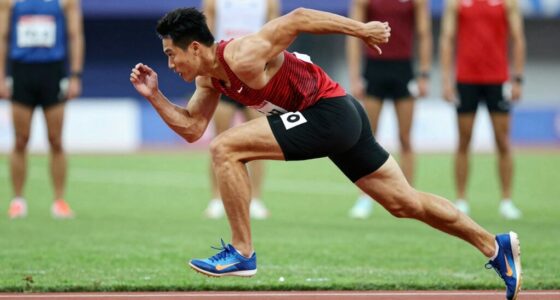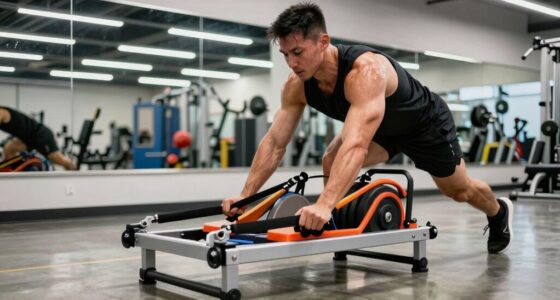
Deceleration training is just as essential as sprinting because it helps you stop quickly and change directions safely, boosting overall performance. Without proper deceleration skills, you’ll risk injuries like strains or ligament tears and struggle with agility on the field. Training your muscles and neuromuscular control for deceleration also improves reaction time and stability, allowing you to execute sharp movements confidently. Keep exploring to discover how mastering deceleration can elevate your game and prevent injuries.

Get workout gear delivered free with Prime
- Fast, free delivery on millions of items
- Prime Video, Amazon Music and more included
- Member-only deals all year
Key Takeaways
- Deceleration improves overall athletic performance by enabling quick stops and sharp turns, just like sprinting enhances speed.
- Proper deceleration training reduces injury risks during sudden stops or directional changes in sports.
- It enhances neuromuscular control, ensuring safe and efficient movement, similar to the benefits of sprinting drills.
- Deceleration skills help maintain body alignment, preventing strains and ligament injuries during rapid movements.
- Combining deceleration with sprinting creates a balanced training approach for speed, agility, and injury prevention.

Deceleration training is fundamental for athletes looking to improve their overall performance and reduce injury risk. While sprinting often gets the spotlight for its role in speed and explosive power, deceleration is just as essential. When you focus on properly controlling your speed and stopping efficiently, you enhance your ability to change direction quickly and safely. This skill is indispensable in many sports, where rapid stops and sharp turns are common. Without adequate deceleration training, you may be vulnerable to injuries like strains, sprains, or even ligament tears, especially when your body is caught off guard during sudden stops.
Deceleration training boosts performance, prevents injuries, and enhances quick, safe directional changes in sports.
Incorporating deceleration drills into your training routine helps you develop better body control and strength, which directly impacts your athletic performance. When your muscles and joints are conditioned to slow you down smoothly, you gain more confidence in your movements and can execute plays with greater precision. This is particularly important in sports such as basketball, soccer, or football, where quick stops and directional changes are frequent. Proper deceleration techniques also help prevent injury-causing movements by ensuring your body maintains proper alignment during abrupt stops. Proper deceleration enhances your ability to react swiftly to game situations, giving you an edge over opponents who might not have prioritized this skill. Additionally, training for deceleration can improve your neuromuscular control, which is crucial for coordinating complex movements effectively. Developing muscle memory through consistent practice also ensures more instinctive responses during high-pressure moments. Incorporating proper technique in deceleration drills is essential to maximize safety and effectiveness. Furthermore, understanding how to decelerate effectively can help in reducing the impact forces experienced during abrupt stops, thereby lessening the risk of injury.
Focusing on injury prevention through deceleration training also means you’re less likely to experience setbacks. Many injuries happen when your body is forced to decelerate suddenly or unevenly—like when you’re trying to stop after sprinting at full speed and your muscles aren’t prepared. Training your body to decelerate effectively minimizes excessive stress on muscles, tendons, and ligaments, which are often the first to give under sudden loads. It also improves your neuromuscular control, allowing your brain and muscles to work together seamlessly during rapid movements. This coordination reduces the risk of missteps, slips, or awkward landings that can lead to injury.
Ultimately, deceleration training enhances your athletic performance by making your movements more efficient and controlled. When you learn to slow down with power and stability, you can accelerate faster, change directions more sharply, and recover quickly from explosive movements. These capabilities are fundamental for maintaining a competitive edge and prolonging your athletic career. By integrating proper deceleration techniques into your training, you’re not only boosting your speed and agility but also building resilience against injuries. In essence, deceleration training is a key component of a well-rounded athletic program—just as important as sprinting itself—because it helps you perform at your peak while safeguarding your body against preventable injuries. Incorporating strength and conditioning tools, such as hot rollers, can assist in recovery and muscle relaxation, further supporting your training efforts.
decoration training agility drills
As an affiliate, we earn on qualifying purchases.
As an affiliate, we earn on qualifying purchases.
Frequently Asked Questions
How Often Should Deceleration Drills Be Incorporated Into Training?
You should incorporate deceleration drills 2 to 3 times weekly into your training routine. This frequency balances building your ability to slow down safely and effectively while helping prevent injuries. Consistent deceleration training enhances overall athletic performance, especially in sports requiring quick stops and changes of direction. Remember, integrating these drills into your regular training regimen is essential for injury prevention and improving your overall speed and agility.
Are There Specific Sports That Benefit Most From Deceleration Training?
You’ll find that sports like basketball, soccer, and football benefit most from deceleration training, as they demand quick stops and sharp changes in direction. Coincidentally, these skills boost agility enhancement and injury prevention. By focusing on deceleration, you improve your ability to slow down safely, reducing injury risk during sudden stops or turns. In these sports, mastering deceleration is essential for peak performance and staying injury-free.
What Are Common Mistakes to Avoid During Deceleration Exercises?
You should watch out for technique errors like poor posture or excessive knee bend that can lead to injury during deceleration exercises. Avoid equipment misuse by using the right gear, such as proper footwear and mats, to guarantee safety. Focus on controlled movements and gradual deceleration rather than rushing, which helps prevent strain and builds effective braking skills. Proper form and equipment use are key to maximizing benefits and staying injury-free.
How Does Deceleration Training Reduce Injury Risk?
Deceleration training reduces injury risk by improving your muscle flexibility and joint stability, which helps your body absorb sudden stops or changes in direction more effectively. When your muscles are flexible and your joints stable, you’re less likely to strain or sprain during rapid deceleration. This training enhances your body’s ability to control movements, minimizes the chance of falls or injuries, and keeps you safer during high-intensity activities.
Can Deceleration Training Improve Overall Athletic Performance?
Deceleration training boosts your overall athletic performance by enhancing biomechanical analysis and neuromuscular control. As you focus on controlled stops and slowdowns, you improve your body’s ability to adapt to sudden changes in speed and direction. This not only increases your agility and balance but also helps prevent injuries. By refining these skills, you become a more versatile and efficient athlete, capable of excelling in various sports and physical activities.
athletic deceleration training equipment
As an affiliate, we earn on qualifying purchases.
As an affiliate, we earn on qualifying purchases.
Conclusion
Remember, deceleration training is just as vital as sprinting—without it, your speed is incomplete. Studies show athletes who master deceleration reduce injury risk by up to 50%, allowing you to stop quickly and change direction safely. Imagine running at full speed, then stopping on a dime without losing balance or control—that’s the power of proper deceleration. So, don’t neglect it; incorporate deceleration drills into your routine and unleash your true athletic potential.
As an affiliate, we earn on qualifying purchases.
As an affiliate, we earn on qualifying purchases.
Halloween Picks
halloween
As an affiliate, we earn on qualifying purchases.