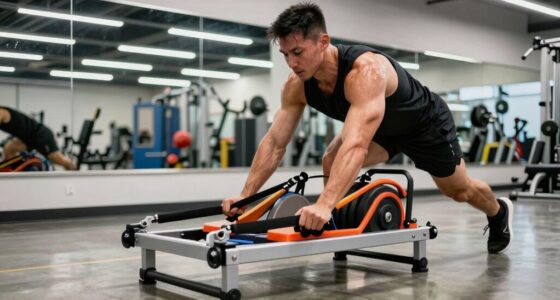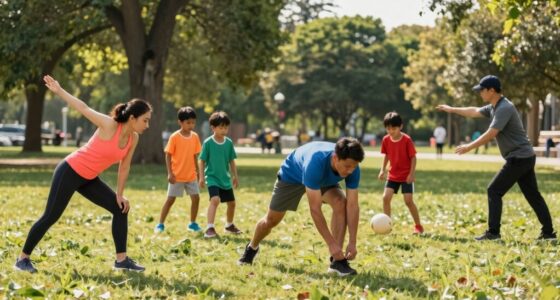
To use plyometrics safely, start slow and focus on proper landing techniques, like landing with slightly bent knees and engaging your core. Always warm up thoroughly and strengthen supporting muscles beforehand. Gradually increase intensity and volume, listen to your body, and take rest days to recover. Wear supportive footwear and train on impact-absorbing surfaces. Prioritizing technique and body signals helps prevent joint injury—continue exploring ways to stay safe during your plyometric workouts.

Get workout gear delivered free with Prime
- Fast, free delivery on millions of items
- Prime Video, Amazon Music and more included
- Member-only deals all year
Key Takeaways
- Progress gradually, increasing intensity and volume over time to prevent joint overload.
- Focus on proper landing techniques, landing with slightly bent knees and engaging core muscles.
- Incorporate a thorough warm-up and strengthen supporting muscles before high-impact plyometric exercises.
- Use appropriate footwear, training surfaces, and include rest days to reduce joint stress and injury risk.
- Monitor for joint discomfort and prioritize proper technique and body signals to maintain joint health.
Plyometrics can be highly effective for building explosive strength and improving athletic performance, but if you’re not careful, they can also put excessive strain on your joints. To protect your joint health and prevent injury, it’s essential to approach these exercises thoughtfully. The key is to start slow, progress gradually, and focus on technique. Jumping into high-intensity plyometric routines without proper preparation can overload your joints, increasing the risk of sprains, strains, or even stress fractures. Always listen to your body; if you feel pain or discomfort, stop immediately and reassess your approach.
Start slow, focus on technique, and listen to your body to protect your joints during plyometric training
Before jumping into intense plyometric drills, guarantee your muscles and connective tissues are well-prepared. Incorporate a solid warm-up routine that elevates your heart rate and loosens your joints. Dynamic stretches, light jogging, or low-impact jumps can prime your body for more explosive movements. Strengthening your supporting muscles, especially around your knees, ankles, and hips, is vital for injury prevention. Exercises like squats, lunges, and calf raises build a stable muscular foundation that absorbs shock and reduces joint stress during plyometric work.
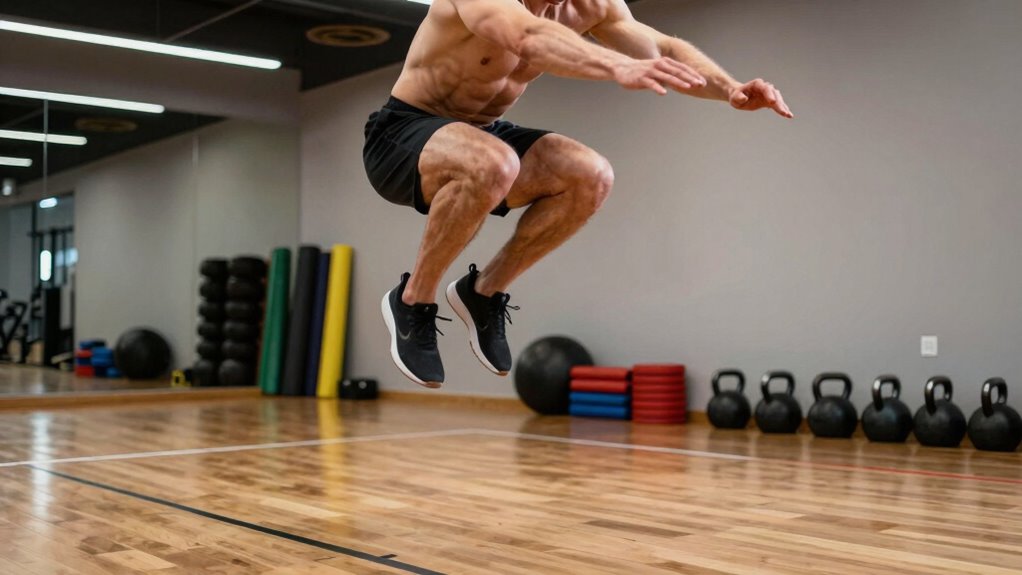
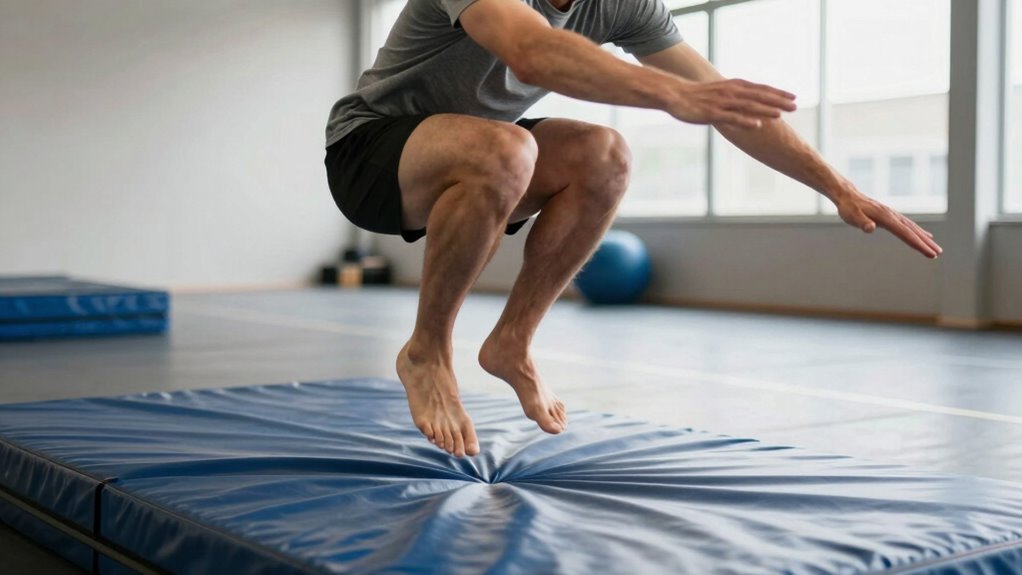
When you perform plyometric exercises, focus on landing softly and with control. Proper landing technique minimizes the impact on your joints and helps maintain joint health over time. Aim to land with your knees slightly bent, engaging your core to stabilize your body, and avoid locking your joints. Plyometric training should be explosive but controlled; don’t sacrifice form for the sake of height or distance. Using a lower volume of repetitions and gradually increasing intensity allows your joints to adapt safely to the added stress.
Incorporate rest days into your training schedule to give your joints and muscles time to recover. Overtraining is a common mistake that can lead to joint fatigue and injury. Cross-training with low-impact activities like swimming or cycling can maintain your cardiovascular fitness without overloading your joints. Additionally, wearing proper footwear that provides adequate cushioning and support can markedly reduce joint stress during jumps and landings. Ensuring your training surface is suitable can also help minimize impact and prevent injuries.
Finally, pay attention to your body’s signals. If you experience persistent joint discomfort, swelling, or instability, it’s wise to back off and consult a healthcare professional. Regularly practicing mobility exercises and maintaining good joint health habits can also help you stay injury-free. With patience, proper technique, and a focus on injury prevention, you can safely reap the explosive benefits of plyometric training while preserving your joint health.
Products Worth Considering

Hyperice Hypervolt Go 3 Percussion Massage Gun with Carry Case

Blueair Blue Pure 211i Max Air Purifier

BowFlex Results Series SelectTech Dumbbells
As an affiliate, we earn on qualifying purchases.
Frequently Asked Questions
Can Older Adults Safely Perform Plyometric Exercises?
Yes, older adults can safely perform plyometric exercises with proper modifications. Age-related adaptations, like lower-impact movements and controlled jumps, help prevent joint stress. These exercises also boost balance improvement, reducing fall risks. Start slowly, focus on proper form, and consult a healthcare professional. With careful progression, plyometrics can enhance strength and agility without damaging your joints.
What Are Signs of Joint Overuse During Plyometrics?
If you notice joint pain or inflammation signs during plyometrics, it’s a clear warning. You might feel persistent aching, swelling, or stiffness in your joints, especially after workouts. These signs indicate overuse or excessive strain. Pay attention to these symptoms, reduce intensity, and rest. Ignoring them could lead to more serious injuries, so always listen to your body and consult a professional if discomfort persists.
How Often Should Beginners Incorporate Plyometrics Into Their Routine?
As a beginner, you should incorporate plyometrics into your routine 1-2 times a week to guarantee plyometric safety and avoid overtraining. Follow beginner guidelines by starting with low-impact exercises and gradually increasing intensity. Pay attention to your body’s signals, and allow ample recovery time. This approach helps prevent joint overuse and injury, making your plyometric training effective and safe while building strength and power over time.
Are There Specific Footwear Recommendations for Plyometric Training?
Think of your shoes as your foundation—solid, reliable, and supportive. For plyometric training, opt for footwear with good footwear stability and cushioning shoes that absorb impact and support quick movements. Avoid worn-out shoes or those with little support, as they can increase joint stress. Proper shoes help protect your joints, enhance performance, and keep you safe during explosive movements. Always choose gear designed for high-impact workouts.
How Can I Modify Plyometrics for Existing Joint Issues?
To accommodate joint issues, opt for joint-friendly modifications like low-impact alternatives such as box step-ups or squat jumps instead of high-impact plyometric moves. Focus on controlled, gentle landings and avoid explosive jumps that strain your joints. Incorporate softer surfaces like mats or grass, and listen to your body. Consulting a physical therapist can also help tailor exercises that build strength safely without aggravating your joint conditions.
Conclusion
To keep your joints safe while doing plyometrics, prioritize proper form, start slowly, and incorporate adequate rest. Remember, research shows that with the right approach, you can reduce injury risk by up to 70%. So, listen to your body, progress gradually, and always warm up. By doing so, you’ll build explosive power without sacrificing joint health, making your workouts safer and more effective in the long run.