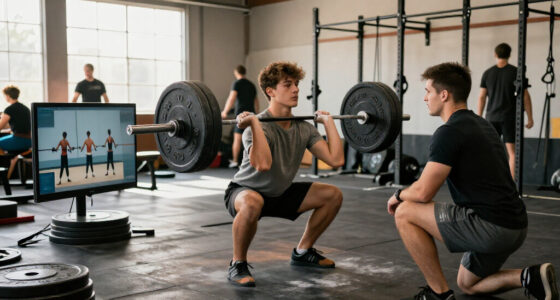
To make a plyometric box safer, guarantee your footing is stable and shoes have good grip before jumping. Always place the box on flat, non-slip surfaces, and check it for damage or wobbling before use. Regularly inspect and maintain the equipment to prevent accidents. Use controlled, deliberate movements and land softly with bent knees to absorb impact. Keep your workout area organized and hazard-free. Want to discover more safety tips? Keep exploring for essential advice.

Get workout gear delivered free with Prime
- Fast, free delivery on millions of items
- Prime Video, Amazon Music and more included
- Member-only deals all year
Key Takeaways
- Ensure the box is placed on a flat, non-slip surface for stability during use.
- Regularly inspect and maintain the box to identify and repair damage or wear.
- Use shoes with good grip and approach the box with controlled, deliberate movements.
- Verify the box’s stability by gently pushing before use and remove debris or hazards.
- Conduct workouts in a clutter-free, organized environment to prevent trips and accidents.
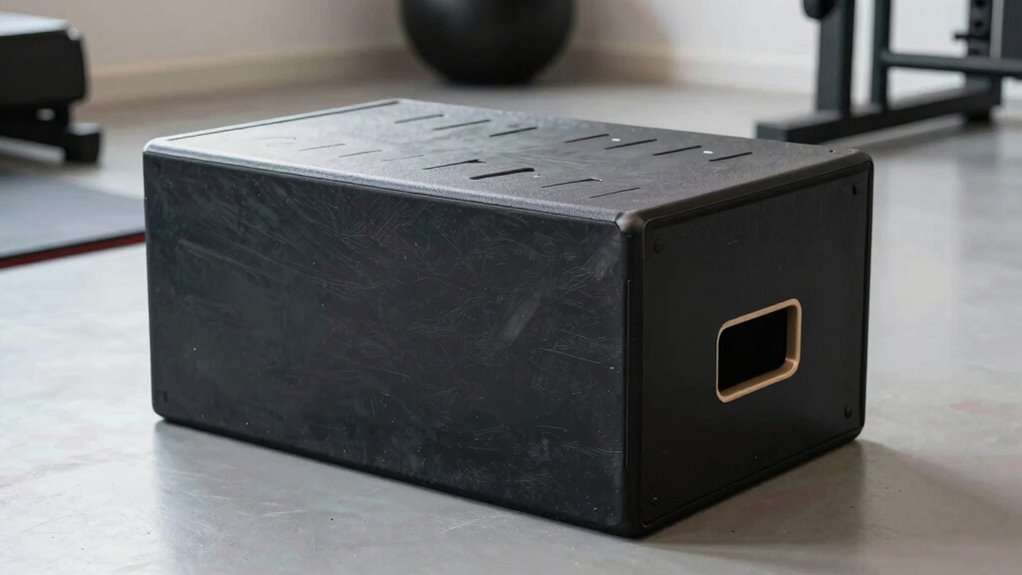
Are you confident you’re using plyometric boxes safely? Ensuring your safety starts with understanding the importance of proper footing and secure placement. Before you even step onto the box, check that your footing is stable and firm. Your shoes should have good grip, and your approach should allow you to land with your feet shoulder-width apart. Proper footing is essential because it prevents slips and wobbling that could cause falls or ankle injuries. When you jump onto the box, aim to land softly with knees slightly bent, absorbing the impact smoothly. This not only protects your joints but also maintains your balance, making your workout more effective and safer.
Securing the plyometric box’s placement is just as critical. Always place the box on a flat, non-slip surface, such as a rubber gym mat or a sturdy, level floor. A secure placement means the box won’t shift or wobble during use, which can be dangerous. Before beginning your exercises, give the box a gentle push to confirm it’s stable. If it moves or wobbles, reposition it until it sits firmly. Many safety incidents happen because the box isn’t placed correctly, so taking this extra moment can prevent injuries. Additionally, double-check that the box is free of debris, dust, or any objects that could cause slipping. The surface of the box itself should be free of splinters or worn-out padding; a rough or damaged surface increases the risk of cuts or slips. Incorporating knowledge about equipment safety can help you identify potential hazards before they cause accidents. Furthermore, understanding maintenance practices can prolong the lifespan of your equipment and prevent unexpected failures. Regular inspections and cleaning are vital to maintain a safe workout environment. In addition, keeping the equipment area free of clutter helps minimize trip hazards and ensures a safer workout space. Maintaining awareness of equipment condition is essential for detecting early signs of wear and tear that could compromise safety.
Another key aspect of safety is the quality and condition of the plyometric box. A sturdy, well-constructed box made from durable materials offers better security than cheap, flimsy alternatives. Regularly inspect the box for cracks, loose screws, or broken parts. If you notice any damage, replace or repair the box before using it again. Properly maintained equipment reduces the chance of unexpected failures during your workout. Remember, safety isn’t just about the equipment—it’s also about your technique. Always focus on controlled, deliberate movements, especially when jumping down. Avoid rushing or trying to overreach your current ability, as this can compromise your balance and increase the risk of injury. Paying attention to equipment maintenance can help ensure your gear remains safe and reliable over time.
As an affiliate, we earn on qualifying purchases.
Frequently Asked Questions
How Do I Properly Inspect My Plyometric Box for Damage?
To properly inspect your plyometric box, start with a thorough damage assessment. Check for cracks, splinters, or fractures in the wood or material. Examine the joints and corners for stability, ensuring nothing feels loose or wobbly. Look at the surface for signs of wear or tears. If you notice any damage, avoid using the box until it’s repaired or replaced. Regular inspections keep you safe during workouts.
What Materials Are Safest for Plyometric Boxes?
You want materials that are durable, stable, and safe. Opt for high-density foam, sturdy wood, or heavy-duty rubber, which provide excellent material durability for impact absorption and longevity. Additionally, choose plyometric boxes with slip-resistant surfaces to prevent accidents during use. These materials not only support your workout but also guarantee safety by reducing slips, falls, and injuries, making your exercise routine more effective and secure.
How Should I Position the Box for Maximum Safety?
You should position the box on a flat, stable surface to prevent slipping. Make sure you have a proper grip on the box, gripping it firmly when moving or stepping onto it. Wear appropriate footwear with good grip and cushioning to reduce injury risk. Always check the box’s stability before use, and keep the area clear of obstacles. Proper positioning and footwear help you stay balanced and safe during plyometric exercises.
Are There Age Restrictions for Using Plyometric Boxes?
You should consider age restrictions for plyometric box use, especially for children or seniors. Younger kids need supervision and smaller, softer boxes to prevent injury, while older adults must follow safety guidelines to avoid falls or strains. Always assess individual strength and coordination, ensuring proper technique. Age considerations help you stay safe, making each jump confident and controlled, turning your workout into a secure, enjoyable experience.
Can I Modify a Box to Improve Safety?
Yes, you can modify a box to improve safety. Adding custom padding cushions hard edges, reducing injury risk if you misstep. Installing a non-slip grip on the surface helps prevent slips during jumps, especially on smooth or wet surfaces. These modifications enhance safety by providing better stability and comfort, making your workouts safer. Just make certain the modifications don’t compromise the box’s stability or weight capacity for maximum safety.
As an affiliate, we earn on qualifying purchases.
Conclusion
To keep your plyometric box workouts safe, always choose a sturdy, well-made box and inspect it regularly for damage. Use proper technique and start with lower heights before progressing. Keep your workspace clear and wear appropriate footwear. Remember, safety is no accident—taking these precautions guarantees you don’t bite off more than you can chew. Stay vigilant and listen to your body; a cautious approach today keeps injuries at bay tomorrow.
As an affiliate, we earn on qualifying purchases.
rubber gym mats for plyometric exercises
As an affiliate, we earn on qualifying purchases.
As an affiliate, we earn on qualifying purchases.
Fall Picks
fall essentials
As an affiliate, we earn on qualifying purchases.