
Training sleds fit perfectly into strength and conditioning by boosting your strength, speed, and endurance through versatile resistance. You push, pull, or drag weights across different surfaces, engaging multiple muscle groups for a full-body workout. They help improve athletic performance, aid recovery, and increase functional strength—all while being cost-effective and adaptable to any training setting. Keep exploring to discover how sled training can elevate your fitness and optimize your results.

Get workout gear delivered free with Prime
- Fast, free delivery on millions of items
- Prime Video, Amazon Music and more included
- Member-only deals all year
Key Takeaways
- Sled training enhances overall strength, speed, and endurance through versatile resistance exercises.
- It promotes functional movement patterns relevant to athletic performance and daily activities.
- Sled work supports progressive overload, aiding gradual strength development and injury prevention.
- It offers low-impact, controlled resistance ideal for rehabilitation and injury recovery programs.
- Sled training integrates seamlessly into conditioning routines, improving muscular endurance and cardiovascular fitness.
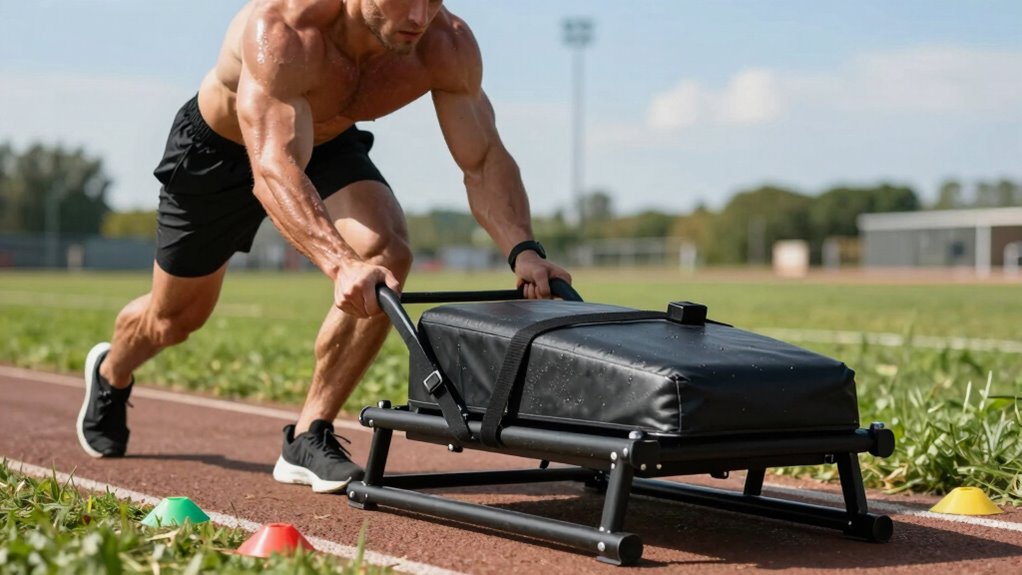
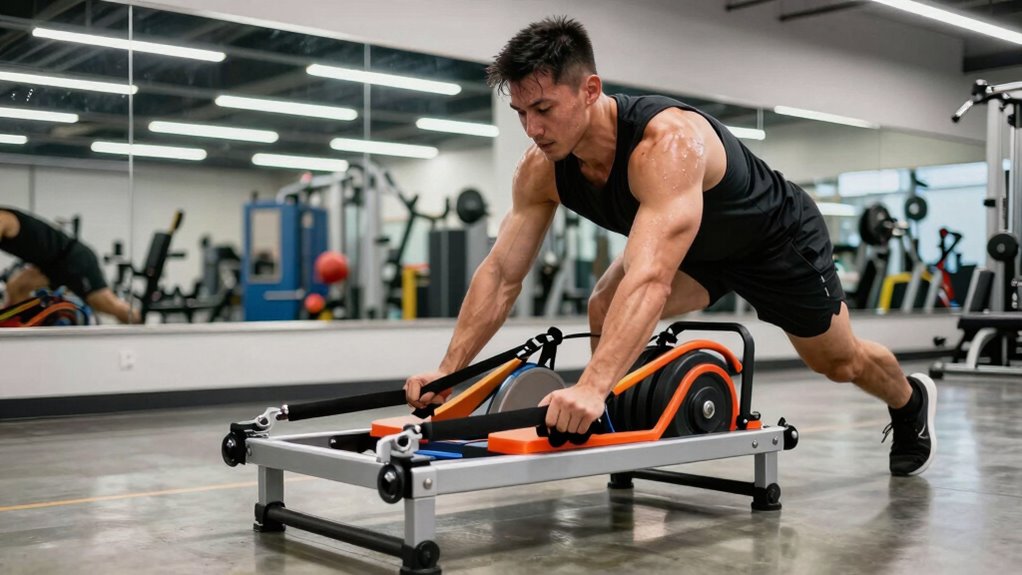
Training sleds have become a staple in strength and conditioning programs because they offer a versatile and effective way to build power, speed, and endurance. These tools allow you to push, pull, or drag weights across various surfaces, providing a dynamic workout that targets multiple muscle groups simultaneously. One of the key advantages of using sleds is their ability to incorporate manual resistance, giving you a controlled and customizable way to challenge your muscles. Unlike traditional weightlifting, sled training emphasizes movement and function, which translates well to athletic performance. Whether you’re an athlete looking to improve your explosive strength or someone recovering from injury, sleds can be adapted to your needs.
Sleds enhance strength, speed, and endurance through versatile, functional, manual resistance training adaptable for all fitness levels.
Manual resistance with sleds is especially beneficial during rehabilitation exercises. As you recover from an injury, you need to gradually rebuild strength and mobility without risking further damage. Sleds allow you to apply just the right amount of resistance, making them suitable for low-impact, controlled movements that focus on proper form. This gradual approach helps in restoring muscle function, increasing joint stability, and improving overall movement patterns. You can start with light loads and short distances, steadily increasing resistance as your strength improves. This method makes sled training an excellent complement to physical therapy, helping you regain confidence and functionality in your movements.
In addition to rehabilitation, sled training enhances your overall conditioning by promoting muscular endurance and cardiovascular health. As you push or pull a sled, you’re engaging multiple muscle groups—legs, core, arms—simultaneously. This full-body engagement boosts calorie burn and helps develop functional strength useful in everyday activities. The variability in sled workouts also keeps your training fresh and adaptable, allowing you to modify resistance levels, surface types, and movement patterns to match your goals. Incorporating functional training principles with sled work can improve your ability to perform daily tasks more efficiently. Moreover, sled training can be tailored to simulate real-world functional movements, making it highly practical for various training needs.
Furthermore, sled training encourages explosive power and speed development, which are essential in many sports. You can perform short, intense sprints with a sled to improve acceleration and overall speed. The resistance adds an extra challenge, forcing your muscles to work harder during each stride or push. This direct transfer to sport-specific movements can greatly enhance your athletic performance. Additionally, sleds are relatively cost-effective compared to many other training tools, making them accessible for a wide range of training environments. Overall, sleds fit seamlessly into strength and conditioning routines by offering a complete workout that emphasizes manual resistance, supports rehabilitation, and boosts athletic capability—all while being adaptable and easy to incorporate into various training phases.
training sled for strength and conditioning
As an affiliate, we earn on qualifying purchases.
As an affiliate, we earn on qualifying purchases.
Frequently Asked Questions
Can Training Sleds Be Used for Injury Rehabilitation?
Yes, training sleds can be used for injury rehabilitation when incorporated with proper rehabilitation techniques. They help improve strength, mobility, and muscle activation without excessive joint stress, making them ideal for injury prevention and recovery. You should always work with a professional to guarantee sled exercises are suitable for your specific injury. Using sleds carefully can accelerate recovery, rebuild strength, and reduce future injury risks effectively.
How Do Sled Training Exercises Vary for Different Sports?
You tailor sled training exercises like sport-specific drills to match your sport’s demands, using sled design to target key muscle groups. For football, you might focus on explosive starts and sled pushes, while for soccer, agility and quick directional changes are prioritized. Adjust weight and movement patterns to mimic sport actions, making your training more effective. This customization helps improve performance and reduces injury risk.
What’s the Ideal Sled Weight for Beginners?
As a beginner, start with a lightweight sled, around 25-50 pounds, to focus on proper form and build confidence. Keep the sled speed moderate to guarantee control, and prioritize smooth, consistent movements. Use weight progression gradually, adding small increments as your strength and technique improve. This approach helps you avoid injury, develop strength safely, and make steady progress in your sled training journey.
Are There Any Safety Precautions for Sled Training?
Safety precautions are essential when sled training—don’t bite off more than you can chew. Always check your equipment for wear and tear, and make sure proper footwear with good grip to prevent slips. Maintain your sled regularly to avoid malfunctions, and start with lighter weights to avoid injury. Keep focused, watch your form, and listen to your body—these steps prevent accidents and keep your training both effective and safe.
How Often Should Sled Workouts Be Incorporated Into Training?
You should incorporate sled workouts 2 to 3 times a week, adjusting based on your goals and recovery. Vary sled speed to target different energy systems—slower for strength, faster for power. Use resistance variety to challenge your muscles differently, ensuring you don’t plateau. Proper rest between sessions is key. Consistent, appropriately scheduled sled training enhances strength, endurance, and overall conditioning without overtraining.
adjustable resistance sled for athletic training
As an affiliate, we earn on qualifying purchases.
As an affiliate, we earn on qualifying purchases.
Conclusion
Incorporating training sleds into your routine isn’t just about building strength or speed—it’s about understanding that consistent effort, like pushing a sled, leads to progress over time. The theory that hard work always pays off holds true here; the more you push through challenges, the stronger you become. Keep pushing, stay committed, and you’ll see that these tools aren’t just equipment—they’re catalysts for growth, resilience, and mastery in your fitness journey.
As an affiliate, we earn on qualifying purchases.
As an affiliate, we earn on qualifying purchases.
Halloween Picks
halloween
As an affiliate, we earn on qualifying purchases.