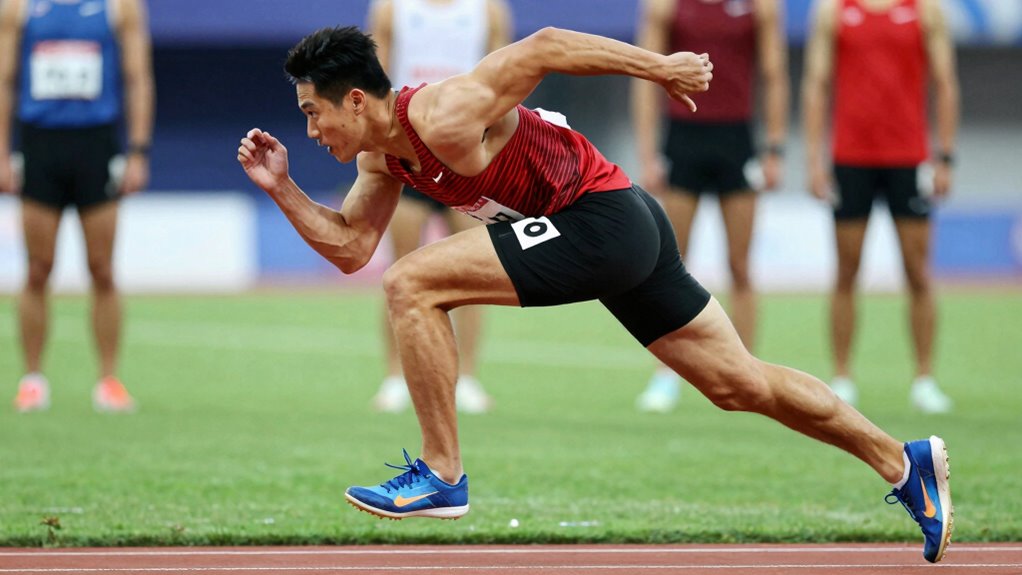
To improve your lateral speed for court and field sports, focus on dynamic drills like ladder and cone exercises to boost quick footwork and directional changes. Incorporate plyometric moves such as lateral jumps and box jumps to develop explosive power, and strengthen your core with planks and twists for better balance during rapid movements. Practice in realistic, high-pressure environments to improve reaction time and adaptability. Keep practicing these methods, and you’ll discover even more tips to enhance your agility and quickness.
Key Takeaways
- Incorporate ladder and cone drills to enhance quick foot placement and directional changes.
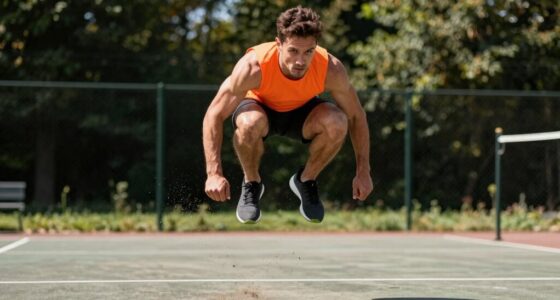
- Perform plyometric exercises like lateral jumps and box jumps to build explosive side-to-side power.
- Strengthen core stability with planks and rotational exercises to improve balance during rapid movements.
- Simulate game scenarios with high-pressure, sport-specific drills for better responsiveness and movement efficiency.
- Prioritize consistent practice and proper recovery to prevent injuries and optimize lateral speed development.

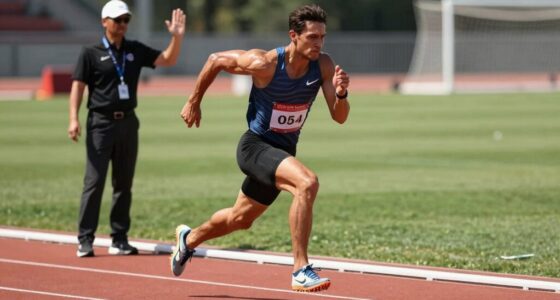
Are you looking to boost your lateral speed to elevate your performance in sports? Improving your side-to-side quickness is essential for gaining an edge on the court or field. The good news is, you can develop this skill through targeted training that emphasizes agility drills and plyometric exercises. These workouts help you move more efficiently, react faster, and change direction seamlessly, which are indispensable for sports like basketball, soccer, tennis, and volleyball.
Start by incorporating agility drills into your routine. Ladder drills, cone drills, and shuttle runs are excellent for enhancing your lateral movement. With ladder drills, for example, you’ll work on quick foot placement, which directly translates into quicker side-to-side movements. Focus on maintaining proper form—stay low, keep your knees slightly bent, and use your arms to propel your movements. Cone drills, where you weave around markers set in a zigzag pattern, challenge your ability to change directions swiftly and efficiently. These drills improve your reaction time and teach your body to accelerate and decelerate effectively, which are indispensable for quick lateral shifts. Paying attention to your piercing hygiene and avoiding irritants can also help keep you comfortable and focused during training sessions. Additionally, understanding the importance of muscle responsiveness can motivate you to include exercises that enhance your ability to react quickly to game situations. Incorporating high-pressure training environments can further simulate game scenarios, helping your body adapt to real-time demands. Incorporating natural movement patterns into your training can further enhance the transferability of your skills to game scenarios.
Enhance your lateral agility with ladder and cone drills for quicker, more efficient side-to-side movements.
Complement agility drills with plyometric exercises, which develop explosive power and improve muscle responsiveness. Plyometrics like lateral jumps, box jumps, and bounding drills target your fast-twitch muscle fibers, enabling you to push off the ground more forcefully and change direction rapidly. Lateral jumps, performed by jumping side to side over an object or line, are particularly effective for strengthening the muscles used in lateral movements. Incorporate these exercises into your training at least two to three times a week, ensuring you allow proper recovery to prevent injury and maximize gains.
Additionally, focus on core strength and stability, which are foundational for quick lateral movements. Incorporate planks, Russian twists, and leg raises into your routine. A strong core helps you maintain balance during rapid side-to-side shifts and prevents unnecessary wobbling or loss of control.

GHB Pro Agility Ladder Agility Training Ladder Speed 12 Rung 20ft with Carrying Bag
- Length and Rungs: 20 feet long with 12 rungs
- Adjustable Rung Spacing: Rung spacing adjustable up to 15 inches
- Portable Design: Includes carrying bag for easy transport
As an affiliate, we earn on qualifying purchases.
As an affiliate, we earn on qualifying purchases.
Frequently Asked Questions
How Long Does It Take to See Improvements in Lateral Speed?
You can typically see improvements in lateral speed within 4 to 6 weeks with consistent training. Staying dedicated and maintaining training consistency is key, but don’t forget injury prevention—proper warm-ups and technique help you avoid setbacks. As you continue, you’ll notice increased agility and quicker side-to-side movements, boosting your performance on court or field. Keep pushing, stay consistent, and prioritize safe training to see results faster.
Can Older Athletes Effectively Increase Their Lateral Agility?
Yes, older athletes can effectively increase their lateral agility despite age-related decline. Consistent agility enhancement exercises tailored to your fitness level promote muscle strength, flexibility, and coordination. Incorporate lateral drills, balance work, and strength training into your routine. While progress may be slower than younger athletes, persistence leads to meaningful improvements. Stay committed, listen to your body, and you’ll enhance your lateral agility and maintain performance longer.
What Equipment Is Essential for Lateral Speed Training?
You need minimal equipment for effective lateral speed training. Focus on proper footwear selection to guarantee good grip and support, which helps prevent injuries and boosts performance. Incorporate agility ladder drills into your routine; they’re excellent for enhancing foot speed, coordination, and lateral agility. You can do these drills anywhere, making them a practical, affordable way to improve your lateral quickness and overall athleticism on the court or field.
How Often Should Lateral Speed Drills Be Incorporated Into Training?
You should incorporate lateral speed drills into your training 2-3 times a week, like tuning a finely crafted instrument. This frequency allows your muscles to adapt without burnout. Mix up drill variety to keep your training fresh—think of it as adding different colors to your palette. Consistent, varied training helps you sharpen your lateral quickness, turning you into a swift, agile force on the court or field.
Are There Any Common Mistakes to Avoid During Lateral Speed Exercises?
To avoid common mistakes during lateral speed exercises, you should watch out for incorrect form, like leaning too much or not engaging your core, which can reduce effectiveness and increase injury risk. Also, avoid rushing progress; lack of progression can stall your improvement. Focus on controlled, proper technique first, then gradually increase intensity and complexity. This approach guarantees safe, steady gains in lateral speed and overall agility.
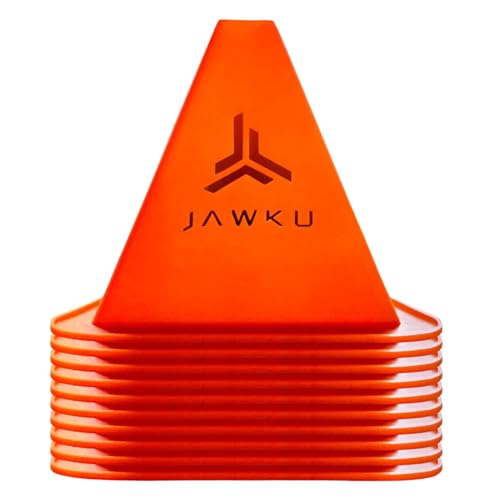
JAWKU Speed Cones Training System for Agility, Speed, Drills and Athletic Sports Training, 10 Cones
- Versatile for Multiple Sports: Suitable for soccer, football, basketball, and more
- Use on Any Surface: Works on grass, concrete, turf, and gym floors
- Enhances Agility and Speed: Improves cutting, bounding, and acceleration skills
As an affiliate, we earn on qualifying purchases.
As an affiliate, we earn on qualifying purchases.
Conclusion
Improving your lateral speed takes time and consistent effort, but don’t get discouraged if progress feels slow. Remember, small improvements add up and can make a big difference on the court or field. It’s easy to think you’re already fast enough, but pushing yourself just a little more can release new levels of agility and confidence. Keep training, stay patient, and trust that your efforts will pay off when it counts most.

BalanceFrom 3-in-1 Foam Plyometric Jump Box for Home Gym, Multiple Heights
- Versatile 3-in-1 Design: Adjustable heights for various workouts
- High-Density Foam Construction: Durable and impact-absorbing material
- Non-Slip Textured Surface: Ensures stability during exercises
As an affiliate, we earn on qualifying purchases.
As an affiliate, we earn on qualifying purchases.

Trideer Exercise Ball for Yoga, Pilates & Fitness – Stability Ball Equipment for Home Gym & Office Chair, Core & Balance Training Accessories, Physical Therapy Equipment, Quick Pump Included, 5 Sizes
- Enhanced grip with anti-slip stripes: Frosted texture for stability
- Safe, non-toxic PVC material: Meets safety standards and eco-friendly
- Supports up to 330 lbs: Burst-resistant with slow air release
As an affiliate, we earn on qualifying purchases.
As an affiliate, we earn on qualifying purchases.