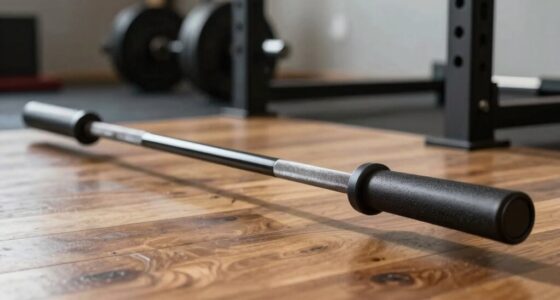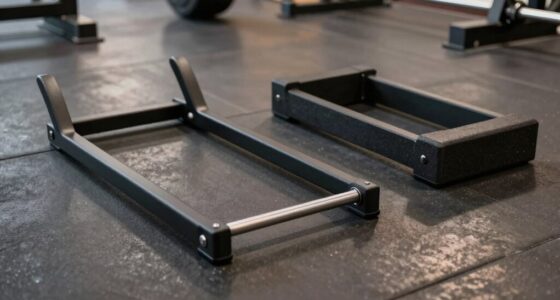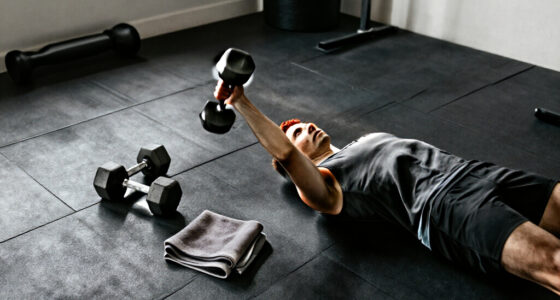
You don’t need a pec deck machine to effectively target your chest at home. Focus on exercises like dumbbell flys, resistance band presses, or using sturdy chairs for incline or decline push-ups. Proper setup and technique are key—keep your elbows slightly bent, control your movements, and squeeze your chest muscles at the peak. By maintaining good form, you can maximize muscle engagement and see results without specialized equipment. Keep exploring to discover more tips for chest development at home.

Get workout gear delivered free with Prime
- Fast, free delivery on millions of items
- Prime Video, Amazon Music and more included
- Member-only deals all year
Key Takeaways
- Pec deck machines are not essential; effective chest isolation can be achieved with free weights or resistance bands at home.
- Use dumbbells, resistance bands, or makeshift setups to target chest muscles without specialized equipment.
- Proper positioning and controlled movements are crucial for effective chest engagement during home exercises.
- Focus on muscle contraction, slow reps, and the mind-muscle connection to maximize chest development.
- Consistency and proper technique are more important than equipment type for effective chest training at home.

Are pec deck machines truly essential for building a strong, defined chest? Not necessarily. While these machines are popular in gyms, they’re just one tool among many for chest development. The key to effective chest workouts lies in understanding muscle engagement and proper equipment setup. You can achieve impressive results at home without a pec deck machine if you focus on exercises that maximize muscle activation and are set up correctly.
You don’t need a pec deck to build a strong, defined chest—focus on proper form and muscle engagement instead.
When you perform chest isolation exercises, your goal is to target the pectoral muscles directly, minimizing the involvement of secondary muscles. To do this effectively, you need to pay attention to how you position your body and equipment. For example, if you’re using dumbbells or resistance bands, make sure your elbows are slightly bent and your movements are controlled. This ensures you’re engaging the chest muscles rather than relying on momentum or secondary muscle groups. Proper equipment setup is crucial—whether you’re using a makeshift bench or a sturdy chair—so that your arms move in a controlled, natural arc. Adjust your seat height or grip position to hit the muscles from different angles, which promotes balanced development. Incorporating muscle engagement techniques can further enhance your workout effectiveness. Additionally, understanding muscle activation principles can help you refine your form for better results. Being mindful of exercise variations can also help target different areas of the chest for more comprehensive development.
Muscle engagement is at the heart of any successful chest workout. When you focus on the contraction of your pectorals, you stimulate growth more effectively. Slow, deliberate movements with a mind-muscle connection help you feel the chest working. For instance, if you’re doing fly exercises with resistance bands, focus on squeezing your chest at the peak of each movement. This intense focus increases muscle engagement and improves the quality of your workout, even if you lack fancy equipment. Additionally, incorporating proper form and controlled reps can help prevent injury and maximize muscle activation.
You don’t need a pec deck machine to target your chest effectively. Instead, prioritize exercises that allow you to control the motion and maximize muscle engagement. Adjust your equipment setup to ensure proper form, and focus on slow, deliberate reps that emphasize contraction over momentum. With consistency, your chest muscles will develop strength and definition, just as they would on a machine. Ultimately, the right exercise choice, attention to form, and muscle engagement are what truly matter—regardless of whether you’re working out in a gym or at home with limited equipment.
As an affiliate, we earn on qualifying purchases.
Frequently Asked Questions
Can I Build a DIY Pec Deck Machine at Home?
Yes, you can build a DIY pec deck machine at home by using common materials like wood, metal, and resistance bands. While it might not match commercial equipment, DIY construction offers a cost-effective alternative for chest isolation exercises. Focus on creating a sturdy frame and adjustable supports to mimic the movement. Equipment alternatives like resistance bands or homemade pulley systems can also help target your chest effectively without buying a professional pec deck.
What Are Common Mistakes When Using Chest Isolation Exercises?
Like a sculptor chipping away at marble, you might struggle with muscle engagement if you ignore proper form during chest isolation exercises. Common mistakes include using too much weight, which reduces control, or flaring elbows, which shifts the focus away from your chest. Always focus on slow, controlled movements to guarantee you’re targeting the right muscles. Maintain proper form to maximize gains and prevent injury.
How Often Should I Train Chest Muscles at Home?
You should train your chest muscles about 2 to 3 times a week, allowing sufficient time for muscle recovery between sessions. This training frequency helps optimize muscle growth and avoid overtraining. Pay attention to how your body responds; if you feel sore or fatigued, give yourself extra rest. Balancing workout intensity with proper recovery guarantees steady progress without risking injury or burnout.
Are There Alternative Exercises Without Equipment for Chest Isolation?
Some believe you can’t effectively isolate your chest without equipment, but that’s not true. You can target your chest muscles using bodyweight techniques like push-ups with elevations or close-grip push-ups. Resistance band exercises also work well, providing resistance to mimic machine movements. These alternatives allow you to isolate the chest at home effectively, building strength and muscle without needing a gym or fancy equipment.
What Safety Precautions Should I Take With Home Gym Equipment?
To guarantee safety with your home gym equipment, follow safety guidelines like checking equipment stability before use and starting with light weights. Always warm up properly to prevent injury and use correct form for each exercise. Keep your workout area clear to avoid accidents, and don’t push beyond your limits. Regularly inspect your equipment for damage, and store weights securely. These steps help with injury prevention and keep your workouts safe and effective.
As an affiliate, we earn on qualifying purchases.
Conclusion
Incorporating pec deck machines or chest isolation exercises at home can greatly boost your chest development. Remember, Rome wasn’t built in a day, so stay consistent and patient with your routine. With dedication and the right approach, you’ll see progress before you know it. Keep pushing forward, and don’t let setbacks discourage you—you’re on your way to a stronger, more defined chest. Stay disciplined, and success will follow suit.
adjustable makeshift workout bench
As an affiliate, we earn on qualifying purchases.
As an affiliate, we earn on qualifying purchases.
As an affiliate, we earn on qualifying purchases.
Columbus Day / Indigenous Peoples' Day Picks
long weekend sales
As an affiliate, we earn on qualifying purchases.