If you’re choosing between chest press machines and dumbbell pressing, consider your goals and experience level. Machines offer a safe, controlled environment ideal for beginners and focused muscle targeting. Dumbbells require more stabilization, engaging additional muscles and building functional strength. Combining both can improve overall results, safety, and muscle balance. By understanding the differences, you’ll be better equipped to optimize your chest workouts—keep exploring to learn how to make both tools work best for you.

Get workout gear delivered free with Prime
- Fast, free delivery on millions of items
- Prime Video, Amazon Music and more included
- Member-only deals all year
Key Takeaways
- Chest press machines provide controlled, guided movements, ideal for beginners and targeted muscle isolation.
- Dumbbell pressing engages stabilizer muscles and allows for natural, unrestricted motion, enhancing functional strength.
- Machines reduce injury risk and joint strain, while dumbbells require greater coordination and control.
- Dumbbells offer versatility with multiple angles, whereas machines focus on quick, consistent chest activation.
- Combining both methods maximizes muscle engagement, safety, and overall chest development.
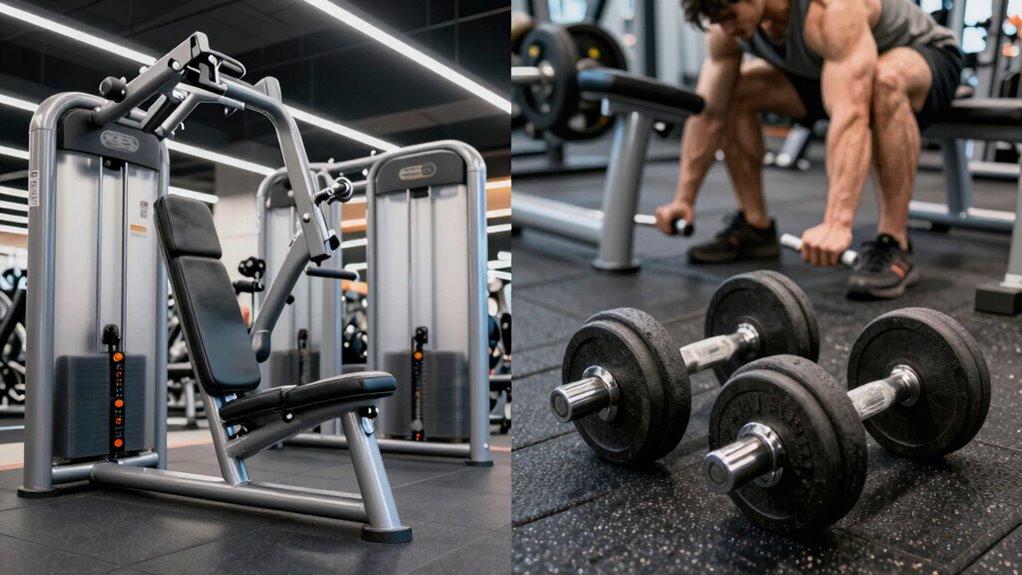
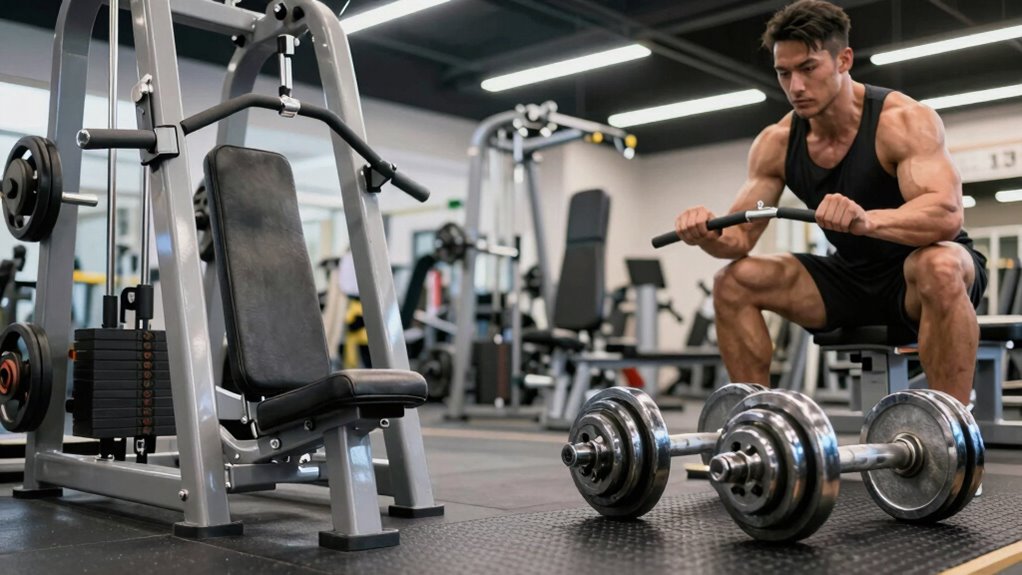
When it comes to building a strong, well-defined chest, choosing the right equipment can make a significant difference. Both chest press machines and dumbbell pressing have their unique advantages, and understanding how each impacts muscle activation and equipment versatility can help you decide which to incorporate into your workout routine. Chest press machines offer a controlled environment, guiding your movement along a fixed path. This setup ensures consistent muscle activation, especially for beginners learning proper form. The guided motion allows you to target your chest muscles effectively while minimizing the risk of injury. However, because the machine limits your range of motion, your muscles may not engage as dynamically as they would with free weights. This can sometimes lead to less overall activation of stabilizer muscles that help support natural movements.
On the other hand, dumbbell pressing provides a different experience. With free weights, you engage a broader range of muscles because your body must stabilize each movement. This enhances muscle activation across not just your chest but also your shoulders, triceps, and core. The versatility of dumbbells allows you to customize your pressing angles, transitioning easily from flat to incline or decline presses, which can target different parts of your chest more effectively. This equipment versatility makes dumbbell pressing an excellent choice if you want to develop a balanced, functional strength that translates well to real-world movements. Plus, the freedom of movement encourages a more natural pressing motion, reducing the likelihood of joint strain. Additionally, utilizing equipment versatility can help prevent workout plateaus by allowing you to vary your training stimulus.
Incorporating muscle activation with different equipment types can also contribute to overall strength gains and muscular balance, especially when combined with other training modalities. However, with greater freedom comes increased complexity. Dumbbell presses demand more coordination and control, especially as the weights get heavier. If your goal is to maximize muscle activation with minimal risk, machines can be safer and more straightforward. But if you’re looking to challenge your stabilizer muscles and improve overall functional strength, dumbbells are unmatched. Ultimately, both tools have their place. Incorporating both into your routine can optimize muscle activation and leverage equipment versatility. Machines can help isolate and build up your chest quickly, while dumbbells can refine your control, stability, and functional strength. The best results often come from a balanced approach, using each type of equipment to complement the other, ensuring your chest develops thoroughly and safely.
adjustable dumbbell set for chest press
As an affiliate, we earn on qualifying purchases.
As an affiliate, we earn on qualifying purchases.
Frequently Asked Questions
Which Exercise Burns More Calories?
Dumbbell pressing generally burns more calories than chest press machines because it demands more energy expenditure. When you use dumbbells, your stabilizer muscles activate more, increasing overall energy burn. You’re engaging more muscle groups, which boosts calorie expenditure during the workout. So, if your goal is maximum energy burn, opting for dumbbell pressing can be more effective, helping you burn more calories overall.
Are Chest Press Machines Safer for Beginners?
Chest press machines are generally safer for beginners because their machine stability provides guided movement, reducing the risk of improper form. This can boost your confidence as you learn the basic pressing motion without worrying about balancing weights. With machines, you can focus on building strength and technique safely. However, always start with light weights and seek guidance to guarantee proper use, preventing injury and encouraging steady progress.
Can Dumbbells Improve Muscle Balance?
Yes, dumbbells can improve muscle balance because they force each side of your body to work independently. This helps correct imbalanced development and promotes better muscle symmetry. By using dumbbells, you engage stabilizer muscles more effectively, reducing the risk of overdeveloping one side. Incorporating dumbbell exercises into your routine can lead to more balanced strength and a more proportional physique over time.
Do Machines Target More Muscles Than Free Weights?
Imagine you’re in a medieval blacksmith’s forge, each tool designed for a specific task. Machines usually target more muscles in a controlled, fixed range of motion, emphasizing muscle isolation. They engage primary movers effectively but often limit stabilizer activation. In contrast, free weights like dumbbells challenge your balance and engage smaller stabilizing muscles, offering a functional workout. So, machines tend to target more muscles, but with less emphasis on stabilizers and range of motion.
Which Method Is Better for Joint Health?
Dumbbell pressing is generally better for joint health because it allows for a natural range of motion and reduces joint stress. With free weights, you can adjust your grip and movement, minimizing strain and promoting healthier joints. Machines often keep your joints in fixed paths, which might increase stress over time. If joint health is your priority, opting for dumbbells offers more flexibility and less risk of joint discomfort.
chest press machine for beginners
As an affiliate, we earn on qualifying purchases.
As an affiliate, we earn on qualifying purchases.
Conclusion
Ultimately, both chest press machines and dumbbell pressing build your strength, but they do so differently. Machines offer stability, guiding your motion, while dumbbells demand coordination and engage stabilizer muscles. Think of machines as a steady foundation—reliable but limiting—whereas dumbbells challenge you to adapt and grow. By choosing between them, you’re not just selecting equipment; you’re shaping your overall strength and resilience. Embrace both to unleash your full chest potential.
dumbbell set with multiple weights
As an affiliate, we earn on qualifying purchases.
As an affiliate, we earn on qualifying purchases.
As an affiliate, we earn on qualifying purchases.
Fall Picks
fall essentials
As an affiliate, we earn on qualifying purchases.