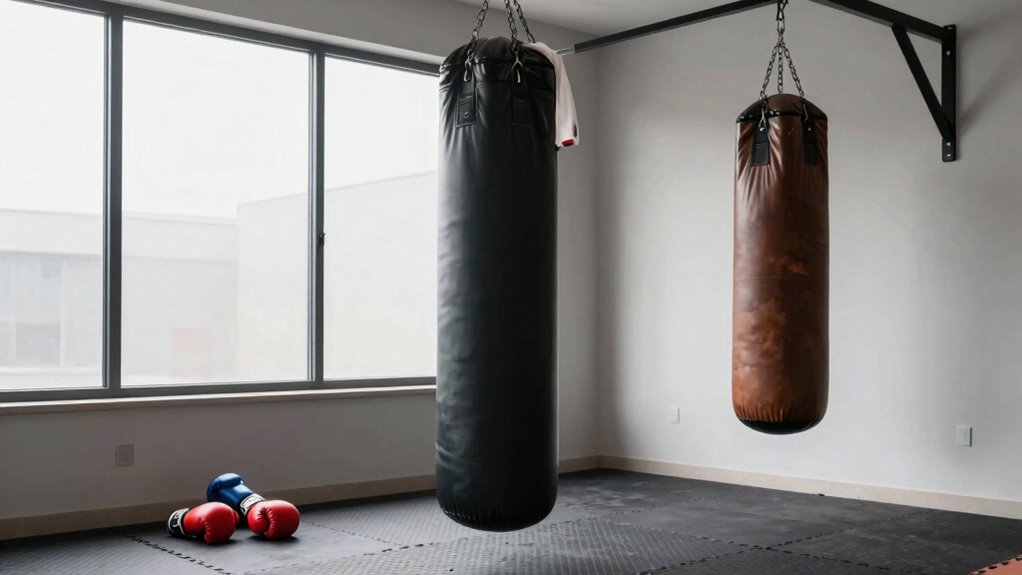
If you’re choosing between heavy bags and freestanding bags for home workouts, consider your space, goals, and durability needs. Heavy bags, made from leather or synthetic materials, provide a sturdy, stable target that’s ideal for serious training and building power. Freestanding bags are easier to set up and move, making them suitable for smaller spaces or lighter workouts. To find out which option suits your goals best and get expert tips, keep exploring your options.

Get workout gear delivered free with Prime
- Fast, free delivery on millions of items
- Prime Video, Amazon Music and more included
- Member-only deals all year
Key Takeaways
- Heavy bags provide a stable, stationary target ideal for powerful strikes and building strength.
- Freestanding bags offer portability and easier setup, suitable for limited space or temporary training areas.
- Heavy bags require secure mounting and sufficient ceiling height, while freestanding bags need a flat, stable surface.
- Heavy bags are more durable for intense, repeated punches, whereas freestanding bags might wear out faster with aggressive use.
- Choose based on space availability, training goals, and the need for stability versus flexibility.

When setting up a home boxing workout, choosing the right bag can make all the difference in your training experience. Your selection impacts not only how you train but also how motivated and effective you stay over time. Heavy bags are the traditional choice for serious training. They’re usually made from durable materials like leather or synthetic fabrics designed to withstand repeated, powerful strikes. This equipment durability allows you to hit with force without worrying about tearing or breaking your gear. Because heavy bags hang from the ceiling or a sturdy frame, they don’t move much when struck, giving you a steady target. This stability helps you develop consistent technique and build power, which is essential for increasing training intensity. Additionally, heavy bags can be customized with different weights to suit your progressing strength levels. However, the setup requires a secure mounting point and enough ceiling height, so installation might be more involved. Once installed, heavy bags can handle aggressive workouts, letting you throw punches with full force and focus on improving strength and endurance. training durability is a crucial aspect to consider when selecting between these types of bags. Selecting the right bag also depends on your training goals and the space available in your home. Proper planning and understanding your training needs can help ensure your setup supports your progress effectively. Incorporating insights from molecular-scale circuits and nanotech fabrication challenges highlights the importance of precise and suitable equipment choices for optimal results. Additionally, understanding the material strength and resilience of your equipment can contribute significantly to your long-term training success.
Products Worth Considering

BowFlex Results Series SelectTech Adjustable Dumbbells, Pair

LEVOIT Vital 200S-P Smart Air Purifier for Large Rooms up to 1875 ft², Quiet 27 dB Operation, AHAM VERIFIDE Certified, Air Quality Monitor,

Therabody Theragun Mini 3rd Generation Massage Gun, Black
As an affiliate, we earn on qualifying purchases.
Frequently Asked Questions
Which Bag Is Better for Beginners?
For beginners, a freestanding bag is better because it’s easier to move and adjust. You should choose a bag with a moderate weight, around 50-70 pounds, so it doesn’t tip over easily but still provides a good punching surface. This type allows you to practice your punches and kicks comfortably, helping you build technique and confidence without the hassle of hanging or anchoring a heavy bag.
Can Freestanding Bags Be Used Outdoors?
Yes, you can use freestanding bags outdoors, but keep in mind their outdoor durability and weather resistance. These bags are designed to handle some exposure, but prolonged sun, rain, or snow can wear them down faster. To protect your investment, consider placing the bag in a shaded, covered area or using a weatherproof cover when not in use. This way, you get the benefits of outdoor training without sacrificing longevity.
How Much Space Is Needed for Each Bag Type?
For a heavy bag, you’ll need about 4 to 5 feet of space around it for safe striking, plus mounting options like ceiling or wall mounts. Freestanding bags require less space—around 3 feet of clearance—and are portable, making them ideal if you have portability concerns or limited room. Consider mounting options and space when choosing, ensuring you have enough clearance for safe and effective workouts.
Are There Noise Considerations With Heavy Bags?
Think of your home as a quiet pond, where heavy bags can create ripples of noise. The noise levels from heavy bags can be loud, especially during powerful punches, making soundproofing considerations important. You might need to add mats or hang the bag on a sturdy wall to dampen sound. Being mindful of your neighbors and creating a soundproof space helps keep the peace while you train fiercely.
How Do Maintenance Requirements Differ?
Heavy bags typically require more maintenance due to their durability concerns; you’ll need to regularly inspect and replace worn-out parts like chains or mounting hardware. Freestanding bags are generally easier to maintain because they have fewer moving parts and are built with more durable materials, reducing complexity. Overall, heavy bags demand more attention and upkeep to guarantee safety and longevity, while freestanding options offer a simpler maintenance routine.
Conclusion
Choosing between heavy bags and freestanding bags depends on your space and training goals. While heavy bags offer durability and a traditional feel, freestanding bags provide flexibility and convenience, especially in limited spaces. Don’t let size or price hold you back—both options can boost your boxing skills and fitness. Remember, the best bag is the one you’ll use consistently. So, pick what fits your routine and start throwing punches today!