

To boost your agility without fancy drills, focus on wearing supportive, flexible shoes that help you react quickly and stay stable. Practice simple movements like side steps, quick toe taps, or shadowboxing while maintaining good form and control. Stay present and mindful during each move to improve your awareness and coordination. Consistent, deliberate practice of these basics develops muscle memory and responsiveness. Keep exploring different tips, and you’ll find ways to sharpen your agility effectively.

Get workout gear delivered free with Prime
- Fast, free delivery on millions of items
- Prime Video, Amazon Music and more included
- Member-only deals all year
Key Takeaways
- Focus on proper footwear that provides grip, support, and allows ground feel for better stability and quick directional changes.
- Practice simple movements like side steps, quick toe taps, and zig-zags to enhance coordination and responsiveness.
- Maintain mental focus through visualization and mindfulness to improve movement awareness and reaction time.
- Incorporate natural, deliberate movement patterns into daily activities to reinforce efficient, instinctive agility.
- Consistently train to build muscle memory, monitor body signals, and adjust techniques for improved control and confidence.
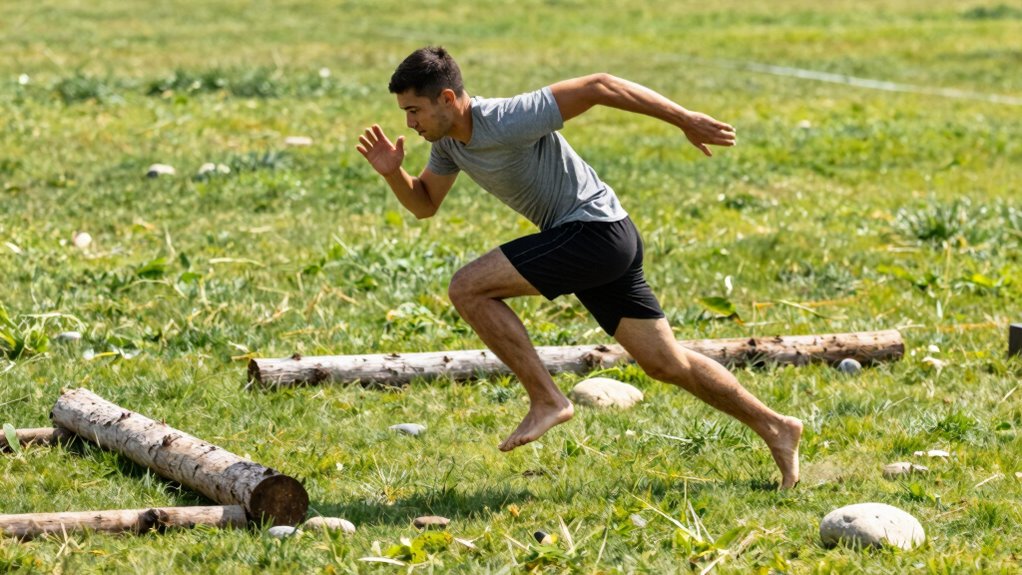
Improving agility doesn’t require expensive equipment or complex drills; simple, deliberate movements can make a noteworthy difference. One of the most overlooked aspects of agility training is footwear selection. The right shoes can boost your confidence, improve your balance, and help you move more efficiently. Look for footwear that offers good grip, flexibility, and support, especially if you’re doing quick directional changes. Avoid overly cushioned shoes that can hinder your ability to feel the ground or make sharp movements. Proper footwear allows you to stay stable and react quickly, which is essential for enhancing agility. Once your shoes are set, the next key component is mental focus. Your ability to stay present during movements makes a big difference in how effectively you can adapt and react. When you’re focused, you’re more aware of your surroundings and your body’s position, which enables faster adjustments. To sharpen your mental focus, practice mindfulness or short visualization exercises before moving into agility drills. Visualize yourself executing quick, precise movements and imagine how your body responds. This mental rehearsal primes your brain and body to work together seamlessly.
You don’t need fancy equipment to improve your agility. Simple exercises like side steps, quick toe taps, or even shadowboxing can help you develop better control and reaction time. Keep your movements deliberate: focus on quality rather than speed, and gradually increase intensity as you improve. Incorporating movement patterns can help you develop more natural and efficient ways of moving, which are essential for agility. Incorporate quick changes in direction, such as zig-zags or cone drills, but do so at a pace that challenges your coordination without sacrificing control. As you perform these movements, maintain a sharp mental focus—avoid distractions and stay fully engaged in each step. This attentiveness will help you develop muscle memory and enhance your overall responsiveness. Remember, training methods are most effective when combined with consistency; regular practice will reinforce neural pathways, making quick movements more natural over time. Additionally, employing natural movement patterns can help you incorporate agility into everyday activities and sports. Developing awareness of proper body mechanics can further optimize your movements and reduce injury risk. A deeper understanding of how visual perception influences reaction times can also provide an edge in quick decision-making and movement adjustments.
In addition, pay attention to your body’s signals. If you feel tense or distracted, take a moment to reset your mental focus before continuing. Combining proper footwear, mindful concentration, and simple movement patterns creates a powerful foundation for improving agility. You’ll find that even without fancy drills or equipment, your ability to change direction swiftly and maintain balance improves steadily. The key is to keep it simple, stay committed, and always prioritize deliberate, focused movements. Over time, these small adjustments will markedly enhance your agility, giving you greater confidence and control in any physical activity.
supportive flexible athletic shoes
As an affiliate, we earn on qualifying purchases.
As an affiliate, we earn on qualifying purchases.
Frequently Asked Questions
Can Agility Training Benefit All Age Groups Equally?
Agility training benefits all age groups, but the approach should be tailored to each individual’s needs. You should focus on age-specific training and developmental considerations, ensuring exercises are safe and appropriate. For kids, fun and simple movements work best, while older adults might prioritize balance and joint stability. By customizing your program, you can help everyone improve agility effectively, regardless of age, fostering better movement and overall health.
How Long Does It Typically Take to See Agility Improvements?
You can typically see agility improvements within 4 to 6 weeks with consistent training. It’s essential to start with an agility assessment to identify your current level and tailor exercises accordingly. Training consistency plays a vital role; sticking to a regular routine helps your muscles adapt and improves coordination. Keep challenging yourself gradually, and you’ll notice progress in your agility over time.
Are There Any Safety Concerns With Simple Agility Exercises?
Did you know that over 50% of agility-related injuries happen due to improper technique? When doing simple agility exercises, safety concerns mainly involve using the right safety gear and proper footwear. Always wear supportive shoes that grip well, and consider protective gear like knee pads if needed. This reduces the risk of sprains or falls, keeping your training safe and effective. Safety should always come first to prevent injuries.
Can Improving Agility Help Prevent Sports Injuries?
Yes, improving your agility can help prevent sports injuries by enhancing your movement efficiency and reaction time. When you become more agile, you’re better equipped to adapt to unexpected changes on the field or court, reducing the risk of strains, sprains, and falls. Focus on simple agility exercises, which develop your coordination and balance, ultimately making your movements safer and more controlled during intense physical activities.
What Common Mistakes Should I Avoid When Training for Agility?
Avoid training misconceptions like thinking more is always better; overtraining for agility can lead to fatigue and injury. Don’t neglect proper rest and recovery, as it’s essential for progress. Focus on maintaining good form, and avoid rushing through exercises—quality beats quantity. Also, steer clear of neglecting warm-ups and cool-downs, which help prevent injuries. Consistency and listening to your body are key to safe, effective agility training.
As an affiliate, we earn on qualifying purchases.
Conclusion
Remember, agility isn’t just about fancy drills or equipment; it’s about embracing simple, consistent movements that sharpen your instincts and responsiveness—like a fox in the brush, swift and adaptable. By focusing on everyday activities and mindful practice, you become more agile in life’s unpredictable moments. So, channel your inner hero—think of those legendary figures who relied on instinct and resourcefulness—and watch your agility grow without the need for gimmicks.
As an affiliate, we earn on qualifying purchases.
As an affiliate, we earn on qualifying purchases.
Fall Picks
fall essentials
As an affiliate, we earn on qualifying purchases.