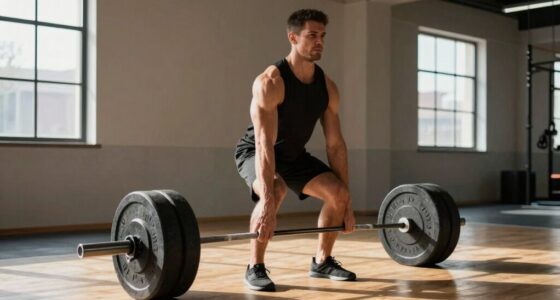
Coordination plays a vital role in your sports success by seamlessly integrating your nervous system, muscles, and brain for precise movements. It helps you move efficiently, conserve energy, and respond faster to external stimuli. Better coordination improves reaction times and muscle control, giving you an edge over opponents. With focused practice, you can develop these skills and elevate your game. Keep exploring to discover how mastering coordination can enable your full athletic potential.
Key Takeaways
- Seamless nervous system-muscle integration enables precise, controlled movements essential for athletic success.
- Efficient muscle coordination conserves energy, enhancing endurance and reducing fatigue during competitions.
- Improved reaction times allow athletes to respond swiftly to external stimuli, gaining a competitive edge.
- Sensory-motor training refines coordination, leading to better movement fluidity and adaptability in game situations.
- Repeated practice enhances neural pathways, resulting in quicker, more accurate motor responses and skill mastery.

Have you ever wondered what makes a sports athlete excel? It’s not just about strength or endurance; it’s about how well your body works together in perfect harmony. This is where coordination plays a pivotal role. When your muscles move efficiently and your reaction time is sharp, you can perform at your best. Coordination isn’t just about fancy footwork or hand-eye skills—it’s about the seamless integration of your nervous system, muscles, and brain to produce precise and controlled movements. The more coordinated you are, the more your muscles work efficiently, meaning they use less energy for the same movement, conserving your strength and stamina over longer periods. This muscle efficiency gives you an edge, especially in sports that demand quick, repetitive actions or sustained effort. When your muscles operate smoothly, you experience less fatigue and can maintain high performance levels longer.
Reaction time is another essential aspect of coordination. It’s the speed at which your body responds to external stimuli—like a ball coming toward you or an opponent making a sudden move. A quick reaction time allows you to anticipate and react faster than your competitors, often making the difference between winning and losing. Improving reaction time involves training your nervous system to process information rapidly and execute movements swiftly. When your reaction time is sharp, your movements are more precise, and you’re better positioned to capitalize on opportunities during a game. This heightened responsiveness also enhances your overall coordination because your brain and body communicate more effectively, ensuring your movements are not only fast but also accurate. Understanding neural pathways and how they influence motor control can help in designing more effective training routines. Additionally, a well-functioning nervous system can improve your ability to adapt quickly to changing game situations. Engaging in sensory-motor training can further refine your coordination, leading to more fluid and precise movements. Incorporating neuroscience principles into training routines can accelerate skill acquisition and motor learning, making your practice sessions even more effective. Furthermore, understanding how sensory inputs influence motor responses can help tailor training exercises to enhance reaction times. Over time, this translates into better control, quicker movements, and more fluid performance on the field or court. The more you practice, the more your body adapts, creating a cycle where improved coordination boosts your athletic ability. So, if you want to excel in sports, focus on exercises that sharpen your reaction time and optimize muscle efficiency. These elements form the foundation of superior coordination, which ultimately sets apart good athletes from the great.
Top picks for "secret role coordination"
As an affiliate, we earn on qualifying purchases.
Frequently Asked Questions
How Does Individual Coordination Differ From Team Coordination?
Individual coordination focuses on your personal skills, like mastering drill techniques to improve your timing and precision. Team coordination, on the other hand, involves syncing with others through effective communication strategies, ensuring everyone moves cohesively. You work on your own mechanics first, then apply those skills within the team context, emphasizing clear communication and mutual understanding. This combination boosts overall performance and helps your team succeed together.
Can Coordination Skills Be Improved Through Specific Training?
Yes, you can definitely develop your coordination skills through targeted training. Focus on enhancing your hand-eye coordination and motor skills by practicing drills that challenge your timing and precision. Repeating activities like juggling, ball-catching, or agility exercises helps refine these skills. Consistent, deliberate practice boosts your coordination, making movements more fluid and instinctive. So, with dedication and specific exercises, you’ll see noticeable improvements in your athletic performance.
What Role Does Mental Focus Play in Coordination?
Mental focus plays a vital role in coordination because it sharpens your mental resilience and enhances focus. When you stay fully present and attentive, your brain can better synchronize your movements with your body’s actions. By practicing focus enhancement techniques, like mindfulness or visualization, you strengthen your ability to maintain coordination under pressure, ultimately improving your overall sports performance and helping you react more precisely and swiftly during essential moments.
How Does Coordination Impact Injury Prevention in Sports?
Did you know that proper coordination reduces sports injuries by up to 30%? When your muscles work in sync through precise muscle synchronization, you’re less likely to strain or tear them. Good coordination also speeds up injury recovery, helping your body regain balance faster. By focusing on coordination, you minimize risks and support quicker recovery, ensuring you stay active and healthy longer in your sports journey.
Are There Sports That Rely Less on Coordination?
Some sports rely less on coordination, especially those emphasizing raw strength or endurance. For example, powerlifting or long-distance running depend more on motor skills like stamina and reaction time than precise coordination. In these sports, your ability to generate force or sustain effort is essential, while fine motor skills or complex coordination play a smaller role. Still, maintaining good reaction time can help improve overall performance and safety.
Conclusion
So, next time you step onto the field or court, remember that flawless coordination isn’t just a modern marvel—it’s been the secret weapon of champions since the days of chariot races. Your ability to synchronize movements, anticipate teammates’ plays, and adapt swiftly can turn the tide of any game. Embrace this timeless skill, and you’ll find yourself not just playing, but dominating. After all, in sports, as in the grandest stories, harmony truly makes the hero.