
Before installing a pull-up station at home, make sure the equipment is sturdy, well-built, and can support your weight. Choose a location with enough overhead clearance, ideally on a load-bearing wall or ceiling joist, and reinforce drywall if needed. Confirm the station is accessible and placed in a safe, uncluttered area. Regularly check hardware for wear and tighten bolts. Keep everything secure for a safe and effective workout—continue exploring for more tips to get it just right.

Get workout gear delivered free with Prime
- Fast, free delivery on millions of items
- Prime Video, Amazon Music and more included
- Member-only deals all year
Key Takeaways
- Ensure the equipment is sturdy, well-built, and rated for your weight before installation.
- Choose a location with sufficient overhead clearance and easy access.
- Verify wall or ceiling support capacity and use appropriate mounting hardware.
- Reinforce drywall or support structures to prevent accidents or damage.
- Regularly inspect and maintain the station and hardware for safety and durability.
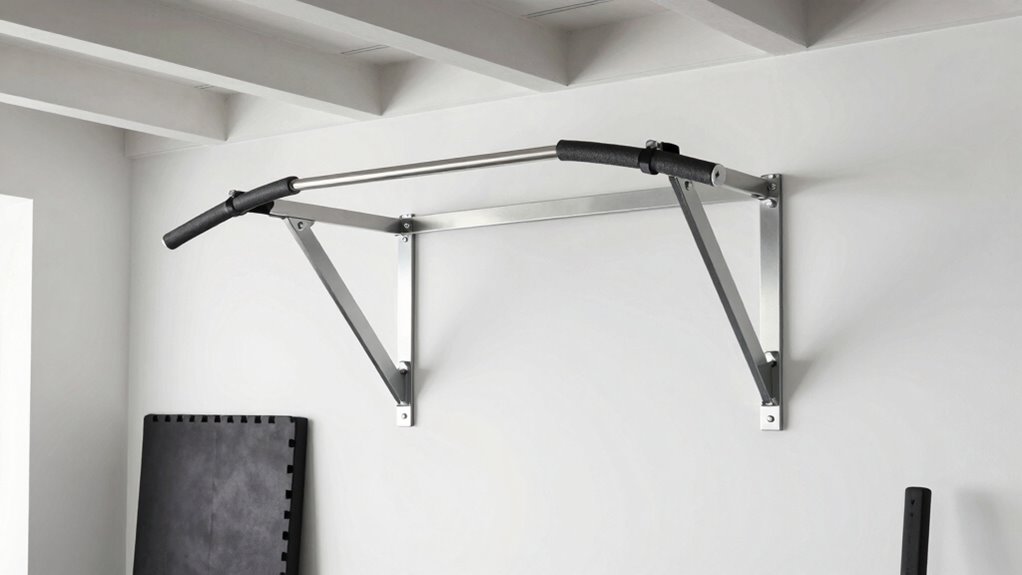
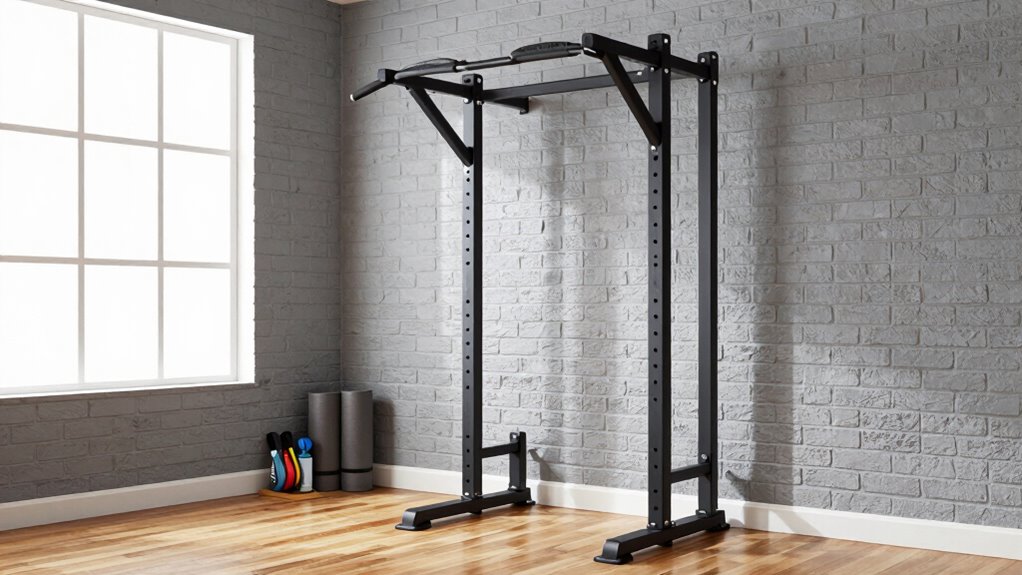
Installing a pull-up station at home can be a great way to boost your fitness routine, but there are vital considerations to keep in mind before you begin. The first thing to focus on is equipment safety. You want to guarantee that the pull-up station you choose is sturdy, well-built, and rated to support your weight. Check the weight capacity and look for models made from durable materials like steel or reinforced aluminum. It’s also wise to read reviews and manufacturer instructions carefully to confirm the equipment’s reliability. Remember, a poorly manufactured or damaged station can pose serious safety risks, so never compromise on quality.
Prioritize equipment safety with sturdy, high-quality pull-up stations rated for your weight.
Next, think about the installation location. Finding the right spot in your home is essential for both safety and convenience. You need a space with enough clearance around the station so you can perform full-range movements without hitting walls, ceilings, or furniture. Measure the height of the ceiling and the space around your chosen spot to make sure you have at least a few feet of overhead clearance. The station should be mounted on a solid, load-bearing wall or ceiling joist capable of supporting your weight. Avoid installing it on drywall alone, unless you reinforce it with appropriate anchors or mounting hardware. Proper installation is key to preventing accidents or damage down the line, so double-check the wall’s structure before drilling.
Another critical aspect of the installation location is accessibility. You’ll want the station somewhere you can reach easily without risking injury. Avoid placing it in a tight corner or cramped area where movement is restricted. If you have children or pets, consider their safety and choose a location that’s out of their reach or where you can supervise your workouts. Additionally, think about how the station integrates with your existing space. It should complement your workout area without making your room feel cluttered or cramped. Proper placement can make your workouts more enjoyable and less stressful. Incorporating proper mounting techniques can also help ensure the station remains stable over time and adds to safety.
Lastly, consider the importance of equipment safety and how it influences the overall setup. Keep the surrounding floor clear of obstacles, and consider placing a mat underneath the station to cushion falls or slips. Regularly inspect the station and hardware for signs of wear or loosening, and tighten bolts as needed. With careful attention to equipment safety and thoughtful selection of the installation location, you’ll create a secure, convenient setup that supports your fitness goals safely and effectively.
home pull-up station with high weight capacity
As an affiliate, we earn on qualifying purchases.
As an affiliate, we earn on qualifying purchases.
Frequently Asked Questions
How Much Space Do I Need for a Pull-Up Station?
You’ll need about 2 to 3 feet of space in front of and below your pull-up station to perform exercises comfortably. When considering space, think about material compatibility to guarantee your wall or ceiling can support the station securely. Also, consider aesthetic considerations, choosing a design that blends with your home decor. Adequate clearance prevents accidents and maximizes your workout safety and enjoyment.
Can I Install It on Any Wall Type?
You can’t just slap a pull-up station on any wall without causing chaos! Walls need reinforcement, or your workout could turn into a disaster. Check material compatibility—concrete and steel are perfect, but drywall needs extra support or it’ll crumble faster than your motivation on a Monday. So, before you start, make sure your wall can handle the pull-up power, or you’ll be cleaning up the mess of a falling station!
What Is the Weight Capacity of Most Pull-Up Stations?
Most pull-up stations have a weight capacity ranging from 250 to 300 pounds, ensuring you can perform various exercises safely. Material durability plays a key role here, with steel frames offering impressive strength and longevity. Additionally, many stations come with aesthetic options, so you can choose designs that blend seamlessly with your home decor while providing reliable support. Always check the specific model’s weight capacity before installation for safety.
Do I Need Professional Help to Install It?
You don’t always need a pro to install a pull-up station—think of it like assembling furniture with an IKEA manual. If your decorating ideas lean toward a seamless look and your budget is tight, DIY might suffice. However, for safety and precision, especially if you’re unsure about your skills or the wall type, consulting a professional guarantees stability and peace of mind. Weigh your budget and comfort level before deciding.
How Do I Ensure Safety During Use?
To guarantee safety during use, focus on material considerations like sturdy, high-quality steel or wood that can support your weight. Check that the station is securely mounted to wall studs or ceiling beams, and regularly inspect for wear or loose bolts. Follow maintenance tips such as tightening hardware and cleaning the bars to prevent slips. Always perform a quick stability check before each workout to avoid accidents.
wall-mounted pull-up bar reinforced hardware
As an affiliate, we earn on qualifying purchases.
As an affiliate, we earn on qualifying purchases.
Conclusion
Before you install a pull-up station, make sure you’ve considered space, weight capacity, and stability—no one wants a “flying” workout buddy! Double-check your ceiling or wall strength, and don’t forget to gather the right tools. Remember, a sturdy setup is key to avoiding any “Ye Olde” mishaps. With a little planning, you’ll be crushing pull-ups in no time—just like a modern-day Hercules, minus the mythic labors!
adjustable ceiling mount pull-up bar
As an affiliate, we earn on qualifying purchases.
As an affiliate, we earn on qualifying purchases.
heavy-duty pull-up bar for load-bearing wall
As an affiliate, we earn on qualifying purchases.
As an affiliate, we earn on qualifying purchases.
Halloween Picks
halloween
As an affiliate, we earn on qualifying purchases.