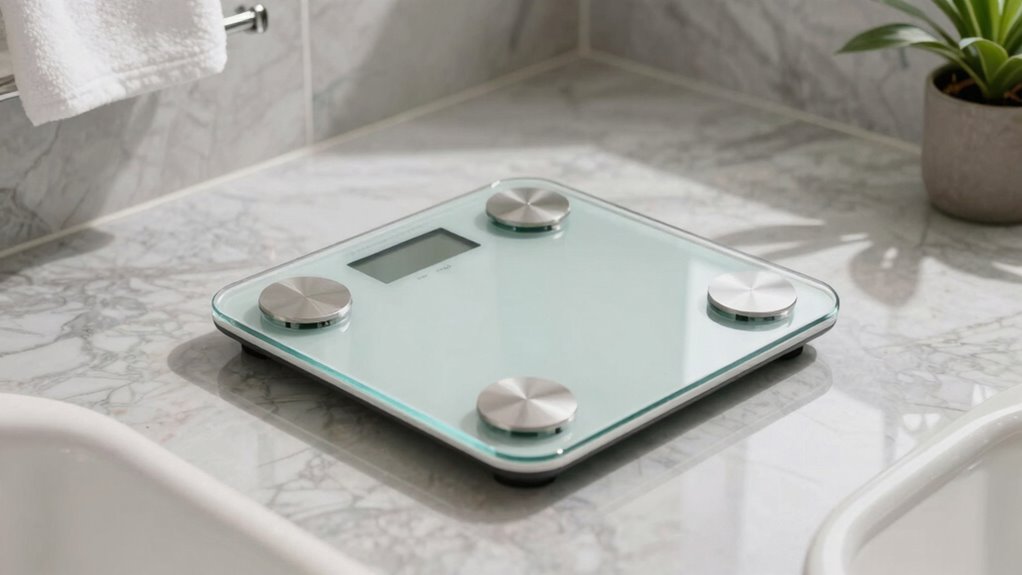

Smart scales measure your body weight, body fat percentage, muscle mass, and hydration levels using bioelectrical impedance analysis, which sends a small electrical current through your body. However, these results can be affected by hydration, recent meals, skin temperature, and time of day, making them estimates rather than precise data. They don’t distinguish types of fat or muscle and are more useful for tracking trends. To understand their full capabilities and limitations, keep exploring what these devices can and can’t do.

Get workout gear delivered free — and shop member deals
- Fast, free delivery on millions of items
- Access to Prime Big Deal Days deals on October 6–7
- Prime Video, Amazon Music and more included
Key Takeaways
- Smart scales measure body weight, body fat percentage, muscle mass, and hydration levels using bioelectrical impedance analysis.
- They cannot provide precise data; results are affected by hydration, recent meals, skin temperature, and time of day.
- The electrical signals do not differentiate between types of fat or muscle, offering only estimates.
- Data accuracy depends on consistent measurement conditions and should be interpreted as trend indicators, not exact metrics.
- Privacy policies and data handling are often unclear, so users should be aware of potential data collection beyond body metrics.
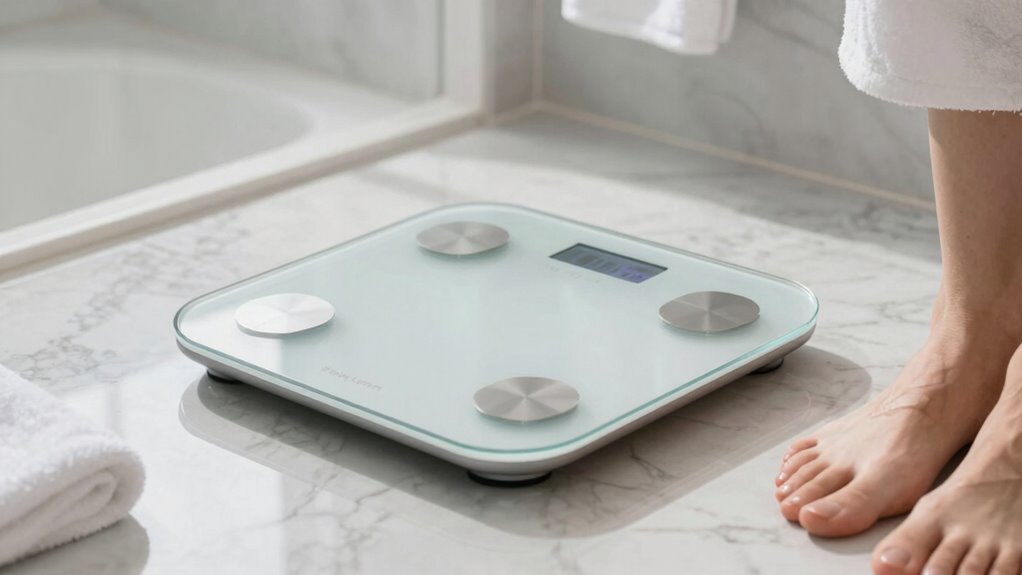
Smart scales have become popular tools for tracking your health, but understanding what they measure—and what they don’t—is essential. When you step on a smart scale, it’s tempting to see it as an all-encompassing health device, especially since many models offer fitness tracking and body composition data. These scales can provide insights into your weight, body fat percentage, muscle mass, and even hydration levels. They do this by sending a small electrical current through your body and measuring how quickly it travels, which varies based on different tissues and compositions. This process, called bioelectrical impedance analysis, gives you a snapshot of your body composition, helping you monitor changes over time and set fitness goals.
However, it’s important to recognize the limitations of what smart scales actually measure. While they can give you an estimate of body fat and muscle mass, these numbers are not always perfectly accurate. Factors such as hydration levels, recent meals, skin temperature, and time of day can influence the results. If you’re dehydrated or have eaten recently, the scale might show skewed data, leading you to misinterpret your progress. It’s also worth noting that the electrical signals don’t differentiate between types of fat or muscle, which means the measurements are averages rather than precise metrics. Consistency in measurement conditions can help improve the reliability of your data, but it won’t eliminate all inaccuracies. Additionally, privacy policies related to data collection and storage are often not widely understood, which is important to consider when using health-tracking devices. Being aware of measurement variability can help set realistic expectations for your progress.
When it comes to fitness tracking, smart scales are useful for providing a broad overview of your body composition trends rather than exact data. They can motivate you by showing gradual improvements or declines, but they shouldn’t be your sole source of health assessment. For example, if your goal is to lose fat or gain muscle, these scales can help track your progress over weeks or months, but they shouldn’t replace other methods such as caliper measurements or professional assessments. Additionally, the accuracy of these measurements can be influenced by factors like hydration status, which is especially relevant given that bioelectrical impedance analysis is sensitive to fluid levels. Instead, treat the data as part of a larger picture that includes how you feel, your strength, endurance, and overall wellbeing. Recognizing their limitations aligns with a comprehensive approach to health and fitness, emphasizing the importance of diverse assessment tools.
smart body scale with body fat percentage
As an affiliate, we earn on qualifying purchases.
As an affiliate, we earn on qualifying purchases.
Frequently Asked Questions
Do Smart Scales Provide Accurate Body Fat Measurements for Everyone?
Smart scales may not provide accurate body fat measurements for everyone. Calibration challenges and user variability can considerably affect results, especially if your hydration levels, recent meals, or activity levels change. Factors like age, gender, and body composition also influence accuracy. For consistent results, use the scale under similar conditions each time and be cautious about relying solely on its measurements for health decisions.
How Often Should I Use My Smart Scale for Reliable Tracking?
In the blink of an eye, you should weigh yourself consistently, ideally once a week, to track progress reliably. To keep your smart scale accurate, follow the manufacturer’s calibration frequency and weigh yourself under similar conditions—same time of day, clothing, and hydration. User consistency is key; fluctuating routines can skew results, making your data less trustworthy. Regular use guarantees you’ll spot trends and stay motivated.
Can Smart Scales Detect Health Issues Beyond Body Composition?
Smart scales primarily focus on body composition metrics and aren’t designed to detect health issues directly. However, they can serve as early warning indicators through health risk detection, like sudden weight changes or abnormal trends that might signal underlying problems. While they offer valuable insights, you should consult healthcare professionals for thorough health assessments, as smart scales can’t replace medical diagnostics or identify specific health conditions.
Are Smart Scales Suitable for Children or Elderly Individuals?
Smart scales are generally not suitable for children or elderly individuals due to concerns about child safety and elderly suitability. For children, their smaller size and developing bodies can lead to inaccurate readings, and safety features might not be adequate. Elderly individuals may have mobility issues or health conditions that require more specialized monitoring. Always consult a healthcare professional before using a smart scale for children or seniors.
What Factors Can Affect the Accuracy of Smart Scale Readings?
Factors like hydration levels and skin temperature can affect your smart scale readings. If you’re dehydrated, your weight might appear higher, while overhydration can do the opposite. Skin temperature also impacts sensor accuracy, especially if your skin is cold or hot. Additionally, things like recent exercise, clothing, and time of day influence results. To get consistent measurements, weigh yourself at the same time and under similar conditions.
bioelectrical impedance analysis scale
As an affiliate, we earn on qualifying purchases.
As an affiliate, we earn on qualifying purchases.
Conclusion
Understanding what smart scales measure helps you navigate their limits like a seasoned sailor reading the stars. While they can give you valuable insights into your body composition, they aren’t crystal balls predicting your health’s future. Think of them as a map, guiding you rather than defining your destination. Use them wisely, knowing they’re just one piece of a much larger puzzle in your wellness journey. After all, a tool is only as good as the hand that wields it.
As an affiliate, we earn on qualifying purchases.
smart scale for muscle mass tracking
As an affiliate, we earn on qualifying purchases.
As an affiliate, we earn on qualifying purchases.
Fall Picks
fall essentials
As an affiliate, we earn on qualifying purchases.