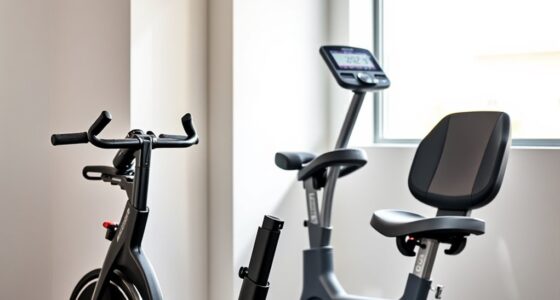
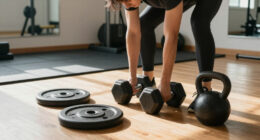
To extend your fitness equipment’s life, keep it clean and dust-free with regular wiping and proper storage in a climate-controlled space. Inspect parts for wear, replace worn components promptly, and lubricate moving parts to prevent friction. Check electrical cords and connections for damage, and calibrate settings as needed. Follow manufacturer schedules for maintenance and upgrades. Taking these steps helps ensure safe, reliable workouts—and you’ll find more helpful tips below.
Key Takeaways
- Regularly clean and dust equipment, using appropriate disinfectants and storing in a climate-controlled environment.
- Conduct visual inspections and calibrate sensors periodically to identify wear and ensure accurate performance.
- Replace worn or damaged parts promptly, including belts, cables, and electrical cords, to prevent safety hazards.
- Lubricate moving components regularly with suitable lubricants to reduce friction and extend equipment lifespan.
- Ensure electrical connections are secure, update software as needed, and store equipment safely when not in use.

Clear Gear Disinfectant and Deodorizer For Sports Equipment, 32 Oz Bottle
- Made in USA and EPA-Registered: Safe, non-toxic disinfectant formula
- Versatile Healthcare Use: Disinfects and deodorizes medical equipment
- Effective Odor Elimination: Lightly-scented, neutralizes bad smells
As an affiliate, we earn on qualifying purchases.
As an affiliate, we earn on qualifying purchases.
Regular Cleaning and Dusting

Regular cleaning and dusting are vital to keep your fitness equipment in top condition. Establishing consistent cleaning routines helps prevent dirt buildup and maintains hygiene. Use a soft cloth or microfiber towel to remove dust from surfaces daily, focusing on areas like control panels, handles, and padded parts. Dust removal is essential because accumulated dust can impair moving parts and reduce equipment lifespan. For stubborn spots, slightly dampen the cloth with water or a gentle disinfectant, avoiding harsh chemicals that could damage finishes. Regularly wiping down your equipment not only prolongs its life but also ensures a safe workout environment. Make dust removal a habit, and your fitness gear will stay cleaner, more functional, and looking newer longer. Additionally, using air purifiers in your workout space can help improve overall air quality by reducing airborne pollutants and allergens. Incorporating proper ventilation also aids in minimizing dust and maintaining a healthier environment around your equipment. Monitoring the headphone jacks and connections of your electronic fitness devices can prevent connectivity issues that may disrupt your workout sessions. Implementing AI-based monitoring can further help track equipment condition and alert you to maintenance needs proactively. Recognizing the importance of regular maintenance can help identify potential issues early, extending the lifespan of your fitness gear and ensuring safety during use.
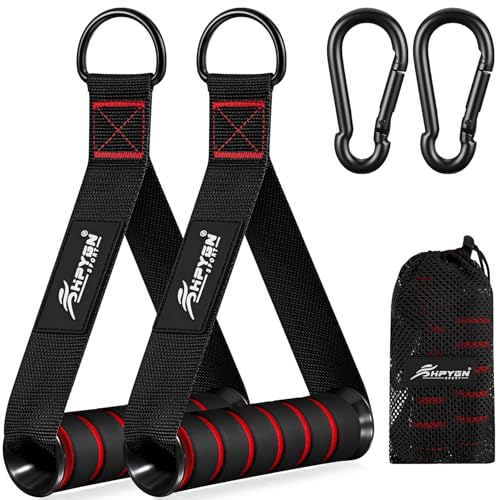
HPYGN Exercise Handles, Replacement Fitness Equipment for Pilates,Yoga,Strength Trainer, Heavy Duty Comfortable Cable Handle Compatible With High Bearing Capacity Pulley Handles, Pull Down Home Gym
- Strong Replacement Handles: Suitable for worn-out or damaged handles
- Universal Compatibility: Fits various gym equipment types
- Heavy Duty Construction: Supports up to 260kg weight capacity
As an affiliate, we earn on qualifying purchases.
As an affiliate, we earn on qualifying purchases.
Inspecting and Replacing Worn Parts

You should regularly perform visual checks on your equipment to spot signs of wear. When you notice worn or damaged parts, replacing them promptly guarantees your equipment stays safe and functional. Staying on top of these inspections ensures everything works smoothly and lasts longer. Additionally, understanding common equipment issues can help you identify potential problems early before they require costly repairs. Regular maintenance of paint sprayer accessories such as inlet strainers and spray tips can also prevent clogs and ensure consistent performance over time. Incorporating jet propulsion systems into your routine can significantly extend the lifespan of your fitness equipment and improve its overall efficiency.
Regular Visual Checks
How often do you check your fitness equipment for signs of wear and tear? Regular visual checks help catch issues early before they cause bigger problems. Look for frayed cables, loose bolts, or cracks in the frame. Keep an eye on moving parts that may need lubrication or replacement. Incorporate user training by teaching others how to perform these inspections, ensuring everyone helps maintain equipment health. Consider scheduling periodic equipment upgrades when you notice persistent wear. To stay organized, use this quick reference:
| Check Area | What to Look For |
|---|---|
| Cables and Belts | Fraying, stretching, cracks |
| Bolts and Fasteners | Looseness, corrosion |
| Moving Parts | Unusual noise, stiffness |
Regular checks extend your equipment’s life and ensure safe workouts. Additionally, understanding proper maintenance practices can help prevent unexpected breakdowns and improve overall durability. Remember that inspection frequency plays a critical role in maintaining optimal equipment performance and safety, especially since wear and tear can develop gradually if not monitored regularly. Incorporating preventive maintenance routines can further enhance the longevity of your equipment and align with the latest advancements in machine learning tech that facilitate predictive maintenance and early detection of issues.
Timely Part Replacements
Inspecting and replacing worn parts promptly keeps your equipment functioning safely and efficiently. Regularly check components like belts, pulleys, and cables for signs of wear or damage. Follow your user manual’s guidance to identify parts that need attention. Additionally, keep your software updated to guarantee optimal performance and safety features. When replacing parts, consider these steps:
- Consult the user manual for specific replacement parts and procedures.
- Schedule timely replacements before worn parts cause further damage or safety risks.
- Verify that software updates are installed to enhance equipment longevity and functionality.
- Incorporate preventive maintenance practices to reduce the likelihood of unexpected breakdowns and extend your equipment’s lifespan, much like retail hours help ensure consistent service availability.
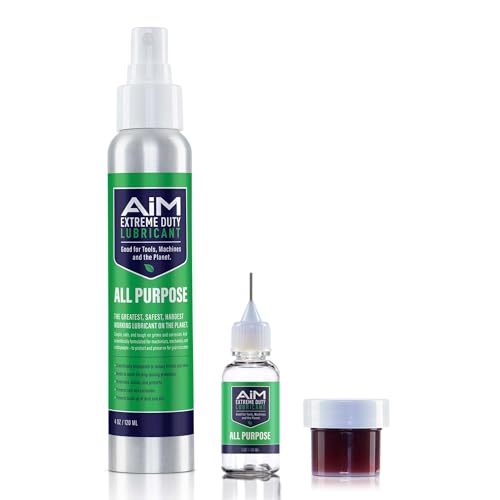
PlanetSafe Lubricants Home & Industrial Gym Equipment Maintenance Kit: AiM Extreme Duty Lubricant & AiM Grease Bundle with Precision Applicator – Small Kit
- Includes: Lubricant, Grease, and Applicator Bottle
- Enhances Workout Smoothness: Reduces friction for quieter, smoother treadmill operation
- Protects Equipment: Deep-penetrating silicone formula shields treadmill belt
As an affiliate, we earn on qualifying purchases.
As an affiliate, we earn on qualifying purchases.
Lubricating Moving Components

To keep your fitness equipment running smoothly, you need to use the right lubricants for each moving part. Make sure to apply lubricant regularly to prevent friction and wear. This simple step can extend the life of your equipment and guarantee safe, effective workouts. Incorporating sound vibrations into maintenance routines can also promote optimal function and longevity. Additionally, considering the future of maintenance technology, such as AI-guided diagnostics, can help identify potential issues before they become major problems. Staying informed about advanced lubrication methods can further improve your equipment’s performance and durability. Regular maintenance and staying updated on maintenance innovations ensure your equipment remains in top condition for years to come. For example, exploring new lubricant formulations can enhance efficiency and reduce the need for frequent reapplications.
Use Appropriate Lubricants
Using the correct lubricants is essential for keeping your fitness equipment running smoothly. When choosing appropriate lubricants, avoid common mistakes like applying too much or using the wrong type. To guarantee proper maintenance, follow these steps:
- Select lubricants specifically designed for your equipment’s components to prevent damage.
- Read manufacturer instructions carefully to ensure compatibility.
- Apply lubricants sparingly to avoid attracting dust and debris, which can cause wear.
- Ensure your lubricant selection aligns with fokos guidelines to maintain optimal performance.
Regularly Apply Lubricant
Ever wonder how to keep your fitness equipment performing at its best? Regularly applying lubricant is key. Start by selecting the right lubricant for your equipment—check the manufacturer’s recommendations to guarantee compatibility. When applying, use proper application techniques: clean the moving parts first, then apply a thin, even layer of lubricant. Focus on joints, pulleys, and tracks to minimize friction and prevent wear. Avoid over-lubricating, as excess can attract dust and debris. Use a small brush or applicator for precision. Repeating this maintenance routine every few months will keep your equipment running smoothly and extend its lifespan. Proper lubricant selection and careful application are simple steps that make a significant difference in maintaining peak performance.

10Ft 3 Prong AC Power Cord TV Universal Treadmills Cable for Computer Monitor, Horizon Fitness Treadmills, Superfit, BowFlex, Sole E35 E55 F63 F80,Goplus, Walking Pad Treadmill Charger Replacement
- Voltage Rating: 110-125V, 10A, 18AWG
- Compatibility: Fits fitness equipment and electronics
- Cable Length: 10 feet long
As an affiliate, we earn on qualifying purchases.
As an affiliate, we earn on qualifying purchases.
Checking Electrical Connections and Cords
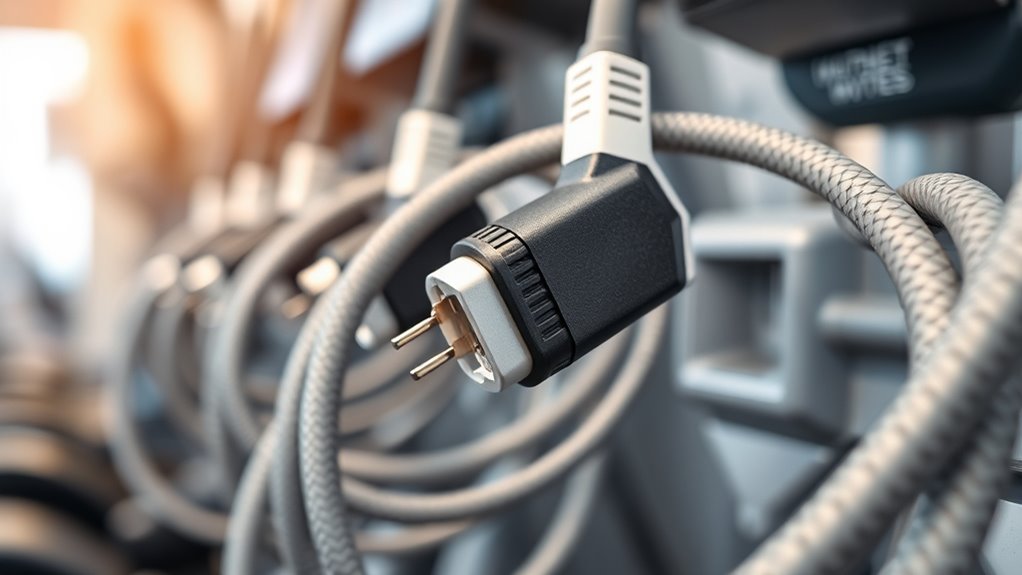
Electrical connections and cords are essential for your fitness equipment to operate safely and efficiently. Regularly inspect them for damage or wear. Here are three key steps to maintain electrical safety:
- Check for frayed or exposed wires and replace damaged cords immediately.
- Ensure all connections are secure, and unplug equipment during storms to prevent power surges.
- Follow power surge prevention tips, like using surge protectors, to safeguard your equipment and avoid costly repairs.
Calibrating and Adjusting Settings

Calibrating and adjusting your fitness equipment guarantees it operates accurately and safely. Begin by performing sensor calibration, ensuring sensors measure data like heart rate, speed, and resistance correctly. Follow the manufacturer’s instructions for calibration procedures to avoid errors. Regularly check for software updates, as they often include important fixes and improvements that enhance performance and precision. Updating the software can also reset or fine-tune settings for *ideal* operation. Adjust settings such as resistance levels, incline, and display parameters to match your workout needs. Proper calibration and adjustments help prevent inaccurate readings and mechanical issues, prolonging your equipment’s lifespan. Always refer to the user manual for specific calibration steps, and perform these tasks periodically to keep your equipment functioning at its best.
Proper Storage and Placement

Proper storage and placement are essential to keep your fitness equipment in top condition and guarantee it remains safe to use. To achieve this, focus on three key points:
Proper storage safeguards your fitness equipment’s condition and safety.
- Keep your equipment in an indoor climate with stable temperature and humidity, preventing rust and warping.
- Ensure proper ventilation around your equipment to reduce moisture buildup and mold growth.
- Place your equipment on a flat, stable surface, avoiding areas prone to moisture or extreme temperature fluctuations.
Following Manufacturer Maintenance Schedules
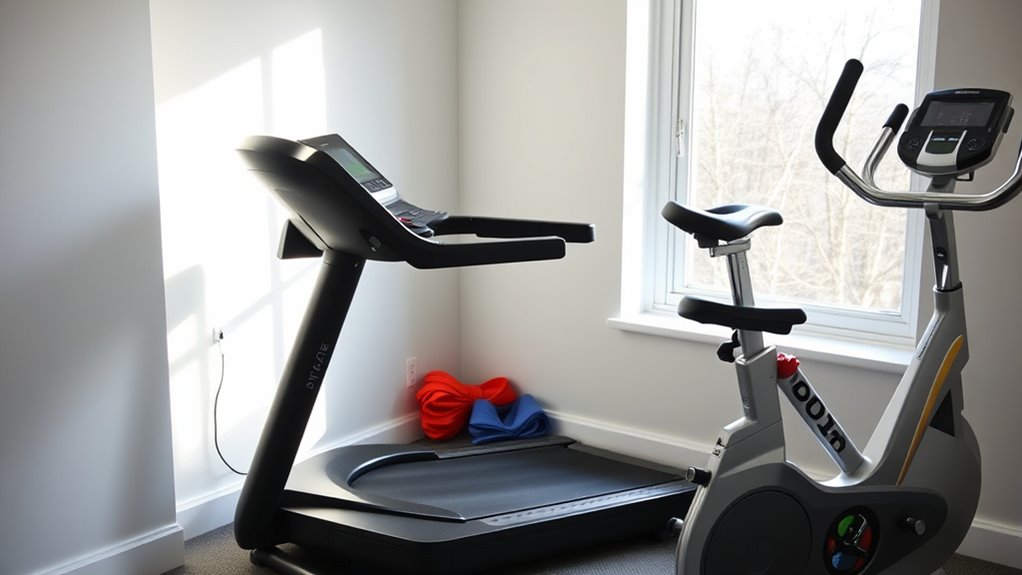
Have you ever overlooked the importance of following your equipment’s maintenance schedule? Ignoring manufacturer manuals can void warranty requirements and lead to costly repairs. Staying on top of scheduled checks guarantees your equipment runs smoothly and lasts longer. Refer to the manufacturer’s instructions regularly to understand specific maintenance tasks and timelines.
| Maintenance Tasks | Frequency |
|---|---|
| Lubricate moving parts | Monthly |
| Check bolts and screws | Every 3 months |
| Inspect electrical components | Annually |
| Clean and disinfect | Weekly |
| Replace worn parts | As needed |
Frequently Asked Questions
How Often Should I Schedule Professional Maintenance for My Equipment?
You should schedule professional maintenance for your fitness equipment at least once a year, or more often if you use it daily. Regular routine inspections help identify issues early, but maintenance scheduling guarantees everything stays in top shape. Keep an eye on signs of wear and tear, and don’t hesitate to bring in a professional if you notice any problems. Consistent maintenance keeps your equipment safe and extends its lifespan.
What Signs Indicate My Equipment Needs Urgent Repairs?
If your fitness equipment makes unusual noises or shows signs of wear beyond its age, it likely needs urgent repairs. Pay attention to persistent squeaks, grinding sounds, or loose parts, which indicate issues that could worsen if overlooked. Also, if the equipment’s performance declines despite maintenance, it’s time to call a professional. Addressing these signs promptly helps prevent further damage and ensures your safety during workouts.
Can I Use Household Cleaning Products on My Fitness Gear?
You should avoid using household cleaning solutions on your fitness gear because they can damage the material or cause corrosion. Instead, opt for gentle, manufacturer-recommended cleaning solutions or a damp cloth. If your equipment needs repairs, consider DIY repairs only if you’re confident and have the right tools; otherwise, consult a professional. Proper cleaning and timely repairs help extend your equipment’s lifespan and keep it safe to use.
How Do Environmental Factors Affect the Lifespan of My Equipment?
Environmental factors can be the silent enemies of your fitness gear, like dust accumulation slowly wearing down surfaces and mechanical parts. High humidity acts like a lurking damp cloud, encouraging rust and mold to take hold, shortening your equipment’s lifespan. To keep your gear in top shape, store it in a dry, clean space and wipe down regularly. Think of your equipment as a plant that needs proper care to thrive over time.
What Safety Precautions Should I Follow During Maintenance?
During maintenance, always prioritize equipment safety by disconnecting power sources and wearing protective gear. Follow manufacturer instructions carefully to prevent damage, and keep your workspace clean to avoid accidents. Never rush through maintenance tasks, as shortcuts can compromise safety and equipment longevity. By adhering to proper maintenance safety procedures, you reduce risks of injury and ensure your fitness equipment remains in top condition, extending its lifespan effectively.
Conclusion
By tending to your fitness equipment with care, you breathe new life into each piece, turning your space into a sanctuary of strength and durability. Think of your maintenance routine as watering a garden—each small act helps your equipment flourish and withstand the test of time. With consistent attention, you’ll keep your workout gear running smoothly and your fitness journey thriving. Remember, a little upkeep today grows into long-lasting results tomorrow.