
TL;DR

Get workout gear delivered free — and shop member deals
- Fast, free delivery on millions of items
- Access to Prime Big Deal Days deals on October 6–7
- Prime Video, Amazon Music and more included
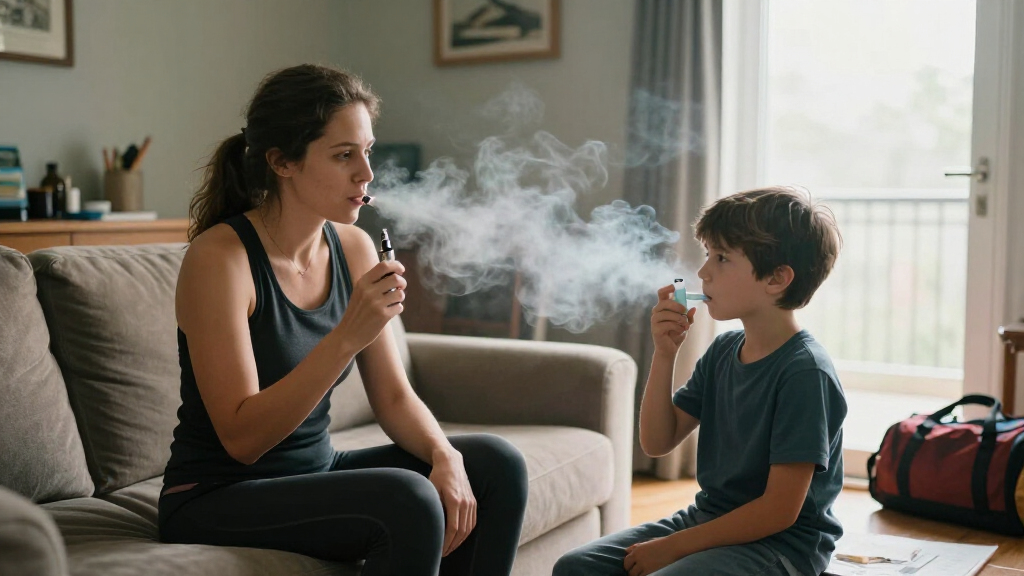
An observational study of 48,118 pediatric asthma-care encounters found that children exposed to both household tobacco smoke and e-cigarette aerosol had higher risks across several measures of asthma control than children without those reported exposures. The study cannot show that exposure caused the outcomes, and researchers say follow-up studies with objective exposure measures are needed.
A study of children with asthma found that reported exposure to both household tobacco smoke and e-cigarette aerosol was associated with higher risks of several poor asthma outcomes, including flares and nighttime symptoms. The observational analysis, presented by Brian Jenssen of the Children’s Hospital of Philadelphia at an American Academy of Pediatrics meeting, cannot establish that the exposures caused those outcomes, but it adds to concerns about children breathing either product’s emissions at home.
The analysis covered 48,118 encounters in the hospital’s primary care network from July 2023 through March 2026. Each encounter involved a child at least 1 year old with an asthma diagnosis whose parent completed assessments about tobacco and e-cigarette use and the child’s asthma control at the same visit. Nearly half of the children were ages 6 to 12.
Families reported combined tobacco and e-cigarette use in the home in 2,500 encounters, or 5%. Tobacco-only use was reported in 4,238 encounters, or 9%, and e-cigarette-only use in 1,427, or 3%. The researchers adjusted their analysis for child age, sex, insurance and the Child Opportunity Index, a measure used to represent socioeconomic conditions.
For e-cigarette exposure alone, the study found an adjusted 30% higher risk of asthma flares (adjusted odds ratio 1.3, 95% confidence interval 1.1 to 1.4) and a 40% greater likelihood of activity-related asthma symptoms (adjusted odds ratio 1.4, 95% CI 1.2 to 1.5). Children reported as exposed to both products had statistically significant 20% to 40% higher risks across measures including uncontrolled asthma, flares, nighttime and activity-related symptoms, albuterol use and hospital admissions in the prior year. The supplied report does not give a separate effect estimate for each of those outcomes.
Why Both Exposures Concern Researchers
The findings matter because families and clinicians may ask about cigarette smoking without asking about vaping. Jenssen said screening parents for both tobacco and e-cigarette use during routine visits could help connect them with treatment and identify children who may be exposed at home. The study’s pattern suggests that asking about only one product could miss another source of secondhand exposure.
The results do not show that vaping and smoking together directly worsen asthma, nor do they establish how much risk any individual child faces. Still, the reported associations offer a reason for clinicians to discuss both products with families of children with asthma. Jenssen said parents should avoid using either product around children and, where possible, pursue quitting all tobacco and nicotine products. Those are the researcher’s recommendations, not outcomes tested by this analysis.
air purifier for home with children
As an affiliate, we earn on qualifying purchases.
As an affiliate, we earn on qualifying purchases.
How the Study Measured Exposure
The research was a cross-sectional analysis of electronic health record data, meaning exposure reports and asthma assessments were collected at the same visit rather than tracking children forward over time. The analysis therefore identifies associations, not a sequence that proves exposure came before a worsening in asthma. Parent-reported household use also does not directly measure what a child inhaled or how often exposure occurred.
Jenssen said the reason combined exposure might be linked with worse outcomes is not known. He proposed that particles from cigarette smoke and e-cigarette aerosol could affect different parts of the lungs, potentially adding to harm, but described this as a possibility rather than a demonstrated mechanism. The report also notes that children may be more susceptible to respiratory exposures because of their smaller size and faster breathing rate; that observation does not establish the mechanism behind this study’s results.
“Neither tobacco nor e-cigarette exposure is safe for children with asthma, or any child.”
— Brian Jenssen, MD, MSHP, of the Children’s Hospital of Philadelphia
child-safe humidifier for asthma relief
As an affiliate, we earn on qualifying purchases.
As an affiliate, we earn on qualifying purchases.
What the Data Cannot Establish
The study cannot determine whether household exposure caused asthma symptoms or whether other factors contributed to the association. Because data came from assessments completed at a single visit, researchers also cannot show how exposure and asthma control changed over time. Exposure was reported by parents; the analysis did not include objective measurements of secondhand smoke or aerosol, according to the report.
It is also unclear why the combined-exposure group showed higher risks across multiple outcomes, or how those risks compare for children with different levels or patterns of exposure. The report describes statistically significant increases of 20% to 40% for the combined group across several measures but does not provide individual estimates for each outcome. The findings apply to the analyzed encounters in one health system’s primary care network and do not, on their own, establish the same pattern in every population.
electronic cigarette vapor detector
As an affiliate, we earn on qualifying purchases.
As an affiliate, we earn on qualifying purchases.
Longer Follow-Up Is Needed
Jenssen said researchers need to follow children over time and use more objective measures of both exposure and asthma outcomes. Such work could help clarify whether exposure precedes changes in asthma control, how risks vary with exposure amounts, and whether the combination of smoke and aerosol has an additive effect. The supplied report does not describe a planned follow-up study or give a timeline for further results.
For now, the practical implication raised by the researchers is to ask about vaping as well as smoking when discussing a child’s home environment. Jenssen said parents should use these products away from children and seek help to quit. The study does not test whether those steps change asthma outcomes, so the effect of any particular intervention remains to be established.
secondhand smoke detector for home
As an affiliate, we earn on qualifying purchases.
As an affiliate, we earn on qualifying purchases.
Key Questions
Did the study prove that vaping and smoking cause worse asthma in children?
No. It found associations in an observational, cross-sectional analysis. The study cannot establish that household exposure caused the asthma outcomes.
What did researchers report about vaping exposure alone?
E-cigarette exposure alone was associated with a 30% higher risk of asthma flares and a 40% greater likelihood of activity-related asthma symptoms, based on adjusted estimates. The report gives confidence intervals for both findings.
How many families reported using both products at home?
Combined tobacco and e-cigarette use was reported in 2,500 of 48,118 encounters, or 5%. The figures refer to encounters in the study, not necessarily unique families.
Why might combined exposure be associated with worse outcomes?
The reason is not known. Jenssen suggested that smoke and e-cigarette aerosol particles might affect different areas of the lungs, but the study did not test or confirm that explanation.
What did the researcher recommend families and clinicians do?
Jenssen said clinicians should ask about both smoking and vaping at routine visits and connect parents with treatment. He also advised keeping product use away from children and said quitting tobacco and nicotine products is the broader goal.
Source: rss
Fall Picks
fall essentials
As an affiliate, we earn on qualifying purchases.