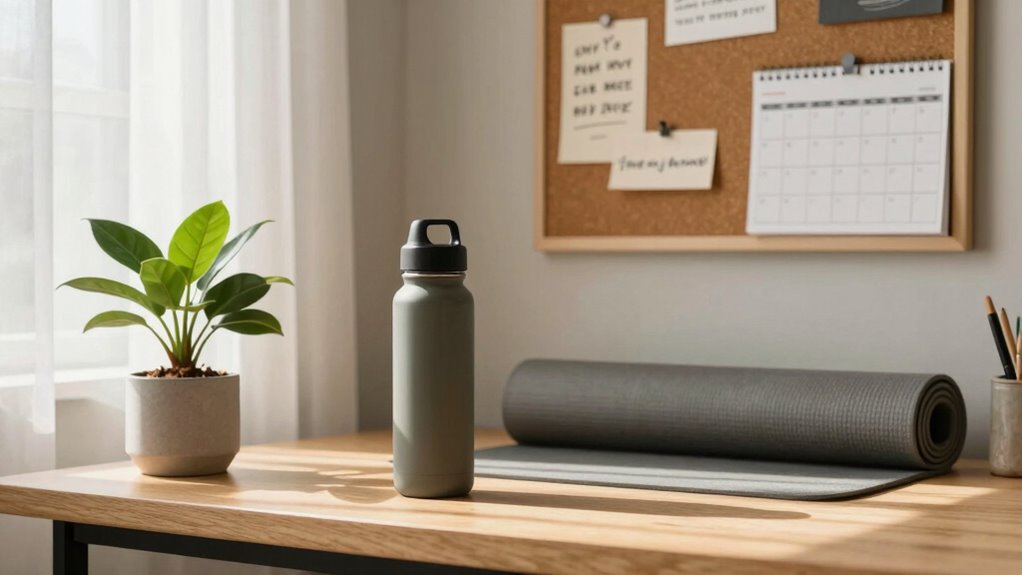

To support better habits through environment design, you should arrange your space intentionally by adding visual cues that remind you of your goals. Keep clutter to a minimum to reduce overwhelm and make it easier to focus. Set up dedicated zones for activities, like a specific spot for workouts or healthy snacks, to reinforce routines. Small environmental tweaks can make habits feel automatic and effortless. If you keep exploring, you’ll discover even more ways to create spaces that naturally support your habits.
Key Takeaways
- Arrange your space to include visual cues that remind and encourage desired habits.
- Reduce clutter to create a focused environment that minimizes distractions and mental barriers.
- Designate specific zones for activities to reinforce routine behaviors.
- Place necessary items within easy reach to lower friction and facilitate habit execution.
- Incorporate environmental signals, like setting out workout clothes or healthy snacks, to prompt specific actions.
Your environment plays a crucial role in shaping your habits, often more than you realize. The way your space is arranged can either support your goals or make it harder to stick to good routines. One powerful way to influence your behavior is through environmental design, which involves intentionally modifying your surroundings to encourage positive habits. For example, using motivational cues—visual or physical signals that remind you of your intentions—can be a game-changer. Placing a water bottle on your desk as a visual cue encourages you to stay hydrated, or setting out your workout clothes the night before acts as a prompt to exercise. These cues act as gentle nudges, making it easier to stay on track without relying solely on willpower.
Environmental design uses visual cues to effortlessly support your habits and goals.
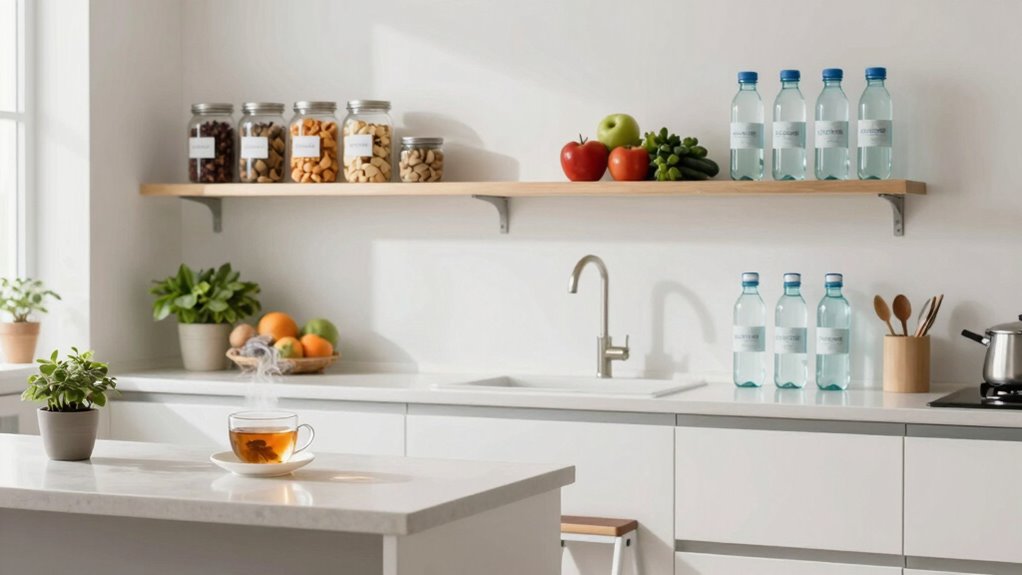
Clutter reduction is another key aspect of environment design that supports better habits. When your space is cluttered, it creates mental and physical barriers to action. You might find it harder to focus or feel overwhelmed by the chaos, which can derail your efforts to develop routines. Clearing clutter from areas associated with your goals, like your workspace or kitchen, makes it easier to access what you need and stay committed. For instance, keeping healthy snacks visible and accessible in your kitchen encourages healthier eating habits. When your environment is organized, you eliminate friction, making the desired behavior more convenient and automatic. Additionally, understanding the importance of projector technology in creating a comfortable viewing environment can help you design spaces that promote relaxation and focus, further supporting your habits. Recognizing the influence of environmental cues on behavior can help you craft more effective habit-supporting spaces. Incorporating visual cues into your environment can further enhance your ability to establish routines effortlessly.
In addition to motivational cues and clutter reduction, consider how the overall layout influences your mood and motivation. A tidy, inviting space can boost your energy and make you more inclined to engage in positive activities. Conversely, an environment filled with distractions or unnecessary clutter can sap your motivation and make it harder to focus. You can also use environmental design to create designated zones for specific habits, like a cozy corner for reading or a dedicated workout space. These intentional setups serve as subtle reminders and help establish routines by associating certain areas with specific behaviors. Incorporating behavioral triggers into your environment can further reinforce your habits and make them more automatic over time.
Ultimately, your environment is a powerful tool for habit formation. By thoughtfully incorporating motivational cues, reducing clutter, and designing your space to support your goals, you make it easier to follow through on new habits. The more your surroundings align with your intentions, the more natural and effortless your new routines will become. Small changes in your environment can lead to significant improvements in your consistency and long-term success, making habit development feel less like a challenge and more like a natural part of your daily life.
As an affiliate, we earn on qualifying purchases.
Frequently Asked Questions
How Quickly Can Environment Changes Influence Habits?
Environmental cues can influence your habits surprisingly quickly, often within days or weeks. When you change your environment to support desired behaviors, habit formation accelerates as cues trigger new routines. You might notice new habits forming faster because your surroundings act as constant reminders. By intentionally designing your environment, you create powerful cues that make it easier to adopt positive habits and break old ones, speeding up your overall habit formation process.
Can Environment Design Replace Willpower Entirely?
No, environment design can’t replace willpower entirely, but it profoundly supports habit formation. By shaping your surroundings, you boost intrinsic motivation and make healthy choices easier. When your environment encourages positive behaviors, you rely less on sheer willpower and more on automatic habits. While environment design is powerful, it works best alongside personal commitment, strengthening your ability to develop lasting habits without constant force of will.
What Are Common Mistakes in Designing Supportive Environments?
Many mistake making in environment design stems from neglecting natural behavior cues. You might clutter spaces, creating chaos that hampers habit formation. Failing to fit environments to your routines leads to lapses and lackluster progress. Don’t overlook the importance of intentional cues that trigger positive behaviors. Instead, focus on simplifying and structuring spaces, ensuring cues gently guide your habits, making consistency easier and setbacks less likely.
How Do I Customize Environment Design for Individual Needs?
To customize your environment design for individual needs, focus on personalization strategies that suit your habits. Adjust sensory elements like lighting, sound, and textures to create a setting that feels comfortable and motivating. Use feedback from your daily routines to identify what works best, then tweak these elements accordingly. This targeted approach helps reinforce positive habits and makes your environment more supportive of your unique preferences and goals.
Is Environment Design Effective for Breaking Bad Habits?
Yes, environment design can effectively break bad habits by reducing triggers and environmental cues that prompt unwanted behaviors. You can rearrange your space to minimize temptation, like removing junk food or avoiding places linked to bad habits. By controlling habit triggers and environmental cues, you create a setting that encourages positive actions and makes it easier to resist old patterns. Consistent adjustments reinforce new, healthier habits over time.
clutter reduction storage solutions
As an affiliate, we earn on qualifying purchases.
As an affiliate, we earn on qualifying purchases.
Conclusion
By designing your environment thoughtfully, you make healthier habits easier and more automatic. For instance, imagine someone who keeps fresh fruit on their kitchen counter instead of sweets; this small change encourages better snacking choices effortlessly. When your surroundings support your goals, you reduce friction and increase your chances of success. So, take control of your space—it’s a powerful way to reinforce positive habits and create lasting change in your life.
dedicated activity zones for home
As an affiliate, we earn on qualifying purchases.
As an affiliate, we earn on qualifying purchases.
motivational visual cues for exercise
As an affiliate, we earn on qualifying purchases.
As an affiliate, we earn on qualifying purchases.