To build more movement into your desk job, take hourly stretch breaks to relieve muscle tension and improve circulation. Use a sit-stand desk or shift positions frequently throughout the day. Stand during phone calls or walk to colleagues instead of emailing. Adjust your workspace ergonomically, ensuring your monitor and keyboard are at proper heights. Incorporate variety in your movements and posture changes to stay comfortable and active. Keep exploring simple strategies to stay active all day long.

Get workout gear delivered free with Prime
- Fast, free delivery on millions of items
- Prime Video, Amazon Music and more included
- Member-only deals all year
Key Takeaways
- Take regular hourly stretch breaks to relieve muscle tension and improve circulation.
- Use a sit-stand desk or alternate between sitting and standing throughout the day.
- Incorporate movement into tasks, like walking to colleagues or standing during phone calls.
- Adjust your ergonomic workspace to encourage proper posture and reduce strain.
- Shift positions frequently and vary movements to prevent stiffness and promote muscle engagement.
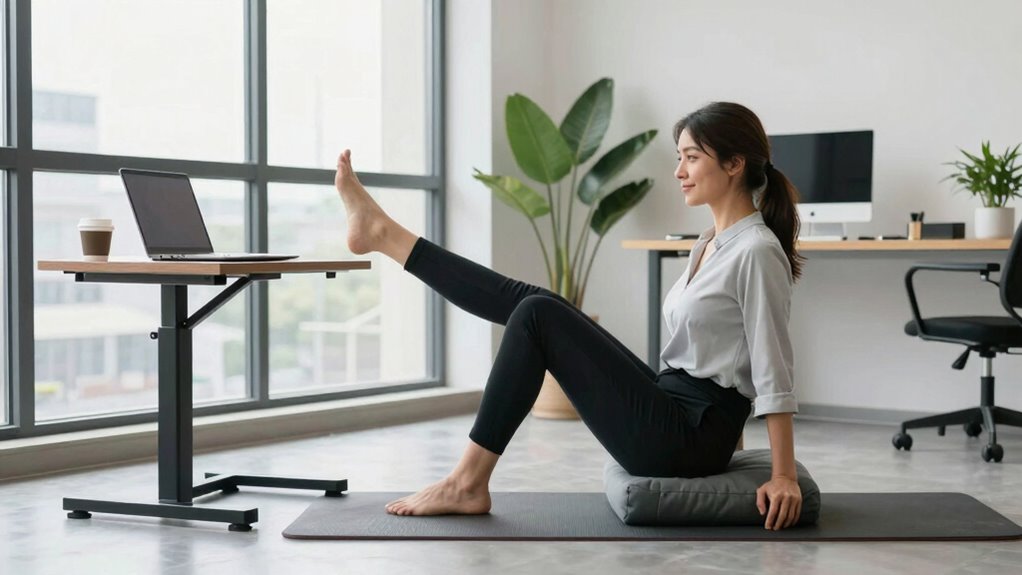
Many of us spend hours sitting at our desks, which can take a toll on our health over time. Sitting for prolonged periods increases the risk of back pain, poor posture, and even cardiovascular issues. The good news is that you can counteract these effects by incorporating small, intentional movements into your workday. One of the simplest ways to do this is by taking regular stretch breaks. Every hour, stand up and stretch your arms, legs, and back. These quick movements not only relieve muscle tension but also improve circulation, keeping you alert and comfortable. Setting a timer or using reminder apps can help you stay consistent with these breaks, ensuring you don’t forget to move throughout the day.
In addition to stretch breaks, paying attention to your ergonomic setup is essential. An ergonomic workspace encourages good posture and reduces strain. Adjust your chair height so your feet are flat on the floor and your knees are at a 90-degree angle. Your monitor should be at eye level to prevent neck strain, and your keyboard and mouse should be positioned so your arms are close to your sides with wrists straight. Small adjustments like these make a significant difference in how your body feels after hours at your desk. When your workspace is optimized, you’re more likely to maintain proper posture and avoid discomfort that can lead to longer-term issues. Incorporating movement variety into your routine can further enhance your health benefits and prevent stiffness. Regularly changing positions promotes muscle engagement and reduces fatigue, making your workday more comfortable. Additionally, exploring regional flavors and cultural insights in your snack or beverage choices can make your breaks more enjoyable and refreshing.
Incorporating movement doesn’t mean you need to overhaul your entire day. Simple actions, such as standing while on phone calls or walking to a colleague’s desk instead of emailing, add up over time. If possible, consider using a sit-stand desk that allows you to alternate between sitting and standing. Standing periodically not only reduces the risks associated with prolonged sitting but also engages different muscle groups. Even if you don’t have a sit-stand desk, you can practice shifting your position often, stretching your legs or twisting your torso to break the static posture. Being mindful of your posture awareness can help prevent long-term musculoskeletal issues and promote better overall health. Incorporating proper ergonomic principles can further support your efforts to stay active and comfortable during your workday.
As an affiliate, we earn on qualifying purchases.
Frequently Asked Questions
How Often Should I Stand or Stretch During the Workday?
You should stand or stretch every 30 to 60 minutes during your workday. Regular movement provides ergonomic benefits, helping you avoid stiffness and discomfort. It also promotes posture improvement by preventing slouching or poor alignment. Set reminders to stand, stretch, or walk around briefly. Incorporating these habits keeps your muscles active, reduces fatigue, and supports overall well-being, making your workday more comfortable and productive.
Are There Specific Exercises Recommended for Small Office Spaces?
In cozy office environments, you can seamlessly incorporate office stretches and compact exercise routines without disrupting your flow. Focus on simple moves like seated spinal twists, shoulder rolls, or ankle circles that require minimal space. These exercises help refresh your body, boost circulation, and keep you energized. By dedicating just a few minutes, you’ll find it easier to stay active and comfortable throughout your busy workday.
Can Using a Standing Desk Improve Overall Health?
Using a standing desk can substantially improve your overall health by offering ergonomic benefits and enhancing posture. Standing encourages better spinal alignment, reduces the risk of back pain, and promotes circulation. By alternating between sitting and standing, you prevent stiffness and fatigue. Incorporate movement breaks to maximize these benefits, ultimately supporting your physical well-being and boosting productivity throughout your workday.
What Are Quick Ways to Increase Movement Without Disrupting Workflow?
Think of your day as a river that needs gentle currents to stay lively. To boost movement quickly, make ergonomic adjustments like adjusting your chair height or adding a footrest. Take on small activity challenges—stand for five minutes every hour or stretch at your desk. These tiny ripples keep your energy flowing without disrupting your workflow, transforming your routine into a steady, invigorating stream.
How Can I Stay Motivated to Move More Throughout the Day?
To stay motivated to move more throughout the day, set regular movement reminders on your phone or computer. Incorporate desk stretches into your routine, making them a non-negotiable part of your schedule. Visual cues or sticky notes can also serve as helpful prompts. Remember, small consistent movements boost your energy and productivity, so focus on creating a habit that feels achievable and rewarding, keeping you motivated to stay active.
ergonomic keyboard and mouse set
As an affiliate, we earn on qualifying purchases.
As an affiliate, we earn on qualifying purchases.
Conclusion
So, you’ve started adding more movement to your day—great! But here’s the thing: the real challenge is maintaining these habits when life gets busy. Will you stick to your new routine, or let it slip away? The secret lies in consistency and tiny adjustments. Keep pushing forward, and who knows? Soon, those small changes could transform not just your workday, but your entire lifestyle. Are you ready to see what’s next?
desk height adjustable monitor stand
As an affiliate, we earn on qualifying purchases.
As an affiliate, we earn on qualifying purchases.
As an affiliate, we earn on qualifying purchases.
Halloween Picks
halloween
As an affiliate, we earn on qualifying purchases.