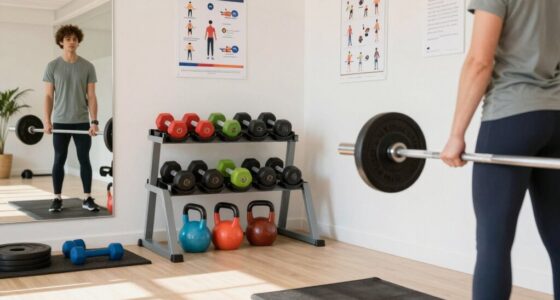
When starting exercise as a beginner, focus on gradual progress to avoid injuries or burnout. Pay attention to your body’s signals, and don’t push too hard too fast. Mix different workouts, like cardio, strength, and flexibility, to keep it balanced. Prioritize proper technique and warm-up routines for safety. Track your progress and celebrate small wins to stay motivated. Keep these tips in mind, and you’ll build confidence and safety in your fitness journey.
Key Takeaways
- Start with low intensity and gradually increase workload to prevent injury and burnout.
- Listen to your body’s signals and rest when needed to ensure safe progress.
- Focus on proper form and technique before increasing exercise difficulty or duration.
- Incorporate routine variation and warm-up/cool-down to reduce overuse injuries.
- Track your progress and celebrate small milestones to stay motivated and consistent.
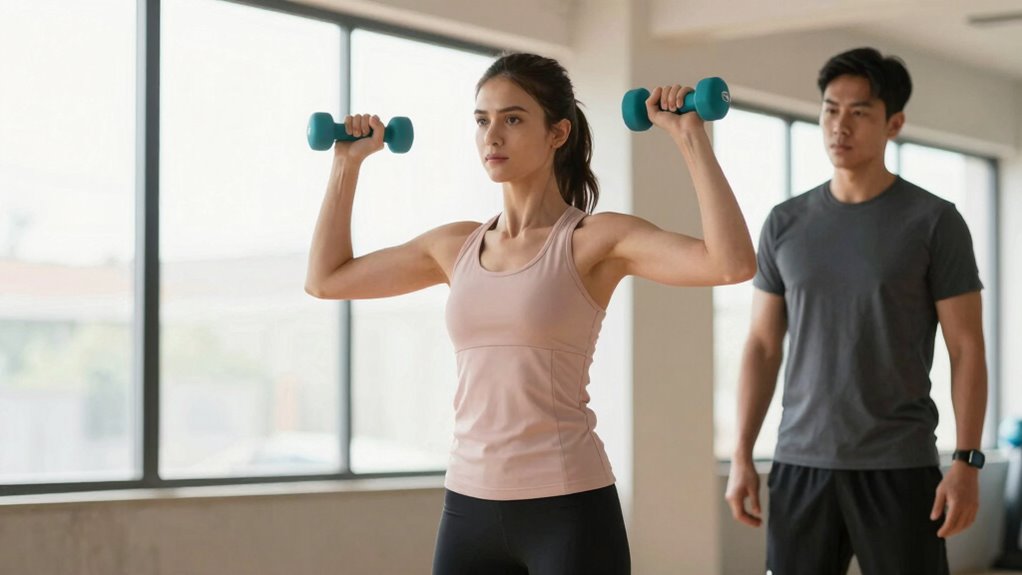
Starting a new exercise routine can be exciting, but it’s important to prioritize safety as you build your strength and endurance. When you’re just beginning, it’s tempting to push yourself hard to see quick results, but doing so can lead to injuries or burnout. Instead, focus on gradual progress, listening to your body, and setting realistic goals. Incorporating good nutrition tips into your routine is crucial. Eating balanced meals with enough protein, healthy fats, and carbohydrates fuels your workouts and aids recovery. Proper nutrition also supports your mental health by reducing stress and boosting your mood, making it easier to stay motivated. Remember, your mental health plays a significant role in how well you adapt to new exercises; feeling positive and confident can help you stick with your plan longer.
Prioritize safety, gradual progress, and balanced nutrition to build confidence and sustain long-term fitness success.
As you start, pay attention to how your body responds. When you experience fatigue or discomfort, don’t ignore it—rest and recover. Overexertion can cause setbacks, so aim for consistency rather than intensity. Using a gradual approach allows your muscles, joints, and bones to adapt safely. Keep track of your progress with a journal or app to celebrate small wins; this can boost your mental health and keep you motivated. It’s also wise to vary your workouts to prevent boredom and overuse injuries. Mixing cardio, strength training, and flexibility exercises ensures comprehensive development without overloading specific muscle groups. Additionally, understanding the importance of contrast ratio in visual aids can help you better appreciate how different exercises and routines are balanced for optimal results. Incorporating safe training practices can further minimize injury risks and promote long-term success. Remember, focusing on progression strategies will help you develop a sustainable and effective routine.
Progression isn’t just about increasing intensity—it’s also about improving form and technique. Proper form minimizes injury risks and enhances the effectiveness of each movement. If you’re unsure, consider consulting a trainer or watching instructional videos. Building strength takes time, so patience is key. Don’t rush to lift heavy weights or run long distances before your body is ready. Instead, prioritize proper technique and consistency. This approach will help you make sustainable progress and reduce the chance of setbacks. A well-structured routine that respects your body’s signals and recovery needs will ultimately lead to more lasting results. Incorporating appropriate warm-up and cool-down routines can also significantly reduce the risk of injury and improve overall recovery.
Finally, keep your mental health in check. Recognize that setbacks are normal and part of the process. Celebrate your efforts rather than just results, and don’t get discouraged if progress seems slow. Surround yourself with supportive friends or join a community to stay motivated. Remember, the goal is to create a healthy, enjoyable routine that you can maintain long-term. Prioritizing safety, nutrition tips, and mental health will set a strong foundation for your fitness journey, helping you progress safely while enjoying the many benefits exercise brings to your life.
beginner exercise resistance bands
As an affiliate, we earn on qualifying purchases.
As an affiliate, we earn on qualifying purchases.
Frequently Asked Questions
How Do I Know if I’M Overtraining?
You can tell you’re overtraining if you feel persistent fatigue, irritability, or trouble sleeping. Notice if your exercise intensity feels too high or if you’re not recovering well between sessions. Pay attention to your nutritional needs—if you’re not fueling your body properly, overtraining becomes easier. Keep a close eye on your body’s responses and adjust your workouts accordingly to avoid burnout and promote safe, sustainable progress.
What Should I Do if I Experience Pain?
Pain is your body’s way of signaling danger—don’t ignore it. If you feel pain, stop exercising immediately. Make sure you do a proper warm-up before workouts, as it prepares your muscles and reduces injury risk. Stay hydrated, as it helps your body recover and prevents cramps. If pain persists, consult a healthcare professional. Remember, listening to your body is key; pushing through pain can lead to setbacks.
How Often Should I Rest Between Workouts?
You should rest between workouts every 48 hours to give your muscles time to recover. During this period, focus on proper hydration and nutrition tips, like consuming enough protein and staying well-hydrated, to support your progress. Listen to your body; if you’re feeling overly sore or fatigued, take an extra rest day. Rest is essential for avoiding injury and ensuring steady, safe progress in your fitness journey.
Are There Specific Exercises to Avoid as a Beginner?
Be cautious—some exercises can catch you off guard. As a beginner, avoid high-impact moves and complex lifts until you’re confident. Prioritize proper stretching to prepare your muscles, and always check equipment safety before use. These steps help prevent injury and build a solid foundation. Stay alert, listen to your body, and gradually introduce new exercises, ensuring your fitness journey starts safely and steadily.
When Should I Increase My Workout Intensity?
You should increase your workout intensity when you feel confident with your current exercises, maintain proper form, and aren’t experiencing pain. Focus on nutrition tips like fueling your body with enough carbs and protein to support progress. Gradually add more weight or reps, listening to your body’s signals. Remember, safe progression involves avoiding overexertion and ensuring you’re well-nourished to prevent injury and promote recovery.

CAP Barbell 40-Pound Adjustable Cement Dumbbell Set – Versatile Weights for Home Gym Excellence
- Complete Cement Dumbbell Set: Includes multiple weight plates for versatility
- Adjustable Dumbbells: Features handles and spinlock collars for customization
- Rust-Resistant Coating: Designed to prevent rust and enhance durability
As an affiliate, we earn on qualifying purchases.
As an affiliate, we earn on qualifying purchases.
Conclusion
Starting your fitness journey is exciting, but rushing can lead to setbacks. Progress gradually, embracing patience over speed. As you build strength and confidence, remember that consistency outweighs intensity. Your body, like a delicate seedling, needs time to grow strong. So, cherish each small victory, knowing that patience fuels progress. In this dance of effort and rest, you’ll find that steady steps lead to lasting change, turning your initial steps into a lifelong habit.

TriggerPoint Grid 1.0 Foam Roller – 13" Multi-Density Massage Roller for Deep Tissue & Muscle Recovery – Relieves Tight, Sore Muscles & Kinks, Improves Mobility & Circulation – Targets Key Body Parts
- Enhances Muscle Recovery: Promotes tissue aeration and blood flow
- Comfortable Foam Construction: Distrodensity zones for sore muscles and soft tissue
- Customizable Massage Feel: Varying ridges and nodules for targeted relief
As an affiliate, we earn on qualifying purchases.
As an affiliate, we earn on qualifying purchases.
As an affiliate, we earn on qualifying purchases.