To start strength training without feeling lost, focus on proper form and begin with lighter weights to build confidence. Follow beginner tutorials or work with a trainer to learn correct techniques. Be consistent, listen to your body, and gradually increase your weights and variety to avoid plateaus. Keep your environment supportive and stay motivated by tracking progress. If you stick with these essentials, you’ll discover more ways to improve as you go along.

Get workout gear delivered free with Prime
- Fast, free delivery on millions of items
- Prime Video, Amazon Music and more included
- Member-only deals all year
Key Takeaways
- Begin with basic exercises focusing on proper form and lighter weights to build confidence.
- Follow structured beginner programs or tutorials to understand correct techniques.
- Set clear, manageable goals and track progress to stay motivated and focused.
- Incorporate rest days and listen to your body’s feedback to prevent injury.
- Maintain a supportive environment and stay consistent for long-term success.
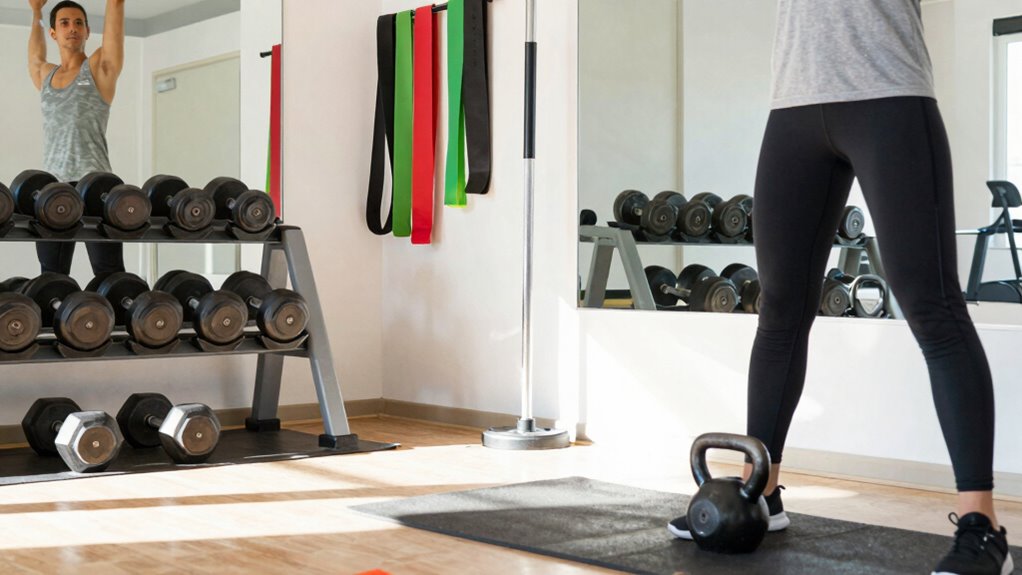
Starting strength training can feel overwhelming at first, but with the right approach, you’ll build confidence and see progress quickly. The key is to focus on fundamentals, stay consistent, and be patient with yourself. When you’re just starting out, it’s essential to learn proper form to prevent injuries and guarantee you’re targeting the right muscles. Watching tutorials, working with a trainer, or even attending beginner classes can help you grasp correct technique early on. Remember, injury prevention relies heavily on proper form, so don’t rush through exercises or lift weights that are too heavy. Instead, start with lighter weights and gradually increase as your strength and confidence grow.
Focus on proper form, start light, and build gradually for safe, effective strength training progress.
Nutrition plays a critical role in your strength training journey. Incorporate nutrition tips that support muscle growth and recovery, like consuming enough protein, staying hydrated, and eating a balanced diet rich in vegetables, healthy fats, and complex carbs. Protein is especially important because it provides the building blocks your muscles need to repair and grow after workouts. Consider timing your meals around your training sessions; eating a protein-rich snack or meal shortly after exercising can enhance recovery and help prevent soreness. Staying well-hydrated is equally important, as dehydration can impair performance and slow down recovery. Avoid drastic dieting or cutting calories too much, as your body needs fuel to build strength and prevent fatigue. Establishing a proper training environment can also help you stay motivated and consistent in your workouts. Additionally, understanding the importance of authenticity in self-identity can empower you to stay true to your fitness goals and maintain motivation over time. Consistent training habits are essential for long-term progress and making strength training a sustainable part of your life.
As you progress, listen to your body and adjust your training plan accordingly. Rest days are essential, giving your muscles time to recover and grow stronger. Incorporating proper water damage and rug cleaning techniques can help maintain your workout space and prevent long-term damage to your flooring. Incorporating variety in your workouts to prevent plateaus and keep things interesting, but always prioritize proper technique over lifting heavier weights. Remember, consistency beats intensity early on, so set manageable goals and celebrate small victories along the way. Additionally, paying attention to projector technology advancements can inspire you to create an optimal training environment that enhances your focus and motivation.
Finally, keep in mind that starting strength training isn’t just about lifting weights—it’s about creating a sustainable habit. Track your progress, stay motivated, and don’t get discouraged if results take time. Focus on the process, emphasize injury prevention, and maintain good nutrition habits, and you’ll build a solid foundation for long-term strength. With patience and persistence, you’ll find yourself lifting more confidently and feeling stronger each day.
Products Worth Considering

BowFlex Results Series SelectTech 552 Adjustable Dumbbell

Garmin Venu 3 Fitness Smartwatch, 45 mm, Black

Fitbit Versa Smart Watch – Black Aluminum, One Size (S & L Bands Included)
As an affiliate, we earn on qualifying purchases.
Frequently Asked Questions
How Often Should I Train for Maximum Results?
You should train about three to four times a week for maximum results, ensuring you maintain training consistency. Track your progress regularly to see improvements and adjust your routine accordingly. Rest days are essential for recovery, so balance your workouts with proper rest. Staying consistent helps your muscles adapt, and monitoring progress keeps you motivated. Stick to your schedule, and you’ll see steady gains without feeling overwhelmed or lost.
What Should I Eat Before and After Workouts?
Eating the right foods boosts your workout results—did you know that proper meal timing can improve performance? Before your workout, have a balanced snack with carbs and protein, like a banana with peanut butter. After, focus on recovery with protein-rich foods and some carbs to replenish glycogen. Follow nutrition tips that emphasize timing and quality to maximize gains and reduce fatigue, helping you stay motivated and consistent.
How Do I Avoid Common Strength Training Injuries?
To avoid common strength training injuries, focus on proper form at all times. Start with lighter weights to master the technique before progressing. Incorporate warm-up and cool-down routines, and listen to your body—don’t push through pain. Injury prevention hinges on consistency and attention to detail, ensuring you perform exercises correctly. If unsure, seek guidance from a trainer to help you develop safe habits from the start.
Can I Do Strength Training at Home Without Equipment?
Yes, you can definitely do strength training at home without equipment. Focus on bodyweight exercises like push-ups, squats, lunges, and planks to build strength. Create simple home workout routines that target different muscle groups, and gradually increase reps or intensity. Consistency is key, so set a schedule and stick to it. You’ll be surprised how effective bodyweight exercises are for strength, even without gym equipment.
How Long Does It Take to See Noticeable Progress?
Like a seed breaking through soil, noticeable progress appears in about 4 to 6 weeks with consistent effort. But remember, progress patience is essential; plateaus are just hurdles waiting to be overcome. Keep pushing, even when growth stalls, and you’ll break through the stagnation. Your persistence fuels transformation, turning small efforts into powerful change. Trust the process, and your strength will bloom brighter than you imagined.
Conclusion
Starting strength training might feel overwhelming at first, but remember, every expert was once a beginner. For example, imagine Sarah, who began with just 10-minute sessions and gradually increased her weights. She stayed consistent, celebrated small wins, and now trains confidently three times a week. Just like her, you’ll build strength and confidence over time. Keep it simple, stay patient, and enjoy the journey—your stronger self is just around the corner.