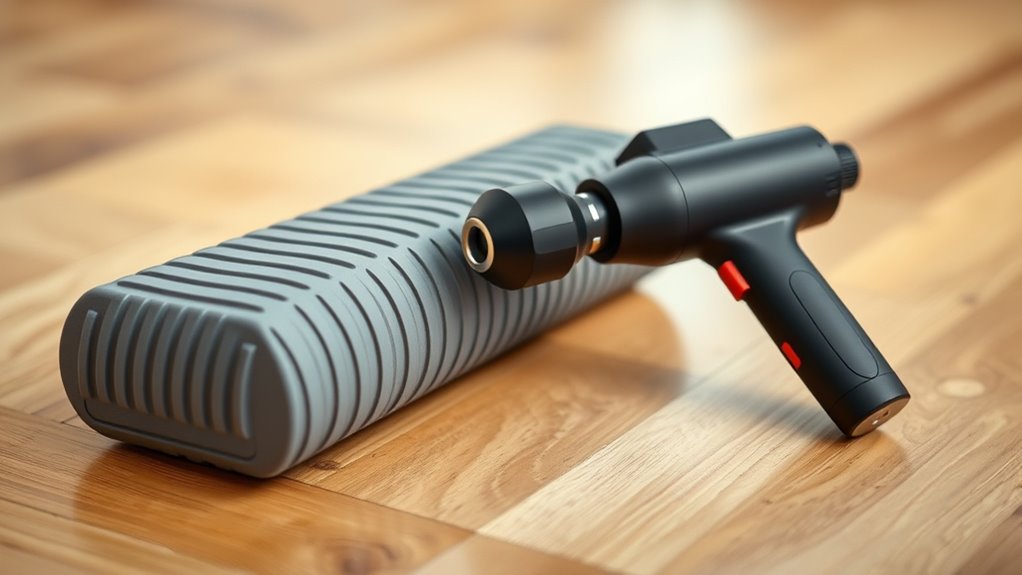

Choosing between a foam roller and a massage gun depends on your recovery goals. Foam rollers are great for broad muscle groups, improving flexibility, and gentle circulation, making them perfect for routine maintenance. Massage guns deliver targeted, deep tissue relief, helping eliminate stubborn knots quickly. Both tools can work together for peak recovery, but understanding their unique benefits can help you decide which suits your needs best. Keep going for a deeper comparison of each option’s advantages.
Listen free for 30 days with Audible
Thousands of audiobooks and originals — cancel anytime.
As an affiliate, we earn on qualifying purchases.
Key Takeaways
- Foam rollers provide broad, gentle pressure ideal for overall muscle maintenance and flexibility, while massage guns target deep, specific knots for focused relief.
- Foam rolling is cost-effective, portable, and suitable for routine warm-up and recovery; massage guns offer customizable, targeted deep tissue therapy.
- Foam rollers promote circulation and muscle relaxation passively; massage guns deliver rapid, percussive pulses for quick soreness relief.
- For comprehensive recovery, combining both tools maximizes circulation and addresses different muscle tightness levels effectively.
- Choice depends on recovery goals: foam rollers for general flexibility and maintenance, massage guns for targeted deep tissue relief.
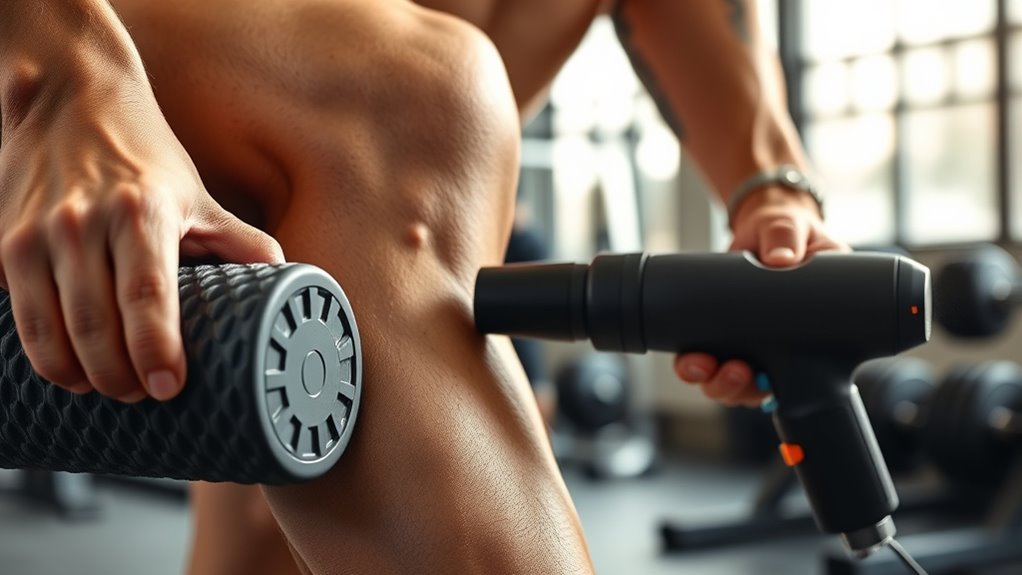
When it comes to muscle recovery and relief, foam rollers and massage guns are two popular tools that offer effective benefits. Both are designed to help you reduce muscle tension and enhance circulation, but they do so in different ways. Understanding how each works can help you decide which is better suited for your needs. Foam rollers are typically long, cylindrical pieces of foam that you roll over your muscles. As you apply pressure and roll back and forth, they help break up adhesions and knots in your muscle tissue. This process not only relieves muscle tension but also stimulates blood flow, leading to circulation improvement. The gentle, sustained pressure of foam rolling makes it especially good for easing tight muscles after workouts or long periods of inactivity. It’s a more passive form of self-massage that you can do almost anywhere without any extra equipment beyond the roller itself. Additionally, foam rolling can aid in improving flexibility, which is essential for injury prevention and optimal athletic performance.
Foam rollers provide gentle, sustained pressure to relieve tension and boost circulation after workouts or inactivity.
Massage guns, on the other hand, are handheld devices that deliver rapid, percussive pulses directly into your muscles. These pulses penetrate deep into tissue, making them highly effective at loosening tight spots and reducing muscle soreness. Because of their targeted approach, massage guns can quickly address specific areas of muscle tension, providing almost instant relief. They also promote circulation improvement by increasing blood flow to the affected muscles, which accelerates recovery. The variable speed and intensity settings allow you to customize your massage to match your comfort level and specific muscle needs. Unlike foam rollers, massage guns are more dynamic and can reach deeper layers of muscle tissue, making them ideal for athletes or anyone with persistent muscle tightness.
Choosing between the two depends on your recovery goals and personal preference. If you prefer a more gentle, broad approach that also encourages circulation improvement over larger muscle groups, a foam roller is an excellent choice. It’s cost-effective, portable, and simple to use, making it perfect for routine muscle maintenance. If you need targeted relief for stubborn knots or deep muscle soreness, a massage gun might be more effective. Its percussive action can reach areas that are difficult to treat with a foam roller and can deliver more immediate results.
Ultimately, both tools can complement each other in your recovery routine. Foam rollers are great for warming up muscles and maintaining flexibility, while massage guns excel at pinpointing and relieving specific areas of tension. By integrating both into your regimen, you’ll maximize circulation improvement and muscle tension relief, enhancing your overall recovery process.
As an affiliate, we earn on qualifying purchases.
Frequently Asked Questions
Can Foam Rollers Prevent Injuries During Workouts?
Yes, foam rollers can help prevent injuries during workouts by improving muscle flexibility and reducing tightness, which supports injury prevention. Using a foam roller before exercise can warm up muscles, enhancing workout safety and decreasing the risk of strains or pulls. Regularly incorporating foam rolling into your routine keeps muscles supple, promoting better movement and helping you avoid injuries during intense workouts.
Are Massage Guns Suitable for All Muscle Groups?
Yes, massage guns are suitable for most muscle groups due to their device versatility and targeted design. You can easily switch attachments to focus on specific areas like shoulders, calves, or quads, ensuring effective muscle targeting. However, avoid using them on sensitive or bony areas, and consult a professional if you have injuries. This way, you maximize the benefits while minimizing the risk of discomfort or injury.
How Often Should I Use a Foam Roller or Massage Gun?
You should use a foam roller or massage gun 3-4 times a week, depending on your activity level and muscle soreness. Keep your usage moderate to avoid over-stimulating your muscles and risking injury. Consistent use can aid in injury prevention and improve recovery, but listen to your body. Incorporate rest days and adjust frequency if you notice discomfort or increased soreness. Balance is key for effective recovery.
Do These Recovery Tools Help With Chronic Pain?
Chronic pain affects over 20% of adults worldwide, and recovery tools can help. Foam rollers and massage guns target muscle tightness and improve circulation, aiding chronic pain management. While they may not eliminate pain completely, regular use can provide long-term relief by reducing muscle tension and enhancing mobility. Consistently incorporating these tools into your routine offers a proactive approach to managing chronic discomfort and promoting overall recovery.
Which Device Is More Portable for Travel?
A massage gun is more portable for travel due to its compact design and lightweight build. You can easily slip it into your bag or carry-on without adding much weight or bulk. Foam rollers tend to be larger and heavier, making them less convenient for travel. With a massage gun, you get quick, effective relief on the go, fitting seamlessly into your travel routine.
massage gun for deep tissue massage
As an affiliate, we earn on qualifying purchases.
As an affiliate, we earn on qualifying purchases.
Conclusion
Choosing between a foam roller and a massage gun is like selecting a gentle river or a powerful waterfall for your recovery. The foam roller offers steady, consistent pressure, like a calming stream soothing your muscles. In contrast, the massage gun delivers rapid, targeted pulses, reminiscent of a rushing waterfall awakening your tissues. Both have their place—pick the one that best matches your recovery style, and let your muscles embrace the relief they deserve.
As an affiliate, we earn on qualifying purchases.
As an affiliate, we earn on qualifying purchases.
NFL season / tailgating Picks
team gear
As an affiliate, we earn on qualifying purchases.