
TL;DR

Get workout gear delivered free with Prime
- Fast, free delivery on millions of items
- Prime Video, Amazon Music and more included
- Member-only deals all year
A randomized phase IIb trial of 90 patients with acute respiratory distress syndrome found that more patients receiving inhaled EXO-CD24 were free of respiratory failure by day 7 than those receiving placebo. The study also reported shorter hospital stays and lower observed mortality, but the small trial’s results require confirmation in a larger phase III study.
In a 90-patient phase IIb trial, inhaled immune modulator EXO-CD24 was associated with a higher share of patients free of respiratory failure at day seven than placebo, researchers reported October 20 at the CHEST annual meeting. The study also found shorter hospital stays and lower observed mortality in the treatment group, but the results are preliminary and need testing in a larger trial.
Among patients assigned to EXO-CD24, 85% were free of respiratory failure at day seven, compared with 33.3% of those given placebo, according to results presented by Shiran Shapira, PhD, of Nano24 and Tel-Aviv Medical Center. The reported difference had a P value below 0.0001. Mean hospital stay was 6.5 days with EXO-CD24 and 14.4 days with placebo, with a reported P value of 0.0001.
Deaths through day 28 were reported in 6.7% of the treatment group and 30% of the placebo group. By six months, the figures were 13.3% and 43.3%, respectively; the study reported a hazard ratio of 0.28 (95% confidence interval 0.084-0.902; P=0.033). These are findings from a small phase IIb study, not proof that EXO-CD24 reduces mortality across the wider ARDS population.
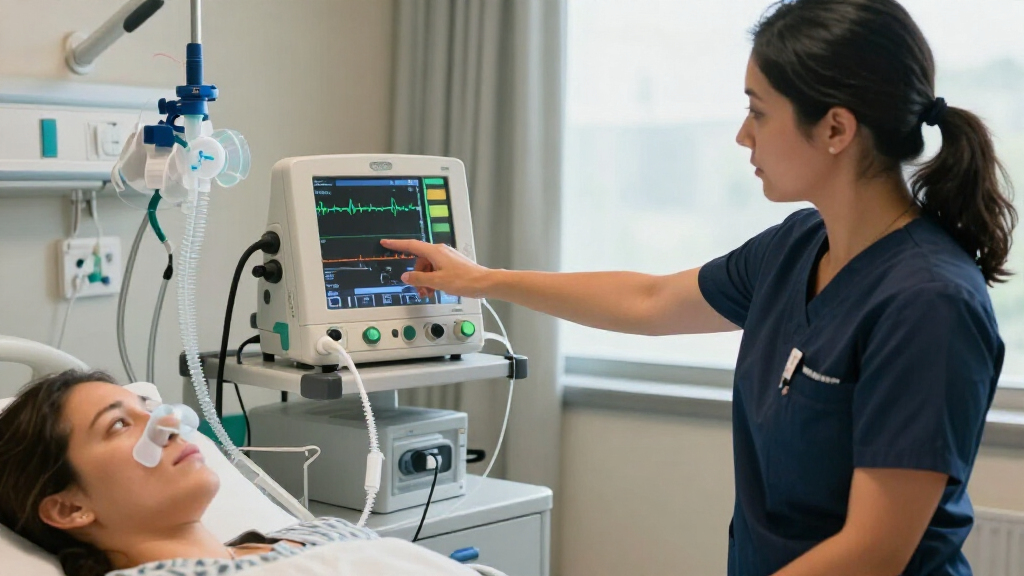
Patients received either aerosolized saline or 1010 particles of EXO-CD24 in 1.5 mL of saline, inhaled over five minutes twice daily from days one through five, for up to 10 doses. Patients discharged from intensive care before day five could finish treatment at home. The reported trial safety follow-up extended to day 28, with a final check at six months.
Potential Gains in ARDS Recovery
ARDS can cause severe breathing failure and often requires intensive care, while treatment options aimed directly at the condition remain limited. The differences reported in day-seven respiratory status and hospital stay suggest EXO-CD24 could warrant further study, particularly if a larger trial confirms the outcomes.
The mortality findings may also matter, but they should be interpreted cautiously: a trial with 90 participants can produce uncertain estimates, and the supplied report does not establish that the treatment caused the observed difference. A phase III trial would be needed to test whether the apparent benefits hold across more patients and clinical settings.
inhaled immune modulator for respiratory distress
As an affiliate, we earn on qualifying purchases.
As an affiliate, we earn on qualifying purchases.
How EXO-CD24 Is Intended to Work
EXO-CD24 is an inhaled therapy built from engineered exosomes, membrane-bound particles that carry biological material between cells. The developers say the exosomes express CD24, a protein involved in regulating immune responses to tissue damage. The intended approach is to limit harmful inflammation while retaining the body’s ability to recognize pathogens.
Shapira said inhalation is designed to deliver the agent directly to affected lung tissue without systemic exposure that could contribute to toxicity. That is the developer’s proposed rationale; the trial results reported at the meeting do not, by themselves, establish how the treatment works in patients. Earlier phases included 178 additional patients, according to the report, which said no treatment-related or dose-related serious adverse events had occurred in the accumulated clinical experience of those patients and the 90 in phase IIb.
“If this would pan out, it will be very exciting.”
— Alice Gallo De Moraes, MD, Mayo Clinic pulmonologist and critical care expert, who was not involved in the trial
As an affiliate, we earn on qualifying purchases.
Questions Before Phase III Testing
The available report does not provide further detail on the trial’s patient characteristics, the causes of ARDS, or how participants were distributed across the treatment and placebo groups. It is also unclear whether the reported differences will persist in a larger, international study or how they may vary across patient subgroups.
The results were presented at a medical meeting, and the supplied information does not give a full peer-reviewed trial publication. Although investigators reported no treatment-related or dose-related serious adverse events across the described clinical experience, that does not rule out less common risks or establish safety for broader use. EXO-CD24 remains an investigational treatment; the report does not indicate that it is approved for routine ARDS care.
As an affiliate, we earn on qualifying purchases.
Larger Trial Planned for EXO-CD24
Shapira described the findings as proof of concept and said the team plans to advance EXO-CD24 into a larger international phase III trial. That study will need to test the treatment against an appropriate comparison group and provide more reliable estimates of benefits and risks. The report did not specify a start date, enrollment target, or expected results date.
Until further evidence is available, the phase IIb findings should be treated as preliminary rather than a change to standard ARDS treatment. The researchers also plan to explore whether the exosome delivery platform could carry other therapeutic candidates, but no additional indication or development timeline was provided.
As an affiliate, we earn on qualifying purchases.
Key Questions
What is EXO-CD24?
EXO-CD24 is an experimental inhaled therapy using engineered exosomes that express the immune-modulating protein CD24. It is being studied for acute respiratory distress syndrome, or ARDS.
What did the phase IIb trial find?
The study reported that 85% of patients receiving EXO-CD24 were free of respiratory failure at day seven, compared with 33.3% receiving placebo. It also reported shorter mean hospital stays and lower observed mortality in the treatment group.
Does the study prove EXO-CD24 lowers the risk of death?
No. The study reported lower mortality in the treatment group, but it included only 90 patients. The findings are preliminary and do not establish that the treatment caused the difference or that it would apply to a broader patient population.
Is EXO-CD24 available as an ARDS treatment?
The report describes EXO-CD24 as an investigational therapy and does not say it is approved for routine care. The developers plan a larger phase III trial to examine its effects further.
What happens next?
The research team plans to move EXO-CD24 into an international phase III study. The report did not give a launch date, enrollment target, or timetable for results.
Source: rss
Halloween Picks
halloween
As an affiliate, we earn on qualifying purchases.