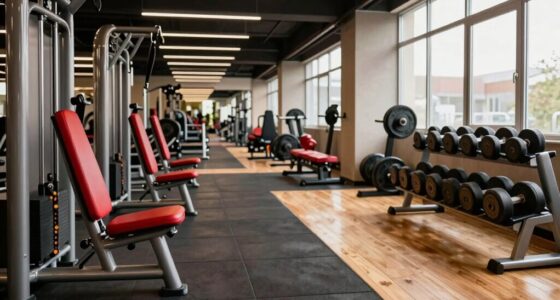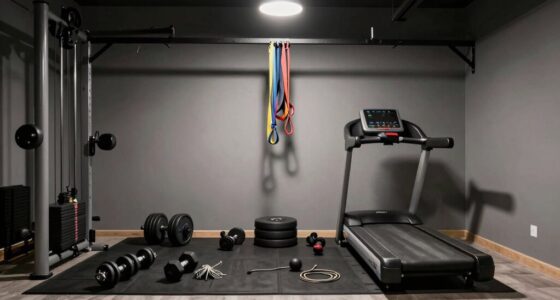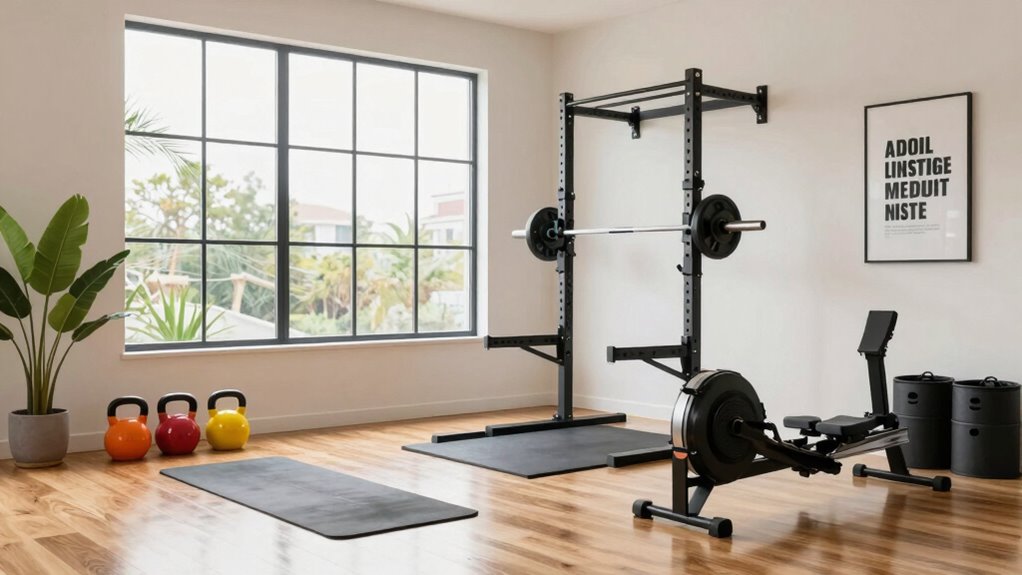

To build a home gym tailored to your training style, start by transforming a space that fits your needs, whether small or large. Pick versatile equipment like free weights for strength, cardio machines for endurance, or mats for flexibility. Organize with vertical storage, mirrors, and zones for different workouts. Focus on good lighting, ventilation, and motivating decor. Want to learn how to customize every aspect for maximum results? Keep exploring for expert tips.

Get workout gear delivered free with Prime
- Fast, free delivery on millions of items
- Prime Video, Amazon Music and more included
- Member-only deals all year
Key Takeaways
- Identify your primary training focus (strength, cardio, flexibility) to select suitable equipment and space layout.
- Design zones within your gym for different activities, optimizing space for each training style.
- Choose versatile equipment that supports multiple exercises aligned with your training goals.
- Ensure proper lighting, ventilation, and technology to create an energizing and comfortable environment.
- Incorporate motivational elements and organized storage to encourage consistency and enjoyment.
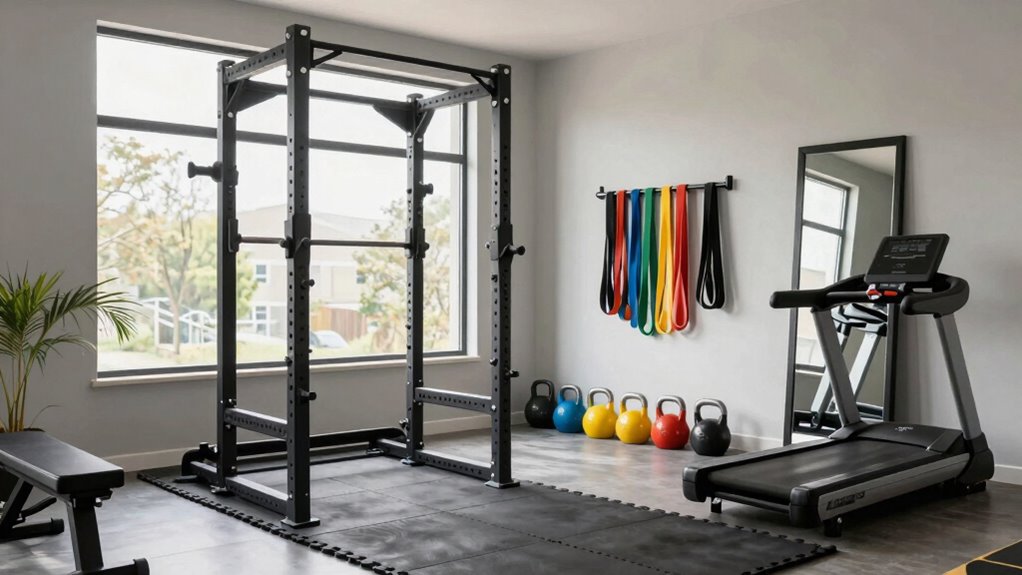
Have you ever considered transforming a spare room or corner of your home into a dedicated workout space? Doing so can make your fitness journey more convenient and consistent. The key is designing a space that aligns with your training style, which means thinking carefully about equipment variety and space optimization. You want a setup that motivates you without feeling cluttered or overwhelming. Start by evaluating the available area and how best to utilize it. A smaller room might need multifunctional equipment or fold-away solutions, while a larger space allows for more diverse setups.
Choosing the right equipment is essential. If your training style focuses on strength, you’ll want a mix of free weights, resistance bands, and maybe a power rack. For cardio enthusiasts, a treadmill, rowing machine, or jump rope could be your staples. If flexibility and mobility are your priorities, consider yoga mats, foam rollers, and stretching tools. The goal is to incorporate enough equipment variety to keep your workouts engaging and inclusive, without overcrowding the space. Prioritize versatile pieces that serve multiple purposes, helping you maximize every square inch.
Choose versatile, multi-purpose equipment to maximize space and keep workouts engaging.
Space optimization is equally important. Think vertically—install shelves or wall hooks to keep accessories, mats, or small weights off the floor. Use multi-use furniture, like a storage bench that doubles as seating or a foldable treadmill that stows away when not in use. Mirrors can make the room feel larger and help you check your form. Keep pathways clear so you can move freely, avoiding clutter that can cause accidents or distract you from your workout. Consider strategic placement of equipment to create distinct zones for cardio, strength, and stretching, making your space feel organized and purposeful. Incorporating creative storage solutions can further maximize your available space and keep everything tidy. Additionally, understanding the importance of contrast ratio can help you choose appropriate lighting and screen setups if you integrate technology into your workouts. Paying attention to home gym ergonomics can also improve comfort and reduce the risk of injury during training. A well-designed layout can enhance your overall workout experience and help maintain motivation.
Lighting and ventilation also play essential roles. Natural light can energize your workouts, but if that’s limited, invest in bright, adjustable lighting. Good airflow keeps you comfortable and helps prevent odors, especially during intense sessions. Adding a sound system or a TV can boost motivation, making your home gym more inviting. To ensure a pleasant workout environment, consider air quality improvements such as air purifiers or plants that can help keep the space fresh and healthy. Moreover, a well-ventilated space can improve exercise performance by maintaining optimal comfort levels.
Ultimately, building a home gym around your training style isn’t just about buying equipment; it’s about creating a space that motivates and fits into your lifestyle. Focus on equipment variety that supports your goals, and optimize the space to keep it functional and inspiring. With thoughtful planning, your dedicated workout area can become a place you look forward to visiting every day, helping you stay committed and making your fitness journey both efficient and enjoyable.
Products Worth Considering

Garmin Venu Sq 2 GPS Smartwatch, Slate and Shadow Gray

LEVOIT Vital Pet Smart Air Purifier

Oura Ring 5 Smart Ring – Stealth, Size 11
As an affiliate, we earn on qualifying purchases.
Frequently Asked Questions
How Much Space Do I Need for a Home Gym?
You’ll need at least 50 to 100 square feet for a basic home gym, but more space allows better equipment placement and movement. Make sure your space has good lighting and ventilation to stay comfortable during workouts. Keep equipment organized to maximize space, and consider ceiling height for taller machines or overhead exercises. Adequate room not only enhances safety but also keeps you motivated and comfortable during your training sessions.
What Budget Should I Allocate for Equipment?
Think of your budget as planting seeds—what you invest now determines your workout forest later. For cost considerations, allocate around $500 to $2,000, depending on equipment quality and your goals. Prioritize equipment durability to guarantee longevity, saving you money over time. Remember, investing wisely in sturdy, versatile gear means fewer replacements and better results, turning your home gym into a lasting sanctuary for your fitness journey.
How Do I Ensure Safety in a Home Gym?
To guarantee safety in your home gym, regularly inspect and maintain your equipment to prevent accidents. Use safety equipment like mats, gloves, and proper footwear to protect yourself. Keep your workout area clean and organized, removing any hazards. Follow manufacturer instructions for equipment use and maintenance, and don’t push beyond your limits. By prioritizing equipment maintenance and safety gear, you create a secure environment that supports your training goals.
Can I Create a Gym Suitable for Multiple Training Styles?
Think of your gym as a Swiss Army knife—compact yet versatile enough for various training styles. Yes, you can create a gym suitable for multiple training styles by prioritizing equipment versatility and training versatility. Include adjustable dumbbells, resistance bands, and a power rack, allowing you to switch from strength training to cardio or mobility work seamlessly. This flexible setup guarantees your gym adapts to your evolving fitness goals without cluttering your space.
What Are Essential Items for a Beginner Home Gym?
For a beginner home gym, focus on essential equipment that offers variety and maximizes space. Start with a set of dumbbells, a versatile bench, and resistance bands for multiple workout options. A yoga mat helps with floor exercises, while a stability ball adds variety. Opt for space-saving equipment like foldable benches or wall-mounted racks to keep your area organized and optimized, ensuring you can expand your gym as your training evolves.
Conclusion
Remember, Rome wasn’t built in a day, and neither is your perfect home gym. Stay consistent, adapt your space to fit your training style, and be patient with your progress. A well-designed gym is a reflection of your dedication and goals. Keep pushing forward, and you’ll find that small steps lead to big results over time. Your commitment now will pay off in strength, confidence, and health down the line.