TL;DR

Get workout gear delivered free — and shop member deals
- Fast, free delivery on millions of items
- Access to Prime Big Deal Days deals on October 6–7
- Prime Video, Amazon Music and more included
Home gym equipment can support weight loss by helping you move more and train your muscles, but equipment alone does not cause weight loss; results generally depend on a sustained calorie deficit and habits you can keep up. Start with gear that fits your space and budget, combine cardio with strength training, and build your routine gradually.
Choose gear you can use regularly, comfortably, and safely; a simple setup may beat expensive equipment.
Combine cardio with strength training, and build toward 150 weekly minutes of moderate aerobic activity plus strength work on two or more days.
Start with a manageable routine and gradually add time or resistance while leaving room for recovery.
Measure your space and budget, and check fit, storage, maintenance, warranty, and return terms before buying.
Treat machine and wearable calorie numbers as estimates; equipment supports a broader routine but does not guarantee weight loss.
What home gym equipment for weight loss can—and can’t—do
Home gym equipment for weight loss can make regular movement and strength training easier to fit into your week. It does not cause weight loss on its own: weight loss depends on a sustained calorie deficit, shaped by eating habits, activity, sleep, and consistency. This distinction matters because it changes how you shop. Instead of asking which machine “burns the most fat,” the better question is which tool removes the most friction between you and a repeatable habit—and that answer is different for everyone. Why convenience matters so much: the main reason home workouts fail is not lack of equipment quality but lack of use. A folding walking pad that lets you take a brisk 20-minute walk during a lunch break succeeds precisely because it eliminates a commute, weather, and gym scheduling. Dumbbells that sit beside your desk lower the effort threshold for training your muscles twice a week. In both cases, the equipment is doing one job well—reducing the decision cost of showing up. There is also a tradeoff in how you interpret feedback from machines. Calorie counters and app estimates tend to overstate energy expenditure, sometimes by a wide margin, because they generalize from averages rather than your body. If you treat those numbers as precise, you may unconsciously eat back “earned” calories that were never actually burned, stalling progress and eroding your motivation. Used loosely—as a way to compare one session against another or notice trends—they can still be helpful. The implication: let the numbers inform your routine, not your portion sizes.It is worth naming the tradeoff you accept by training at home, too. You gain privacy, flexibility, and no commute; you give up external accountability, variety, and on-demand coaching. That is why walking outdoors, climbing stairs, and body-weight exercises deserve a place in the picture: they cost nothing, they diversify your activity, and they keep your routine from collapsing if your equipment breaks or bores you. Equipment supports the system; it is not the system.The best equipment is equipment you can use regularly and safely. A pair of bands that fits beside your desk can be more useful than an expensive machine that crowds your living room—because a used tool beats an unused one every time.
Compare cardio and strength equipment before you buy
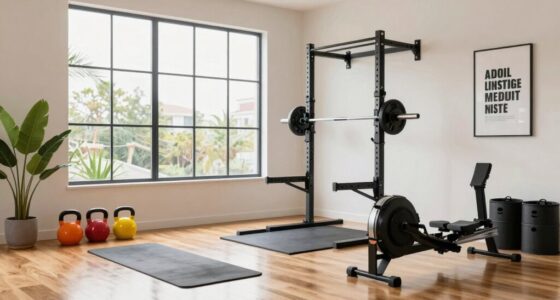
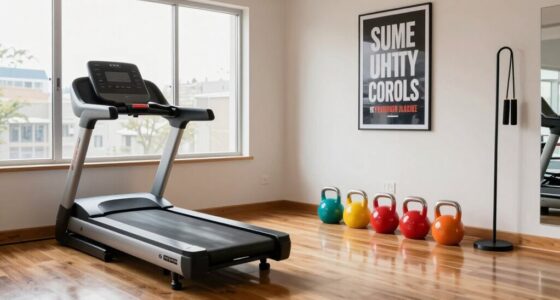
Home gym equipment for weight loss usually serves one of two useful jobs, and the split matters more than it first appears. Cardio gear helps you accumulate aerobic activity, which supports calorie expenditure and heart health; strength gear builds and preserves muscle, which helps you move well and stay capable as you lose weight. A common mistake is buying only cardio equipment. During weight loss, people who do not strength-train tend to lose muscle along with fat, which can make regaining weight more likely and daily movement feel harder. Pairing both types is not marketing cross-selling—it addresses two different adaptations your body needs. There is also a tradeoff in cost, space, and commitment. Cardio machines tend to be expensive and bulky but make aerobic exercise easy to repeat in any weather. Resistance gear is cheap and compact but asks more of you in program design, since you must decide what exercises to do rather than following a machine’s fixed motion. Neither is objectively better; the right choice depends on which barrier is bigger for you—getting your heart rate up, or structuring strength work at home.| Equipment | Potential role | Check before buying |
|---|---|---|
| Treadmill or walking pad | Indoor walking or running | Footprint, noise, speed, incline, and safe setup |
| Stationary or recumbent bike | Low-impact cardio | Seat comfort, fit, adjustability, and resistance |
| Rowing machine or elliptical | Aerobic exercise using more of the body | Technique, stride or seat fit, storage, and comfort |
| Dumbbells or adjustable weights | Strength exercises with room to progress | Weight range, storage, and your available space |
| Resistance bands | Portable, flexible resistance training | Resistance levels, wear, and secure anchoring |
| Kettlebell, mat, or bench | Strength and floor exercises | Starting weight, stable surfaces, and safe technique |
Build a weekly routine with short, manageable sessions
Home gym equipment for weight loss works best as part of a repeatable routine that balances cardio and strength work. A common public-health guideline for adults is at least 150 minutes of moderate-intensity aerobic activity each week, plus muscle-strengthening activity on two or more days [1]. You do not need to hit that target on day one: start with sessions you can recover from and add time or resistance gradually. If you are new to exercise, you might begin with three 15-minute walks on a walking pad and two short strength sessions using light weights or bands. Next week, add a few minutes to each walk if your body feels ready. A steady pace you can repeat beats an all-out first workout that leaves you sore and reluctant to return.- Pick a cardio option. Choose walking, cycling, rowing, or another activity that feels comfortable.
- Schedule strength work. Set aside two days for controlled exercises with bands, dumbbells, or body weight.
- Start at a manageable level. Use a pace and resistance that let you keep good control.
- Build gradually and make room for rest. Add time or resistance over time, and take recovery days as needed.
Choose compact gear that earns its place in your home
Home gym equipment for weight loss in a small space should be easy to store, comfortable to use, and versatile enough to support more than one workout. Resistance bands, a mat, and a few appropriately chosen weights can fit in a closet or under a bed, while body-weight exercises and outdoor walking can keep costs down. Before you buy, picture where the equipment will live between sessions. Set a spending limit, measure the storage area, and check assembly needs, maintenance, warranty, and return terms. Foldable cardio machines and app-guided workouts are popular ways to save space or add structure, but their features do not prove they lead to more weight loss. If a smart bike helps you enjoy a scheduled class, that convenience may be worth the cost; if you ignore its screen, it may not be. A budget-friendly example: start with a mat and resistance bands, then use brisk outdoor walks for cardio. After several weeks, if you find yourself wishing for indoor cycling, you’ll have a clearer idea of what to buy. That small trial can help you avoid filling your home with gear you do not enjoy.Make comfort and safe setup part of your equipment choice
Home gym equipment for weight loss should let you move with control and feel comfortable enough to use it again. Check a machine’s fit, stability, resistance range, and setup instructions before your first session, and keep the floor around it clear. A bike seat adjusted too low or bands attached to an unstable anchor can make a simple workout harder to manage. If you have joint pain or limited mobility, a low-impact machine may feel more comfortable, but individual needs differ. Try equipment when possible and ask a healthcare professional for guidance if you have a chronic condition, significant pain, or questions about beginning exercise. For example, someone with knee discomfort may want professional advice before choosing between cycling, walking, and other activities. Apps and wearable devices can help you remember workouts or track activity, though their numbers are estimates. Focus on trends you can act on—such as how often you moved this week—rather than treating one calorie reading as a score. Rest also belongs in the plan: recovery helps you return to exercise without turning every session into a test.Frequently Asked Questions
What home gym equipment is best for weight loss?
There is no single best choice for everyone. Pick cardio and strength options that fit your space, budget, comfort, and routine—for example, a stationary bike and resistance bands. Regular use matters more than a long equipment list.
Can I lose weight with home gym equipment alone?
Equipment can help you exercise, but it does not cause weight loss by itself. Weight loss generally depends on a sustained calorie deficit, with eating habits, daily activity, sleep, and consistency all playing a part.
How often should I work out at home?
A common guideline for adults is at least 150 minutes of moderate-intensity aerobic activity each week and muscle-strengthening activity on two or more days [1]. If you are starting out, build up gradually with shorter sessions and adjust for your fitness and recovery.
What equipment works in a small apartment or on a tight budget?
Resistance bands and a mat take little room, and a few appropriately chosen weights can add strength options. Walking outdoors and body-weight exercises also let you stay active without buying a cardio machine.
Are walking pads or smart machines effective for weight loss?
A walking pad can make indoor walking more convenient, while smart machines and apps can offer structure or activity tracking. None guarantees weight loss, and calorie estimates are not exact; results depend on your broader habits and consistency.
Conclusion
Choose one cardio activity and one practical way to train your muscles, then schedule sessions you can repeat in a normal week. Let the equipment earn its place through use: the best setup is the one that helps you keep moving, one ordinary session at a time.Fall Picks
fall essentials
As an affiliate, we earn on qualifying purchases.