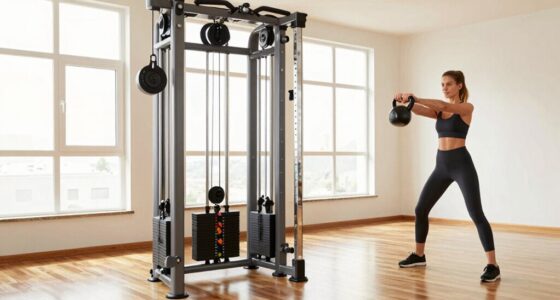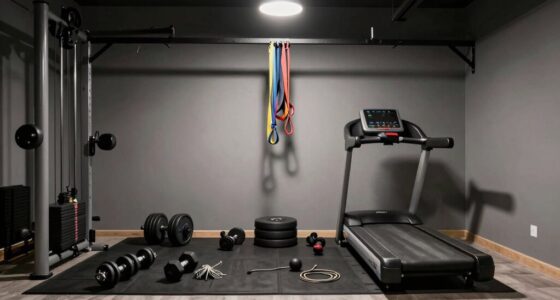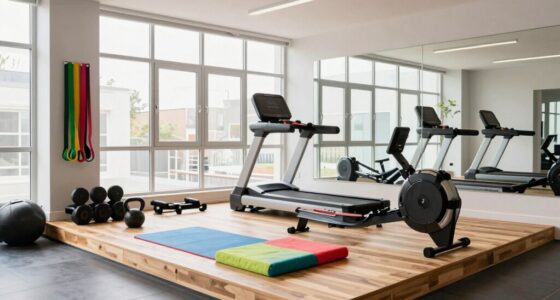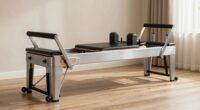
To keep your home gym equipment clean and working longer, regularly wipe down surfaces after each use with disinfectant wipes or a damp cloth. Check for loose bolts, frayed cables, or worn padding, and tighten or replace parts as needed. Use proper cleaning supplies and lubricants to prevent rust and damage. Maintaining a routine of cleaning and inspections not only keeps your equipment hygienic but also optimizes performance and extends its lifespan. Stay with us to discover more tips!

Get workout gear delivered free — and shop member deals
- Fast, free delivery on millions of items
- Access to Prime Big Deal Days deals on October 6–7
- Prime Video, Amazon Music and more included
Key Takeaways
- Wipe down equipment after each use with disinfectant wipes or a damp cloth to prevent dirt and sweat buildup.
- Regularly inspect and tighten loose bolts, frayed cables, and worn padding to prevent equipment failure.
- Use suitable cleaning products for different surfaces, avoiding harsh chemicals that may cause damage.
- Lubricate moving parts and belts periodically to ensure smooth operation and reduce wear.
- Store cleaning supplies properly and schedule routine maintenance checks to extend equipment lifespan.
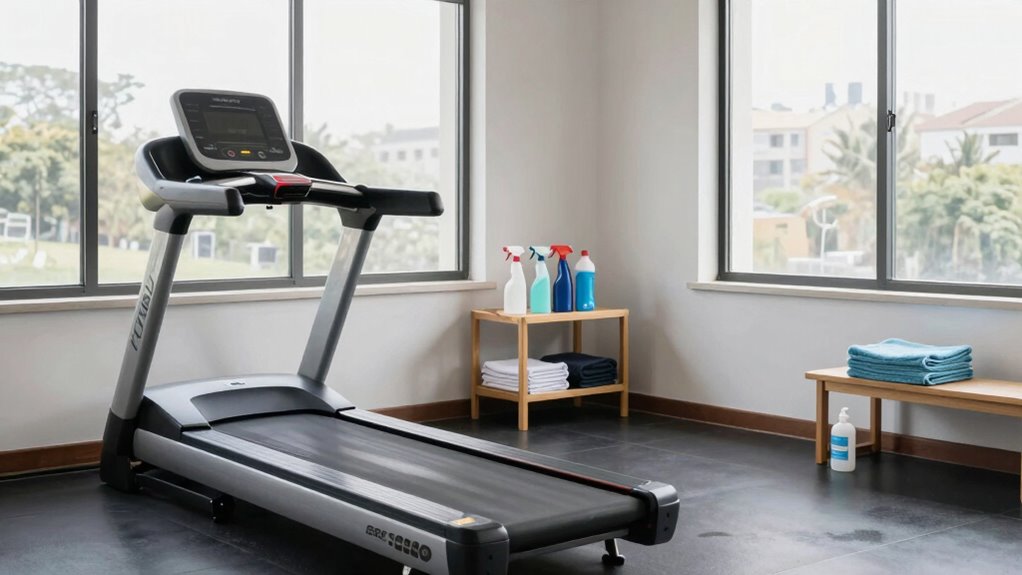
Maintaining clean and well-maintained home gym equipment is essential for guaranteeing it lasts longer and performs at its best. When you stick to regular maintenance routines, you prevent dirt, sweat, and grime from building up, which can cause damage over time. Establishing a consistent schedule for checking and cleaning your equipment keeps it in top shape and saves you money in the long run. Start by setting aside a few minutes after each workout to wipe down your equipment. Keep a set of effective cleaning supplies nearby, such as microfiber cloths, disinfectant sprays, and gentle cleaning solutions designed for gym equipment. These supplies help you quickly remove sweat and dirt, preventing corrosion and mold growth, especially on metal and rubber parts.
Regular cleaning and inspections extend your home gym equipment’s lifespan and ensure safe, effective workouts.
Your maintenance routines should include inspecting your equipment regularly. Look for loose bolts, frayed cables, or worn-out padding, and tighten or replace components as needed. This proactive approach reduces the risk of accidents and equipment failure. For cardio machines like treadmills or ellipticals, check the belts, lubricate moving parts, and ensure the power cords are in good condition. Resistance equipment, such as dumbbells or resistance bands, should be examined for cracks or tears. By catching issues early, you avoid more costly repairs or replacements down the line. Incorporating regular inspections into your routine is a key step in proactive maintenance. Additionally, understanding the importance of preventive maintenance can help you avoid unexpected breakdowns and extend the lifespan of your equipment. Regular upkeep also involves cleaning supplies, which are vital for maintaining hygiene and functionality. Using visual and auditory cues can also assist in proper maintenance techniques, especially for complex machines.
Cleaning supplies are key to keeping your equipment hygienic and functioning properly. Use disinfectant wipes or sprays that are safe for the specific surfaces you’re cleaning. Avoid harsh chemicals that could damage rubber or plastic parts. For stubborn grime or sweat stains, a soft cloth dampened with mild soap and water can do the trick. For metal components, a little WD-40 or a similar lubricant can help prevent rust and keep parts moving smoothly. Remember to follow manufacturer instructions for cleaning and maintenance to avoid voiding warranties or causing damage. Proper storage of cleaning supplies can also prevent accidental spills and prolong their effectiveness. Incorporating proper storage practices can further extend the longevity of your cleaning supplies and equipment.
In addition to routine cleaning, always wipe down your equipment after each use. Sweaty equipment is a breeding ground for bacteria and mold, which can lead to unpleasant odors and health issues. Wearing gloves during cleaning can also protect your skin from harsh chemicals. By combining regular inspections, timely repairs, and diligent cleaning with the right supplies, you extend the lifespan of your home gym equipment and ensure it continues to support your fitness journey effectively. Staying proactive with your maintenance routines not only preserves your investment but also keeps your workouts safe, clean, and enjoyable.
home gym equipment disinfectant wipes
As an affiliate, we earn on qualifying purchases.
As an affiliate, we earn on qualifying purchases.
Frequently Asked Questions
How Often Should I Replace Gym Equipment Parts?
You should replace gym equipment parts based on their equipment longevity and your replacement schedule. Regularly inspect parts like cables, belts, and pads for wear and tear. Typically, critical components need replacement every 1-3 years, but this varies with usage. Staying proactive helps prevent breakdowns and extends the lifespan of your equipment. Keep track of maintenance, and replace parts promptly to guarantee safety and peak performance.
Can I Use Household Cleaning Products on Gym Equipment?
Imagine your gym equipment as a trusted partner, ready for every workout. You can use household cleaning products, but choose cleaning sprays and surface disinfectants carefully. Make certain they’re safe for the material—avoid harsh chemicals that could cause damage. Spray lightly, wipe thoroughly, and let everything dry completely. This keeps your equipment hygienic and in top shape, extending its lifespan while creating a safe, inviting space for your fitness journey.
What Is the Best Storage Method for Home Gym Equipment?
Choose versatile storage solutions like wall-mounted racks, shelves, or storage bins to keep your home gym organized. Prioritize space optimization by consolidating smaller items and storing bulky equipment out of the way. Use labels for easy access and maintain a clutter-free environment. Regularly review and rearrange your storage setup to guarantee it adapts to your evolving workout needs, making your home gym both efficient and inviting.
How Do I Prevent Rust on Metal Fitness Gear?
To prevent rust on metal fitness gear, you should regularly clean and dry the equipment after each use, focusing on metal surfaces. Apply a thin coat of oil or a rust inhibitor to metal parts to guarantee rust prevention and ease metal maintenance. Store your gear in a dry, well-ventilated space, avoiding humidity. Consistent maintenance and proper storage are key to keeping your equipment in top shape and avoiding rust buildup.
Are There Specific Maintenance Tips for Electronic Workout Machines?
You might find it surprising, but regular maintenance of your electronic workout machines is key to longevity. Keep electronics calibrated to guarantee accurate readings, and check the power supply for any signs of wear or loose connections. Dust off vents and clean with a soft cloth. By routinely inspecting and maintaining these components, you prevent malfunctions and extend your equipment’s lifespan, making your home gym more reliable and effective.
As an affiliate, we earn on qualifying purchases.
Conclusion
Think of your gym equipment as a trusted steed in your fitness journey. Just as you’d groom and care for a horse to keep it strong and reliable, regular cleaning and maintenance keep your gear running smoothly and lasting longer. Neglecting this care is like ignoring your steed’s needs—eventually, it’ll falter. So, saddle up with good habits, show your equipment some love, and enjoy a smooth ride to your health goals.
As an affiliate, we earn on qualifying purchases.
As an affiliate, we earn on qualifying purchases.
Evergreen bestsellers Picks
bestsellers
As an affiliate, we earn on qualifying purchases.