
The space you need for a home gym varies based on your workout routine and equipment. For bodyweight or small dumbbell exercises, 50 sq ft may suffice, but larger equipment like treadmills or squat racks need 100–200+ sq ft. You can optimize smaller spaces with multi-functional, foldable, or wall-mounted gear, while maintaining safe movement areas. Want practical tips on intelligent layout and organization? Keep going to discover how to make the most of your space.
Key Takeaways
- Small spaces (50 sq ft) are adequate for bodyweight exercises and compact equipment, while larger areas (200+ sq ft) suit full gyms.
- Prioritize multi-functional, space-saving equipment to maximize limited space and maintain workout versatility.
- Allocate space along walls for large equipment and keep central areas free for movement and stretching.
- Use vertical storage solutions and organization techniques to optimize space and ensure safety.
- Consider ceiling height and layout flow to accommodate equipment, accessories, and different workout routines effectively.
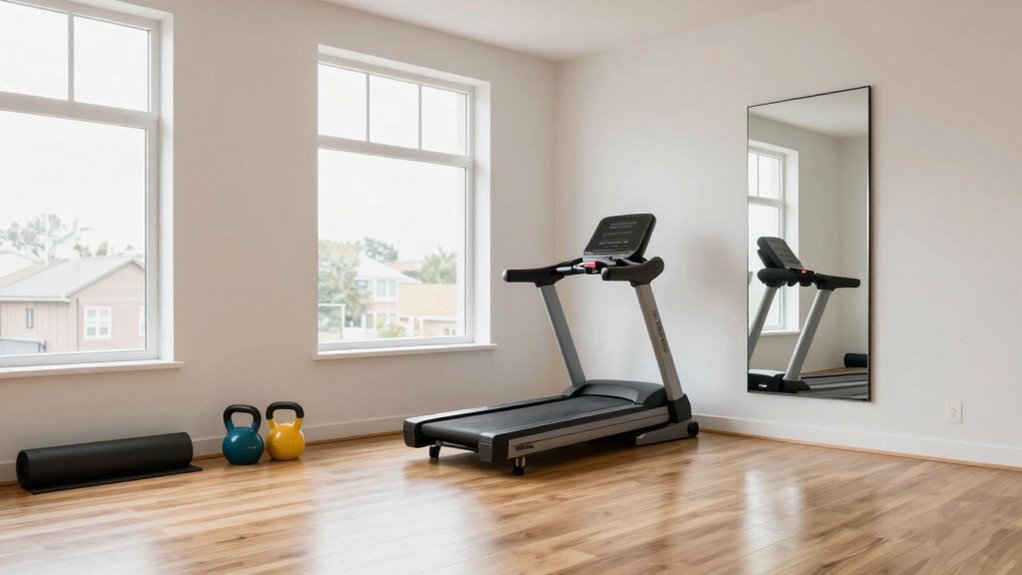
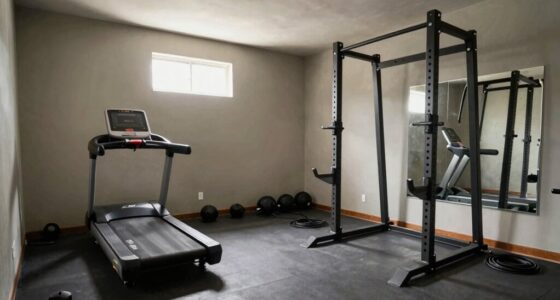
Creating a home gym is a great way to stay fit without the hassle of commuting to a gym. But before you start setting up your space, you need to consider how much room you’ll actually need. The size of your home gym depends on the types of workouts you prefer and the equipment you want to include. For example, if you mainly do bodyweight exercises or use small dumbbells, you can get by with a smaller area. However, if you plan to incorporate larger equipment like a treadmill or squat rack, you’ll need more space.
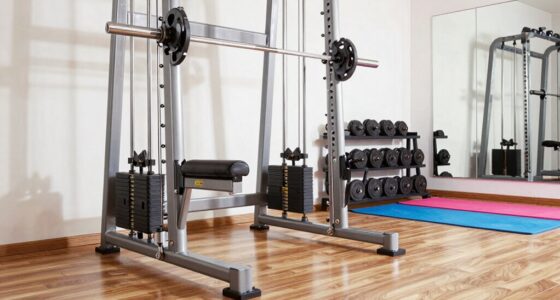
One of the most important factors is how you organize your equipment. Effective storage solutions help maximize your available space and keep your gym area tidy. Look for versatile options like wall-mounted racks, shelves, or compact storage bins, which keep your equipment accessible without cluttering the floor. When planning your storage solutions, think about how frequently you use each item. Keep your most-used equipment within easy reach, and store less frequently used items out of the way. This approach not only frees up space but also makes your workouts more efficient. Additionally, proper organization can help you maintain safety and prevent accidents during your exercise routines. Incorporating sustainable practices such as repurposing existing furniture or using eco-friendly storage materials can also contribute to a more environmentally conscious setup. Being mindful of space optimization techniques can further enhance your gym layout and functionality. Moreover, considering garage organization tips can help you utilize every inch of your space more effectively.
Effective storage keeps your home gym tidy, accessible, and space-efficient with wall-mounted racks, shelves, and smart organization.
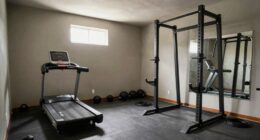
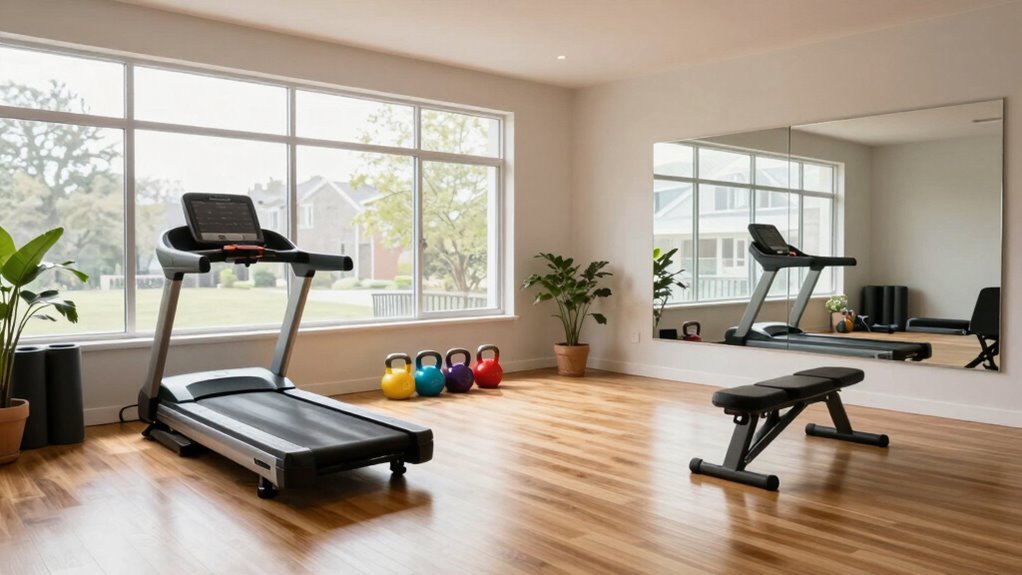
Next, think about your equipment layout. The way you arrange your gear can markedly impact how much space you need. For instance, placing larger equipment like a treadmill or elliptical along one wall leaves more open space in the middle for stretching or bodyweight exercises. Use clear pathways to move freely between different workout zones, ensuring safety and convenience. Also, consider the height of your ceiling—higher ceilings give you more options for installing hanging accessories or doing exercises that require vertical space.
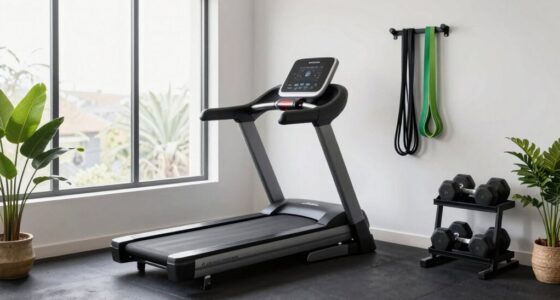
Your ideal home gym size can vary from a small corner of 50 square feet to a dedicated room of 200 square feet or more. If you’re tight on space, focus on multi-functional equipment, such as adjustable dumbbells or foldable benches, which serve multiple purposes without taking up extra room. For larger spaces, you can afford to include more specialized gear, creating a more extensive workout environment. Additionally, incorporating safety measures like proper ventilation and adequate lighting ensures your workouts remain safe and comfortable.
space-saving wall-mounted gym racks
As an affiliate, we earn on qualifying purchases.
As an affiliate, we earn on qualifying purchases.
Frequently Asked Questions
Can I Create a Home Gym in a Small Apartment?
Yes, you can definitely create a home gym in a small apartment. Focus on furniture arrangement to maximize space, such as folding equipment or compact weights. Use vertical storage and multi-purpose furniture to keep the area organized. Lighting optimization is key—brighten the space with natural light or mirrors to make it feel larger. Prioritize versatile, space-efficient equipment, and keep the area clutter-free for an effective workout environment.
What Equipment Is Essential for Limited Space?
You only need a few essential pieces for limited space, focusing on multi-functional equipment like adjustable dumbbells or foldable benches that maximize utility. Incorporate compact storage solutions such as wall-mounted racks or under-bed storage to keep your area organized. Prioritize versatile items that serve multiple workouts, allowing you to maintain an effective routine without clutter. This approach helps you create a practical, space-efficient home gym that fits seamlessly into your apartment.
How Do I Maximize Space in a Tiny Gym?
To maximize space in a tiny gym, focus on smart storage solutions like wall-mounted racks and collapsible equipment. Incorporate multipurpose furniture, such as benches with built-in storage or foldable mats, to save room. Keep the area organized and clutter-free, allowing for more movement. By choosing versatile items and clever storage, you create a functional workout space without feeling cramped, making every square inch work for your fitness goals.
Is a Garage or Basement Better for a Home Gym?
A garage is often better for a home gym because it’s easier to customize with garage insulation, keeping it comfortable year-round. Plus, you can install proper basement lighting if you choose a basement, making workouts safer and more inviting. Consider your climate and preferences—garages offer more ventilation, while basements provide natural light. Both spaces can work well with the right insulation and lighting adjustments.
How Much Clearance Is Needed for Cardio Equipment?
You should allow at least 2 to 3 feet of clearance around your cardio equipment for safe equipment placement and comfortable movement. Make sure your ceiling height is at least 8 feet to accommodate taller machines like treadmills or ellipticals without feeling cramped. Proper clearance prevents accidents and makes workouts more enjoyable. Measure your space carefully, and consider future equipment additions to keep your home gym functional and safe.
foldable treadmill for small spaces
As an affiliate, we earn on qualifying purchases.
As an affiliate, we earn on qualifying purchases.
Conclusion
So, imagine transforming a tiny closet into your personal fitness empire—sweat, strength, and stamina all in one jaw-dropping space! With just a little room, you could be lifting, jumping, and stretching like a pro, turning your home into a gymnasium that rivals any fancy fitness club. Don’t let space limitations hold you back—your dream workout sanctuary is closer than you think. Get creative, and watch your home become the ultimate fitness fortress!
multi-functional home gym equipment
As an affiliate, we earn on qualifying purchases.
As an affiliate, we earn on qualifying purchases.
compact dumbbell storage solutions
As an affiliate, we earn on qualifying purchases.
As an affiliate, we earn on qualifying purchases.