This guide walks you through choosing and setting up home gym equipment for weight loss, from defining your budget and space to making your first purchase and arranging it for actual use. It is written for beginners with no prior home-training experience who want to burn calories and build muscle at home without wasting money on machines they will never use.

Get workout gear delivered free — and shop member deals
- Fast, free delivery on millions of items
- Access to Prime Big Deal Days deals on October 6–7
- Prime Video, Amazon Music and more included

JKSHMYT Weighted Fitness Hoop with Gravity Ball
- ✔ Brand: JKSHMYT
- ✔ Model: ZDC-02
- ✔ Material: ABS plastic

MERACH Adjustable Foldable Ab Trainer
- ✔ Brand: MERACH
- ✔ Model: MR-2314
- ✔ Incline settings: 2

YOTTOY Cordless and Corded Jump Rope with LCD Display
- ✔ Display: LCD
- ✔ Tracking: Time, weight, calories, and jump count
- ✔ Rope: Adjustable steel rope with PVC coating
Weight loss depends primarily on a calorie deficit, and equipment is a tool to help you move more and build muscle — not a shortcut. This guide focuses on versatile, low-cost gear that supports the two things that drive results: resistance training and cardiovascular work. You will finish with a working setup, a training plan structure, and a clear way to confirm the equipment is being used. Difficulty: beginner. Total time: one to two weeks for research and delivery, plus two to three hours to set up and test everything.
Difficulty: Beginner | Time: 1-2 weeks (research and purchasing), plus 2-3 hours for setup
What You’ll Need
Tools & Materials:
- A tape measure, for measuring your available space and doorways
- A smartphone or computer for price comparison and video instruction
- A credit card or payment method for purchases
- Optional: rubber floor mats to protect flooring and reduce noise
Knowledge:
- Basic understanding that weight loss requires a calorie deficit created through diet, with exercise supporting the process
- No prior training experience is required
If you have joint problems, significant excess weight, or a medical condition, talk to a doctor before starting a new exercise routine. If you weigh over roughly 270 lbs (120 kg), check the weight rating on any cardio machine and any collapsible bench before buying — many budget models are rated to 220-265 lbs.
JKSHMYT Weighted Fitness Hoop with Gravity Ball
When we evaluated these three products purely as weight loss tools, the JKSHMYT Weighted Fitness Hoop came out ahead for one reason: it removes nearly every barrier to starting. There is no assembly, no learning curve worth mentioning, and no impact on your knees — you clip the 24 detachable links around your waist and move. Compared with the YOTTOY jump rope, it burns fewer calories per minute, but it is far kinder to joints, and for anyone who is carrying extra weight precisely because high-intensity exercise feels punishing, that difference decides everything.The adjustability is the real differentiator. Because the hoop fits waists from 26 to 47 inches, it works for a wide range of body types out of the box, and you can remove links as your waistline shrinks — a genuinely motivating feature for a weight loss purchase. The 0.7 lb gravity ball provides light, consistent resistance that keeps your core engaged without fatigue ending your session early. The manufacturer’s suggested 30 minutes per day is realistic precisely because the effort level is moderate rather than brutal.The tradeoffs are real, though. Unlike the MERACH and YOTTOY picks, there is no display or tracking, so you will need your phone or a timer to monitor sessions. It also targets your midsection and hips almost exclusively, so it is not a full-body solution the way the jump rope is. And it is explicitly not recommended for elderly users, with children needing adult supervision. Still, as a first piece of weight loss equipment you will actually keep using, this option stands out for consistency over intensity.
Pros:
- Adjustable 24-link design fits waists from 26 to 47 inches
- Zero assembly and minimal learning curve — usable on day one
- Low-impact motion is gentle on knees and ankles
- Durable ABS construction with a 1-year warranty
Cons:
- No display or built-in workout tracking
- Lower calorie burn per minute than jumping rope
- Not recommended for elderly users
Best for: Beginners and anyone with joint sensitivity who wants low-impact daily cardio they can start using immediately.
Not ideal for: Older adults, anyone wanting built-in workout tracking, or users seeking full-body or high-intensity training.
Bottom line: If consistency is your biggest weight loss obstacle, this is the pick that gets you moving daily without excuses.
“If consistency is your biggest weight loss obstacle, this is the pick that gets you moving daily without excuses.”
MERACH Adjustable Foldable Ab Trainer
The MERACH Adjustable Foldable Ab Trainer plays a different role in our lineup: it is the only pick that builds strength rather than primarily burning calories. While the hoop and jump rope are cardio tools, this machine targets the abdominals directly, which matters for weight loss in a specific way — lean muscle supports your metabolism as you lose fat. Its two incline settings and five height adjustments let you scale difficulty from assisted crunches to genuinely challenging reps, something neither cardio option can do with the same precision.Where this model earns its keep is comfort and feedback. The padded knee and elbow supports and quiet rollers make high-repetition sessions tolerable, and the built-in LCD display tracking counts, time, and calories gives you the measurable progress the JKSHMYT hoop lacks. Compared with the YOTTOY jump rope, the MERACH also has a major practical advantage for shared living spaces: it is nearly silent, while rope jumping — even cordless — involves repeated impact on the floor.The drawbacks deserve honesty. Ab training alone burns relatively few calories; ab exercises shape muscle, they do not meaningfully melt fat in isolation. This machine makes the most sense for buyers already doing cardio who want to strengthen and define their core — not as a standalone weight loss solution. It also requires assembly, and notably, no dimensions or folded size are published, so buyers in tight apartments are shopping somewhat blind. If your goal is purely fat loss on a budget, the jump rope below delivers more per dollar and per minute.
Pros:
- Two incline settings and five height adjustments scale difficulty as you progress
- Padded knee and elbow supports with quiet rollers for comfortable high-rep sessions
- LCD display tracks exercise counts, time, and calories
- Folds for storage and transport
Cons:
- Burns fewer calories than cardio-based alternatives
- Requires assembly
- No dimensions or folded size provided
Best for: Anyone pairing cardio with strength work who wants a quiet, adjustable core machine with progress tracking.
Not ideal for: Buyers seeking maximum calorie burn as a primary goal, or those who cannot verify the folded footprint fits their space.
Bottom line: A smart complement to cardio rather than a replacement for it — buy this to strengthen your core, not to out-train a calorie surplus.
“A smart complement to cardio rather than a replacement for it — buy this to strengthen your core, not to out-train a calorie surplus.”
YOTTOY Cordless and Corded Jump Rope with LCD Display
If raw efficiency is what you are after, the YOTTOY Cordless and Corded Jump Rope offers the most calories burned per minute of anything in this lineup, at the smallest footprint and likely the lowest cost. Jumping rope engages your whole body — legs, core, shoulders, coordination — whereas the JKSHMYT hoop keeps the work concentrated around your waist. For a buyer with healthy joints and a weight loss deadline, this pick makes the most sense for sheer throughput.What separates this model from a basic rope is its dual-mode design. The cordless mode, using short weighted balls, lets you simulate jumping anywhere without tripping hazards or ceiling clearance issues — a genuine advantage over the MERACH trainer’s fixed footprint for travelers and apartment dwellers, and something the hoop cannot replicate in terms of portability. The two removable counterweights in the handles add adjustable upper-body resistance, effectively letting you tune intensity as your fitness improves. Meanwhile, the LCD display tracks time, jumps, weight, and calories, giving you the data-driven feedback that the hoop completely lacks.Still, jumping rope is the most demanding option here on your body. Every jump is an impact event, so heavier beginners or anyone with knee, ankle, or hip issues should honestly consider the hoop instead — consistency beats intensity when joints complain. The 360-degree ball bearings and PVC-coated steel rope keep rotation smooth and tangle-free, and the silicone handles resist slipping during sweaty sessions. Two gaps in the product information are worth noting: no battery details are given for the display, and the adjustable rope’s length range is unspecified, which could matter for very tall users.
Pros:
- Switches between corded and cordless modes for any space
- LCD display tracks time, jumps, weight, and calories
- Two removable counterweights allow adjustable resistance
- Non-slip silicone handles and tangle-resistant 360-degree ball bearings
Cons:
- High-impact motion is hard on knees and ankles
- No battery or power details provided for the display
- Rope length range is not specified
Best for: Budget-minded buyers with healthy joints who want maximum calorie burn, full-body engagement, and portable equipment.
Not ideal for: People with knee or ankle problems, heavier beginners just starting out, or very tall users who need confirmed rope lengths.
Bottom line: The most efficient calorie burner here by a wide margin — provided your joints can take the impact and you value data over comfort.
“The most efficient calorie burner here by a wide margin — provided your joints can take the impact and you value data over comfort.”
As an Amazon Associate we earn from qualifying purchases.
Before You Start
Decide your total budget before browsing anything. A functional fat-loss home setup costs far less than most people expect: $150-300 for a bodyweight-and-dumbbell starter setup, $400-800 with an adjustable bench and cardio option, or $1,000+ with a cardio machine. Writing the number down first prevents the most common failure mode, which is impulse-buying a large machine that becomes a clothes rack.
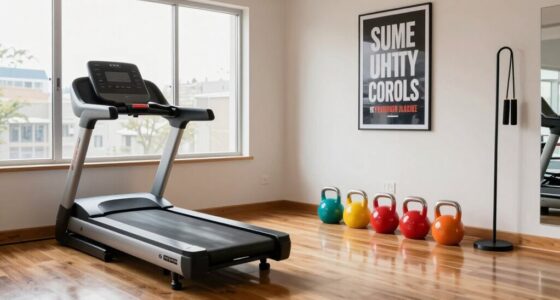
Second, measure your space. Note the room dimensions, ceiling height (important if you plan to jump rope or do overhead presses), and the width of doorways and stairwells the equipment must pass through. A treadmill that does not fit through your basement door is an expensive mistake.
Step-by-Step Instructions
Step 1: Choose your training style and pick an equipment category
Write down which of these matches you best, because it determines everything you buy:
- Resistance-focused (recommended for most people): Select adjustable dumbbells or resistance bands, a bench, and a mat. Muscle raises resting calorie burn and shapes the body as fat comes off.
- Cardio-focused: Pick a jump rope, used stationary bike, or rowing machine.
- Hybrid: Combine dumbbells with one cardio item — the most effective and popular combination for weight loss.
Commit to one category for your first purchase round. Plan to expand later once you have trained consistently for eight weeks.
Tip: If you hate running, do not buy a treadmill. Consistency beats equipment quality every time — buy for the activity you will actually repeat three to five times per week.
Check: You have one sentence written down, such as: ‘Hybrid setup — adjustable dumbbells, mat, and a jump rope.’
Step 2: Divide your budget across items
Split your total budget using this guideline for a hybrid setup: allocate roughly 50% to adjustable dumbbells (your core tool), 20% to a bench or step, 15% to a mat and small accessories, and 15% to your cardio item. Adjust the split if you chose a pure cardio or pure resistance setup.
Write the dollar limit for each item next to it. Apply this list as your shopping filter — skip anything above the number unless something else comes in under.
Tip: Adjustable dumbbells replace an entire rack of fixed dumbbells and are the single highest-value purchase for fat loss training. Expect to spend $100-400 depending on weight range.
Check: You have a written list of items with a dollar cap on each.
Step 3: Measure and map your space
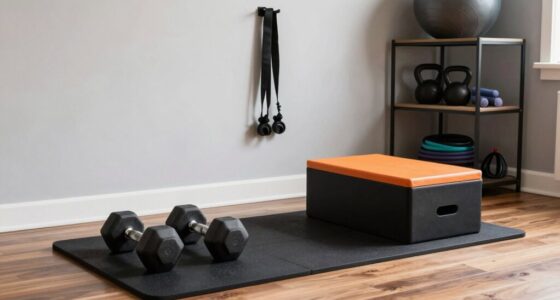
Measure the floor area you will dedicate to training. Verify that a dumbbell-and-bench setup fits in a clear area of roughly 6 by 6 feet. Check that ceiling height allows you to raise dumbbells overhead while standing. Confirm doorways and hallways along the delivery path are wide enough for boxed equipment.
Mark the space with painter’s tape on the floor so you can see exactly what fits before ordering.
Check: The taped area fits your planned items with at least two feet of clearance on each side of where you will stand to train.
Step 4: Buy the core resistance equipment
Purchase, in this order: (1) Buy adjustable dumbbells rated to at least 25 lbs per hand if you are new, or 50+ lbs if you have some training background; (2) Buy an exercise mat; (3) Buy a flat or adjustable weight bench, checking that its stated weight capacity includes your body weight plus the dumbbells.
Compare prices across at least two retailers and read reviews specifically mentioning durability after six months of use, not just unboxing impressions. For dumbbells, prioritize quick weight-changing mechanisms — slow adjustments kill workout momentum.
Tip: Used adjustable dumbbells and benches are widely available at low prices because so many people quit. Check local resale listings before paying full price.
Check: You can perform a goblet squat, a dumbbell row, and a floor or bench press with your new equipment without instability or range-of-motion limits.
Step 5: Add your cardio item
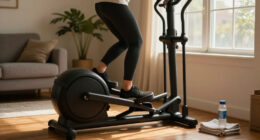
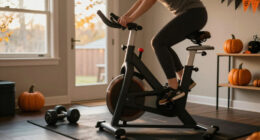
Purchase one cardio tool matched to your preference: a jump rope (cheapest, high intensity, needs ceiling clearance), a used stationary bike (low impact, good for beginners and heavier trainees), or a rowing machine (full body, quiet). Place it in the same room as your resistance equipment — separated cardio equipment gets used dramatically less.
If using a jump rope, cut or adjust it to your height: stand on the rope’s center and the handles should reach your armpits.
Check: You can complete 10 continuous minutes on your cardio tool at a conversational-but-working pace on your first attempt.
Step 6: Arrange the space for daily use
Lay down rubber mats or interlocking floor tiles under the weight area to protect flooring and dampen noise. Position the bench so you have arm’s-length access to the dumbbells from both the seated and lying positions. Place your mat directly in your line of sight from where you sit most often in the house — visibility drives usage.
Store small items in a single bin or rack. Equipment that requires searching gets skipped.
Check: You can go from deciding to work out to starting your first exercise in under two minutes with zero setup friction.
Step 7: Run a full test workout
Complete one full session with your new setup: perform a 5-minute cardio warm-up, then three sets of 10 repetitions each of goblet squats, dumbbell rows, push-ups (on the mat or bench), and dumbbell shoulder presses, finishing with 10 minutes of moderate cardio. Note anything that felt awkward — weights too light, bench at the wrong height, mat sliding.
Fix what you noted: swap weight ranges, adjust bench angle, or add grip material under the mat before your next session.
Check: You finish the session having completed every exercise, and you know exactly what your first month of workouts will look like.
Step 8: Build the usage habit and track results
Schedule three workouts per week in your calendar at fixed times and keep each session to 30-45 minutes. Track two things only: count sessions completed per week, and weigh yourself once per week, same time of day, after using the bathroom and before eating.
Ignore daily weight fluctuations — judge progress on a four-week rolling average. If the average is not trending down after four weeks, adjust your food intake first, not your equipment.
Check: After four weeks you have completed at least 10 of 12 scheduled sessions and a downward or stable trend with improving measurements or fit of clothes.
Common Mistakes to Avoid
- Buying a large cardio machine first and skipping resistance equipment — Buy adjustable dumbbells before any machine. Muscle preservation during weight loss matters more than cardio volume, and dumbbells cost a fraction of a treadmill.
- Overspending on gear before establishing the habit — Cap your first-round spending at a starter level. Only upgrade after eight weeks of consistent training proves you will use it.
- Ignoring weight ratings on benches and cardio machines — Check stated capacity against your body weight plus the weight you will lift. Add 50 lbs of margin to any bench rating.
- Choosing weights that are too light — You should struggle to complete the last two repetitions of a set of 10-12. If you can do 15+ easily, the weight is too light to stimulate change.
Troubleshooting
Problem: Adjustable dumbbells feel bulky or awkward for some exercises
Solution: Supplement with a set of resistance bands for smaller-movement exercises like lateral raises. Bands cost under $20 and solve the bulk problem without replacing your dumbbells.
Problem: Neighbors complain about noise from jumping or dropped weights
Solution: Switch to thick interlocking rubber mats, replace jump rope intervals with a stationary bike or step-ups, and lower dumbbells under control instead of dropping them.
Problem: Motivation drops after two to three weeks
Solution: Shrink the commitment: commit to a 10-minute minimum session rather than skipping entirely. Follow a structured video program so you are not improvising workouts when energy is low.
Problem: Weight loss stalls despite consistent training
Solution: Audit your food intake for one week, weighing portions. Exercise appetite often increases eating; the deficit, not the workout count, drives fat loss. Adjust calories down 200-300 per day and reassess in three weeks.
What Success Looks Like
Your setup is successful when all of the following are true: you can complete a full-body dumbbell workout plus cardio in your space without rearranging furniture; every item has been used at least weekly for four consecutive weeks; your four-week body-weight average is trending down or your clothes fit looser; and starting a workout takes under two minutes from decision to first exercise. If all four hold, your equipment is doing its job — the remaining variable is nutrition.
Next Steps
Once you have completed eight consistent weeks, consider one targeted upgrade: heavier dumbbell plates or a higher weight-rating pair, a pull-up bar for a doorway, or a better cardio machine if your current one is limiting you. Reassess your programming every eight weeks by adding repetitions or weight, since progressive overload is what keeps results coming. If a persistent joint pain appears during any exercise, stop that movement and consult a physical therapist or qualified trainer before continuing. Repeat the habit audit monthly: any equipment unused for three weeks should be sold rather than stored.
Frequently Asked Questions
Do I need a treadmill or exercise bike to lose weight at home?
No. Weight loss comes from a calorie deficit, and dumbbell-based resistance training plus walking outdoors covers most needs. A cardio machine adds convenience in bad weather, but it is the least necessary purchase for beginners.
How much should I spend on a starter home gym for weight loss?
A functional setup of adjustable dumbbells, a mat, and a jump rope runs $150-300. Adding a quality bench brings it to roughly $400-600. Spending more before you have a training habit is the most common waste of money.
Are resistance bands enough instead of dumbbells?
Bands work well as a supplement or for travel, but they max out on resistance for lower-body exercises. If you can only buy one, adjustable dumbbells give better long-term progression for fat loss training.
How often should I use my home gym to lose weight?
Three to four sessions per week of 30-45 minutes combining resistance training and cardio is effective and sustainable for beginners. More frequent sessions are fine if recovery is adequate, but consistency over months matters more than intensity in any single week.
Should I buy everything at once or gradually?
Buy gradually. Start with dumbbells and a mat, train for four to eight weeks, then add based on what you actually feel is missing. Gradual buying matches your equipment to your proven habits instead of your hoped-for ones.
Fall Picks
fall essentials
As an affiliate, we earn on qualifying purchases.