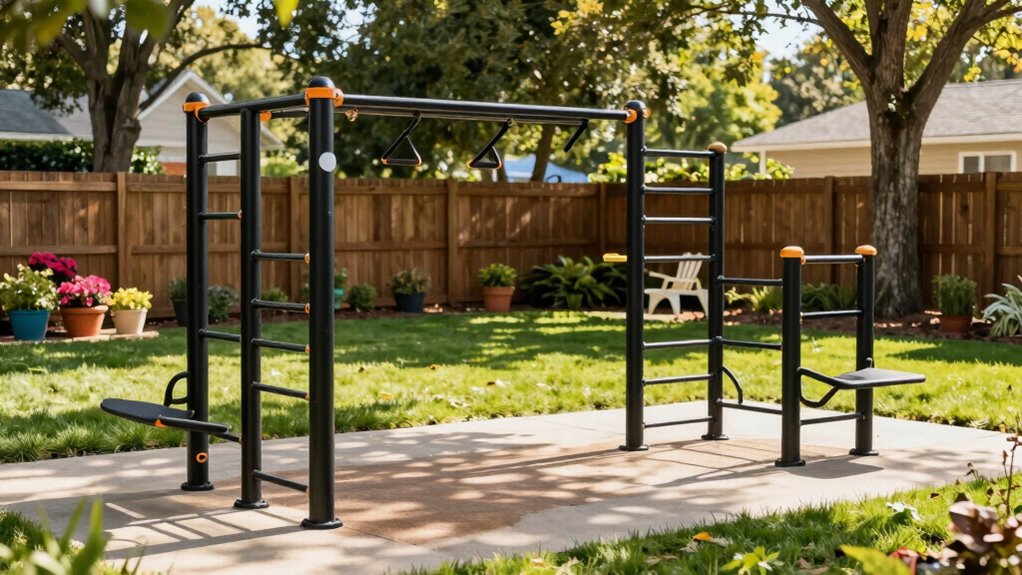

Setting up an outdoor pull-up station in your backyard is a great way to boost your fitness routine with convenience and variety. Position it in a shaded, secure spot with proper flooring like rubber mats for safety. Add features like dip bars or resistance bands to diversify workouts. Regular maintenance, such as checking bolts and protecting against weather, keeps your equipment safe and durable. Keep exploring to discover more tips for building an ideal outdoor training space.

Get workout gear delivered free with Prime
- Fast, free delivery on millions of items
- Prime Video, Amazon Music and more included
- Member-only deals all year
Key Takeaways
- Choose a durable, weather-resistant pull-up station with secure anchoring for safe outdoor use.
- Position the station in shaded areas with proper flooring like rubber mats for safety and comfort.
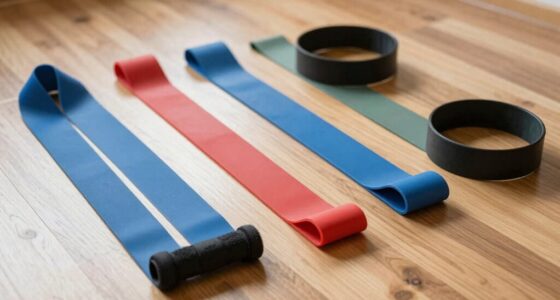
- Incorporate additional features such as dip bars or resistance bands to diversify workout options.
- Regularly inspect and maintain equipment to prevent rust, loose bolts, and wear.
- Plan the layout to maximize space, add outdoor lighting, and organize gear for an effective training environment.
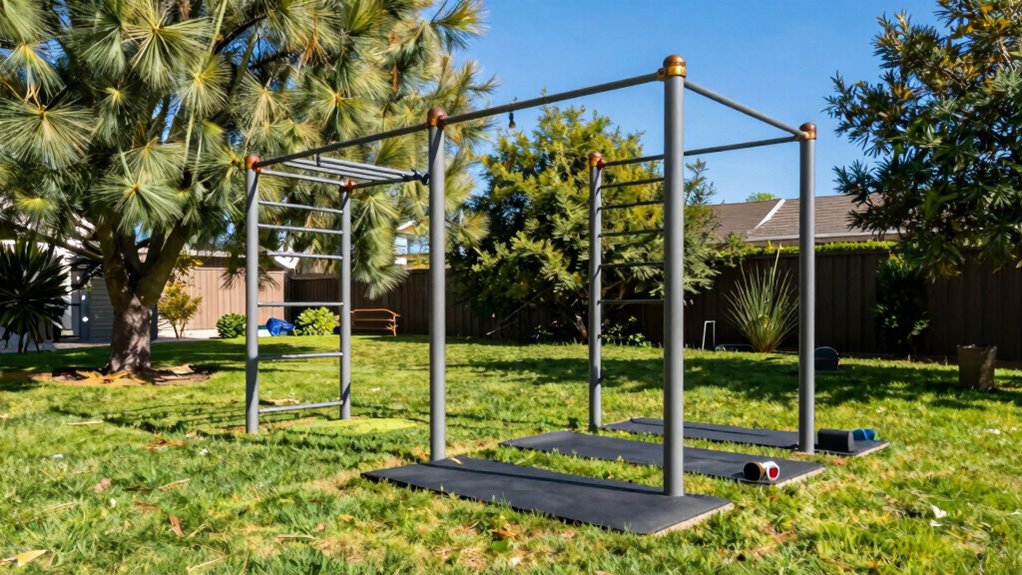
Setting up an outdoor pull-up station in your backyard is a clever way to boost your fitness routine without leaving home. With the right outdoor gym design, you can create a versatile space that encourages regular workouts. One key aspect of this design is selecting a sturdy, weather-resistant pull-up bar that can handle various pull-up variations. These variations—like wide grip, close grip, chin-ups, and mixed grips—target different muscle groups, making your training more effective and engaging. By incorporating multiple pull-up options, you add variety and challenge to your workouts, helping you build strength and endurance over time.
Create a versatile backyard gym with a sturdy, weather-resistant pull-up bar and multiple grip options for effective, varied workouts.
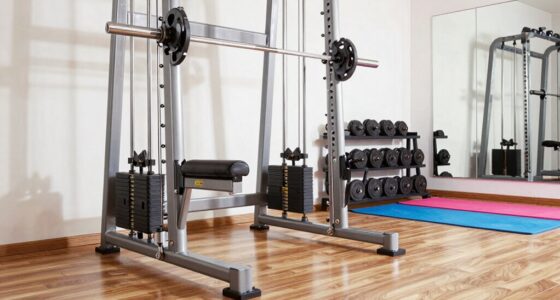
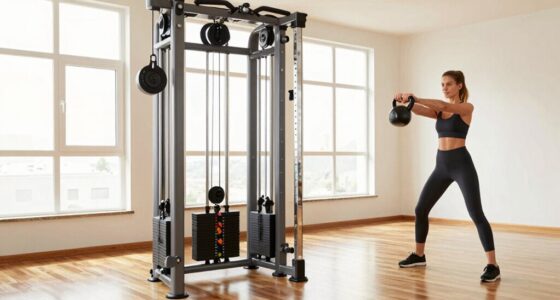
When planning your outdoor gym, think about the layout and placement of your pull-up station. Position it in a shaded area if possible, so you can work out comfortably even on hot days. Make sure the structure is secure, anchored well into the ground or mounted to a solid wall, to guarantee safety during intense exercises. Consider adding some additional features like dip bars, resistance bands, or a punching bag nearby, turning your backyard into a complete training zone. These elements complement pull-up variations by allowing you to target different muscles and keep your routine fresh.
The outdoor gym design should also include proper flooring to minimize injury risk and provide stability. Rubber mats or turf work well, especially in high-traffic areas or where you perform dynamic movements. Proper flooring not only enhances safety but also helps your equipment last longer by reducing wear and tear. Think about lighting as well—adding outdoor lights will let you work out in the early mornings or evenings, extending your training hours and keeping you motivated. Additionally, weather resistance is an important factor to consider when choosing equipment to ensure durability against the elements. Regular maintenance and equipment care can extend the lifespan of your outdoor gear and keep it functioning safely. Incorporating outdoor safety measures, such as checking for rust or loose bolts, will help maintain a secure workout environment. Using weather-resistant equipment and protective covers can further safeguard your investment from the elements.
Incorporating storage solutions for your workout gear is another smart move. Keep resistance bands, towels, and water bottles handy without cluttering your workout space. A small storage shed or mounted hooks can help maintain an organized outdoor gym. As you develop your backyard training setup, remember that consistency is key. Having a dedicated space makes it easier to stick to your fitness goals, and the variety of pull-up variations will keep your workouts interesting and effective. Additionally, understanding seamanship fundamentals and safety measures can help you stay injury-free during your training sessions.
As an affiliate, we earn on qualifying purchases.
Frequently Asked Questions
What Is the Ideal Height for an Outdoor Pull-Up Station?
The ideal height for an outdoor pull-up station is typically around 7 to 8 feet, based on installation guidelines for safety and functionality. You should guarantee the bar is high enough for full extension without foot contact, considering material durability for weather resistance. When installing, double-check stability, and leave ample clearance around the station for safe, effective workouts. This height maximizes usability while maintaining safety and durability over time.
How Do I Prevent Rust on Outdoor Fitness Equipment?
Think of your outdoor fitness equipment as a noble knight facing harsh weather. To prevent rust, you armor it with protective coatings like paint or sealant, shielding it from moisture. Regularly inspect and clean it, just as a knight maintains armor. Applying rust prevention methods guarantees your station remains strong and ready, extending its life. This vigilant care keeps your outdoor gym resilient, so you can train confidently without worry.
Can Children Safely Use Outdoor Pull-Up Stations?
Children can safely use outdoor pull-up stations if you supervise them closely to prevent accidents. Always guarantee the equipment is in good condition and sturdy enough for their weight, emphasizing its durability. Keep an eye on their form and behavior, and remind them of safety rules. By actively supervising and checking the equipment regularly, you create a safe environment where kids can enjoy outdoor workouts without unnecessary risks.
What Safety Features Should I Look for in Backyard Gym Equipment?
While the promise of backyard workouts excites you, safety must come first. Look for equipment made from durable materials like rust-resistant steel or weatherproof plastics, ensuring longevity and stability. Prioritize user safety features such as non-slip grips, secure mounting brackets, and padded areas to prevent injuries. These features protect your loved ones, turning your outdoor gym into a safe, inspiring space for everyone to enjoy, worry-free.
How Often Should I Perform Maintenance on Outdoor Training Stations?
You should perform maintenance on your outdoor training stations at least every three to six months. Regular checks help guarantee equipment durability and weather resistance, preventing rust and damage from the elements. Clean the stations, tighten bolts, and inspect for wear or corrosion. If you notice issues, address them promptly to keep your equipment safe and functional, and extend its lifespan for ongoing backyard workouts.
As an affiliate, we earn on qualifying purchases.
Conclusion
With an outdoor pull-up station and backyard training, you’re not just working out—you’re transforming into a superhero, capable of lifting cars and conquering mountains! Forget gym memberships; your backyard becomes a fortress of strength and stamina. Every sweat-drenched session catapults you closer to legendary status. So, gear up, embrace the challenge, and turn your backyard into the ultimate training ground—because ordinary workouts are for the faint of heart, and you’re here to be unstoppable!
outdoor gym equipment with dip bars
As an affiliate, we earn on qualifying purchases.
As an affiliate, we earn on qualifying purchases.
As an affiliate, we earn on qualifying purchases.
Halloween Picks
halloween
As an affiliate, we earn on qualifying purchases.