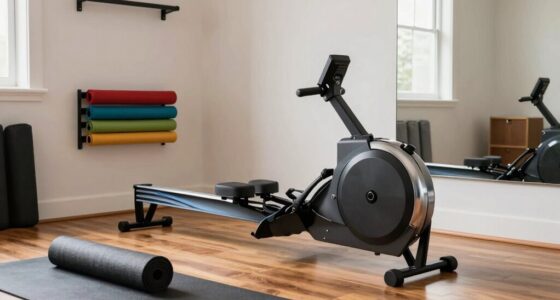
If you’re choosing between rubber gym mats and foam flooring, rubber usually holds up better over time. It’s more durable and resistant to wear, tears, and stains, making it ideal for high-traffic areas and heavy equipment. Foam, while softer and comfortable, tends to need replacing sooner, especially with frequent use. For long-lasting performance and tougher conditions, rubber is a smarter investment. Keep exploring to discover more about how each option can suit your workout space.

Get workout gear delivered free with Prime
- Fast, free delivery on millions of items
- Prime Video, Amazon Music and more included
- Member-only deals all year
Key Takeaways
- Rubber mats are more durable, resisting wear, tearing, and stains, making them ideal for high-impact and heavy-use areas.
- Foam flooring offers better shock absorption and comfort, suitable for light workouts and yoga.
- Rubber provides long-term performance and maintains its appearance with less frequent replacement.
- Foam may need more frequent replacing due to wear but offers a softer, more inviting surface.
- Rubber mats are generally more cost-effective over time due to their durability and lower maintenance needs.
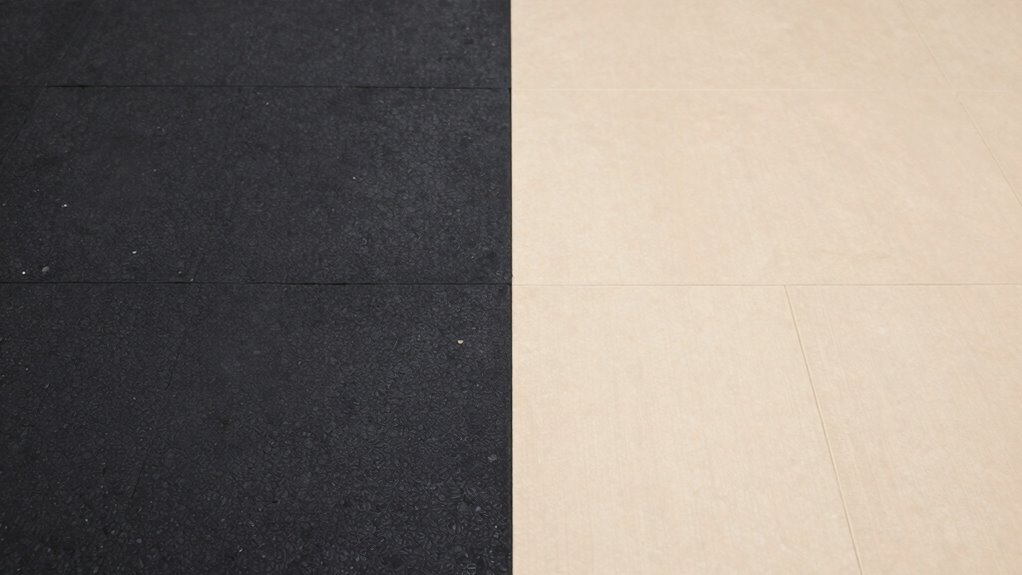
When choosing flooring for your gym, understanding the differences between rubber gym mats and foam flooring is essential. Both options serve different purposes, and knowing which one holds up better depends on how you plan to use your space. Rubber mats are renowned for their durability, making them ideal for high-impact activities and heavy equipment. They can withstand the wear and tear of rigorous workouts, which means they tend to last longer over time. Foam flooring, on the other hand, offers a softer surface that’s more comfortable underfoot and provides excellent shock absorption. However, it may wear down faster, especially in a busy gym environment, and might require more frequent replacement.
Rubber mats excel in durability for heavy use, while foam offers comfort but wears faster in busy gyms.
When considering yoga compatibility, foam flooring often comes out ahead. Its cushioned surface provides a gentle, forgiving layer that’s perfect for stretching and yoga poses, reducing strain on joints and enhancing comfort. Rubber mats, although supportive, tend to be firmer and less forgiving, which might make some yoga practitioners prefer foam flooring for their routines. That said, rubber mats can still be used for yoga if the activity involves more movement or weightlifting, where stability and grip are more critical.
Aesthetic appeal is another factor that influences your choice. Rubber gym mats tend to have a more industrial, professional look, with a variety of textures and colors that suit a serious workout environment. They can be easily cleaned and maintained, which adds to their appeal in commercial gyms or home setups where a neat appearance is essential. Foam flooring, by contrast, often offers a softer, more inviting look. It comes in vibrant colors and patterns, which can add a lively or calming atmosphere depending on your design preferences. This makes foam flooring appealing for home gyms or spaces where aesthetics and comfort are priorities. Additionally, some foam options incorporate sound absorption qualities, creating a quieter workout environment.
Ultimately, when it comes to durability, rubber gym mats generally hold up better over time, especially in high-traffic or heavy-use areas. They resist crushing, tearing, and stains more effectively than foam. Additionally, the impact resistance of rubber makes it especially suitable for equipment-heavy zones, ensuring longevity despite frequent use. Moreover, rubber flooring is often considered more cost-effective in the long run because of its durability and lower maintenance needs. However, if your main focus is on creating a comfortable, visually appealing space suitable for yoga and light workouts, foam flooring might serve you better. The choice hinges on your specific needs—whether durability and impact resistance or comfort and aesthetics are your top concerns. Both materials have their strengths, but understanding how each one performs in different aspects will help you choose the flooring that best supports your fitness goals.
rubber gym mats for heavy equipment
As an affiliate, we earn on qualifying purchases.
As an affiliate, we earn on qualifying purchases.
Frequently Asked Questions
Which Flooring Is More Environmentally Friendly?
Rubber gym mats are generally more environmentally friendly than foam flooring due to their sustainability comparison. They’re often made from recycled rubber or natural materials, making them a more eco-friendly choice. Foam flooring, on the other hand, is usually produced from synthetic, petroleum-based materials, which are less sustainable. If you prioritize eco-friendly options, rubber mats offer better durability and environmental benefits, reducing waste and supporting sustainable practices.
How Do Maintenance Costs Compare Long-Term?
In the long run, rubber gym mats tend to be more cost-efficient due to their durability compared to foam flooring. Rubber mats withstand heavy use, resist tearing, and require less frequent replacement, which lowers maintenance costs over time. Foam flooring, while initially cheaper, may need more repairs or replacement sooner, leading to higher long-term expenses. Your choice impacts both the durability comparison and overall maintenance costs you’ll face.
Are There Color or Design Options Available?
Sure, because your workout space isn’t colorful enough already, right? Both rubber gym mats and foam flooring come with fantastic options for color customization and design variety. You can choose bold, vibrant hues or subtle shades, and even get creative with patterns. So, whether you want a funky gym vibe or a sleek, modern look, you’re covered. Just pick your favorite, and let your floor do the talking!
Can These Mats Be Used Outdoors?
Yes, you can use these mats outdoors, but it depends on their weather resistance and UV durability. Rubber gym mats generally hold up well outside because they’re resistant to moisture, weather, and UV rays, making them durable over time. Foam flooring, on the other hand, isn’t ideal outdoors since it can degrade with exposure to sun and moisture. Check the product specifications to guarantee they’re designed for outdoor use.
Which Flooring Provides Better Sound Insulation?
Rubber gym mats offer better sound insulation compared to foam flooring. Their soundproofing advantages come from denser material, which effectively absorbs impacts and reduces noise transfer. To enhance noise reduction techniques, you can add underlayments or rugs over the mats. This combination amplifies noise reduction, especially in shared spaces. If soundproofing is your priority, rubber mats are the better choice because they minimize sound transmission more efficiently than foam flooring.
foam flooring for yoga and light workouts
As an affiliate, we earn on qualifying purchases.
As an affiliate, we earn on qualifying purchases.
Conclusion
In the end, choosing between rubber gym mats and foam flooring is like selecting your armor for battle—durability and safety are your shields. Rubber mats, much like a steadfast knight, stand strong through countless workouts, resisting wear and tear. Foam flooring, while softer and more forgiving, may not hold up as well over time. Remember, your fitness journey is a marathon, not a sprint—pick the flooring that will be your loyal companion through every step.
durable gym mats for commercial gyms
As an affiliate, we earn on qualifying purchases.
As an affiliate, we earn on qualifying purchases.
shock absorbing foam gym flooring
As an affiliate, we earn on qualifying purchases.
As an affiliate, we earn on qualifying purchases.
Halloween Picks
halloween
As an affiliate, we earn on qualifying purchases.